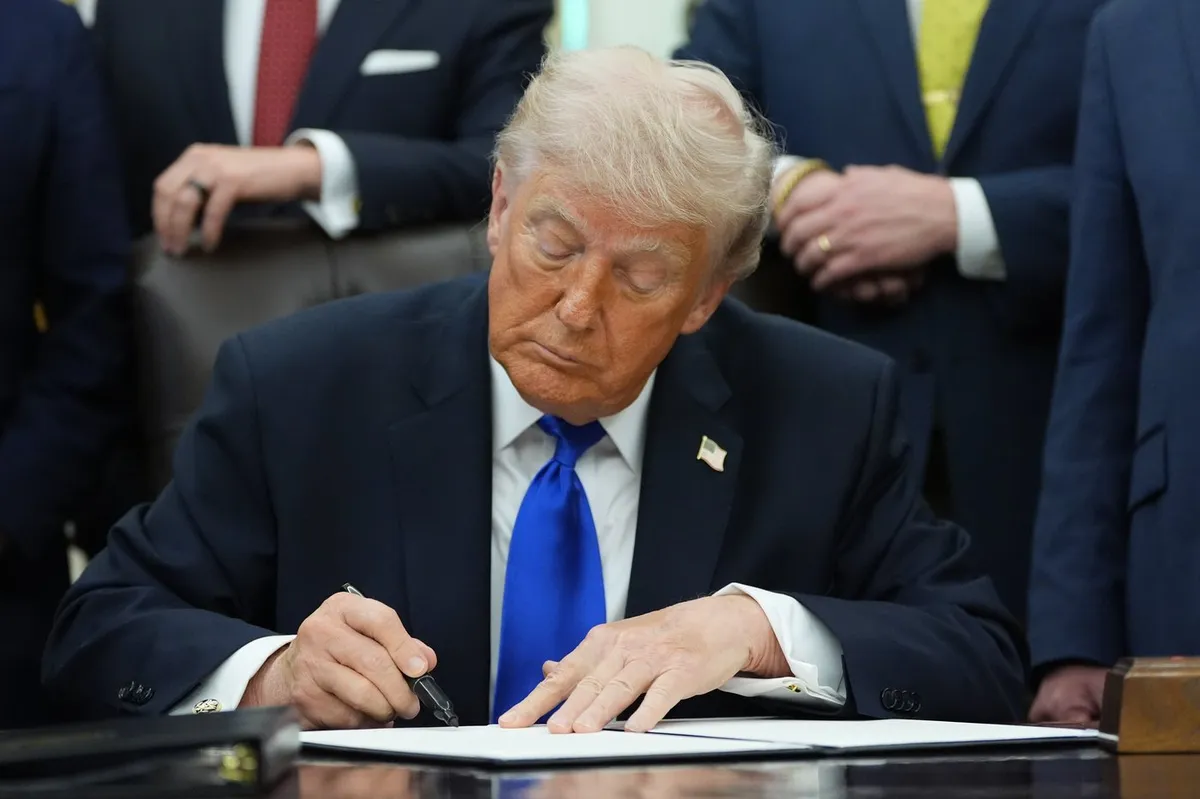
“The EU is not complying with our fully agreed to Trade Deal,” declared Donald Trump as he announced a dramatic increase in tariffs on European automobiles to 25%. This announcement comes amid ongoing tensions surrounding compliance with a previously negotiated trade agreement.
The new tariffs are set to take effect next week, marking a significant shift from the previous ceiling of 15%. Following a Supreme Court ruling that limited Trump’s authority to impose such tariffs, the rate had been reduced to 10%. The implications of this tariff increase are far-reaching, particularly in light of the value of EU-U.S. trade, which amounted to 1.7 trillion euros ($2 trillion) in 2024.
The backdrop for this escalation is rooted in accusations from the Trump administration that the EU has failed to adhere to the terms of their bilateral trade deal. European Commission President Ursula von der Leyen stated, “A deal is a deal,” emphasizing the expectation for mutual compliance.
The economic stakes are high. The European Union anticipated that adhering to the agreement would save its automakers between 500 million and 600 million euros each month. However, Trump’s latest tariff increase threatens to disrupt these financial forecasts and potentially impact U.S. consumers as well.
Key considerations:
- The Supreme Court previously ruled against Trump’s legal authority for such economic measures.
- The EU remains committed to maintaining a predictable and mutually beneficial relationship with the U.S.
- If the U.S. does not honor the pre-existing deal, the EU has options available to protect its interests.
Hildegard Mueller, representing German automakers, warned that “the cost of additional tariffs would be enormous and would likely impact U.S. consumers.” This sentiment reflects broader concerns about how such tariff increases could exacerbate existing trade imbalances and affect national security considerations.
The coming days will be critical as both sides navigate this complex landscape. With Trump’s tariff plans now in motion, there’s little doubt that further negotiations will be necessary.