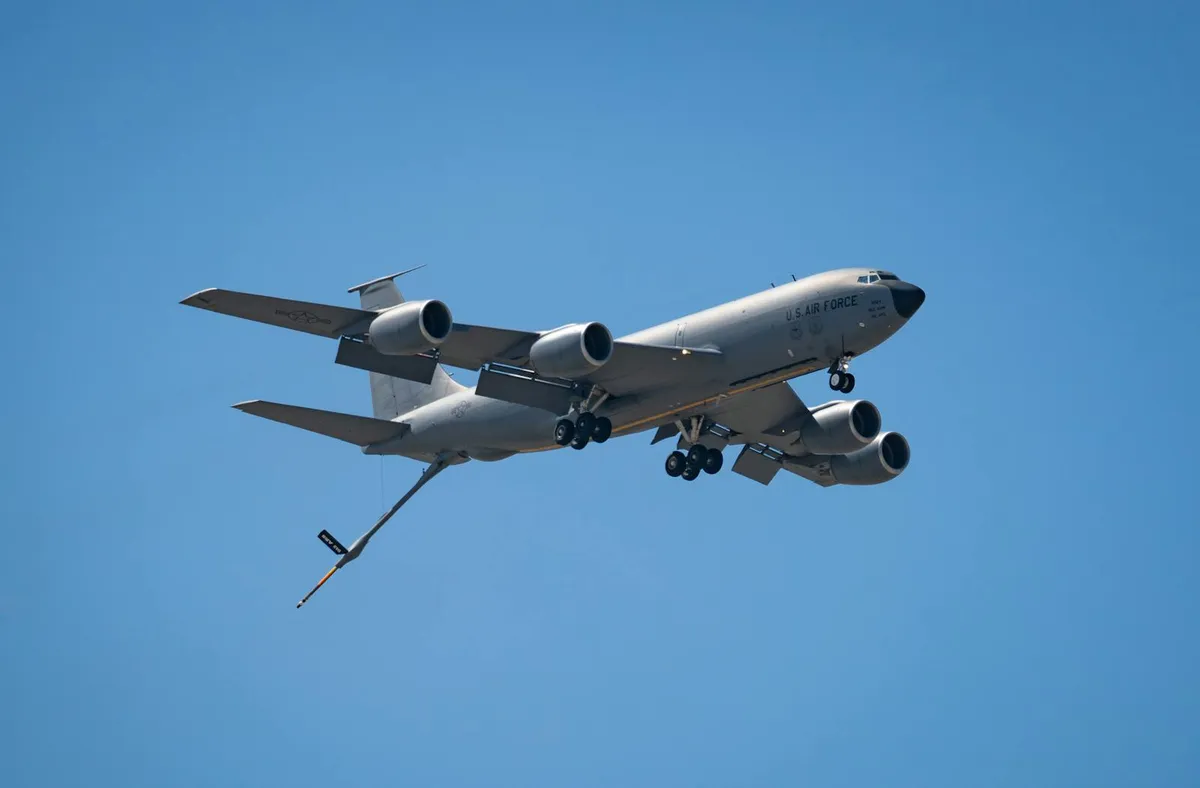
A United States Air Force KC-135R Stratotanker made headlines on April 12, 2026, after landing at RAF Mildenhall in England with significant shrapnel damage. This incident, attributed to Iranian fire during a strike on Prince Sultan Air Base in Saudi Arabia, raises concerns about the safety of military operations in the region.
The aircraft, identified by its registration number 59-1444, is a vintage model manufactured in 1959, making it 66 years old. Despite its age, the KC-135R has undergone interim repairs and remains airworthy, showcasing the resilience of this Cold War-era workhorse. However, the damage it sustained is a stark reminder of the increasing risks faced by military assets in active conflict zones.
Prior to its emergency landing in the UK, the KC-135R had to divert to Crete, highlighting the urgency of the situation. This incident is part of a broader pattern, as the US Air Force has reported losing two KC-135 tankers and sustaining damage to another six during Operation Epic Fury, which is focused on countering Iranian aggression.
The US operates a fleet of approximately 370 KC-135 tankers, all upgraded to the KC-135R variant, which plays a crucial role in mid-air refueling operations for fighter jets. As the military faces losses in the ongoing conflict with Iran, the Air Force has begun reactivating retired KC-135Rs from the 309th AMARG to bolster its operational capabilities.
Experts note that executing a battle damage repair plan in the field to return a KC-135 to the air is a valuable exercise in military readiness. “The patches are apparently interim repairs covering shrapnel damage,” one source commented, emphasizing the aircraft’s importance in maintaining air operations.
While the KC-135 continues to serve as an indispensable asset, the newer KC-46 Pegasus model has faced persistent technical issues, particularly with its refueling boom, raising questions about the future of aerial refueling capabilities. The reliance on older models like the KC-135R underscores the challenges the Air Force faces in modernizing its fleet while ensuring operational readiness.
Details remain unconfirmed regarding whether the damaged KC-135R is economically repairable or if it will ultimately be sent to the boneyard. The full extent of the damage to the KC-135 fleet from the Iranian strikes also remains unclear, leaving military planners to assess the implications for future operations.
As tensions with Iran continue to escalate, the fate of the KC-135R and its role in the US Air Force’s strategic operations will be closely monitored. The incident serves as a reminder of the ongoing challenges faced by military aviation in a complex geopolitical landscape.