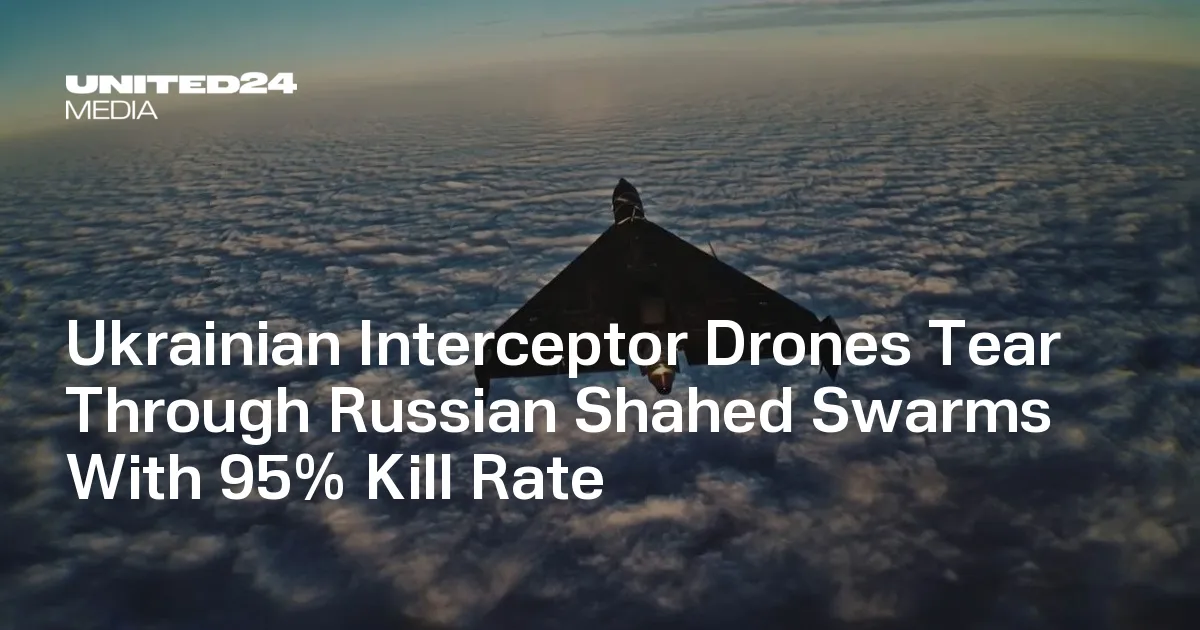
Ukraine has been developing a system of private air defense units to supplement its military capabilities. This strategic move comes amid ongoing conflict with Russia, where aerial threats have escalated. Recently, the introduction of Russian Shahed drones has intensified these challenges. These drones, typically flying at altitudes of 4 to 5 kilometers, are designed for precision strikes—targeting mobile fire groups among other assets.
On April 17, 2026, a notable development occurred in the Kharkiv region. Ukrainian air defense systems showcased their effectiveness by achieving a remarkable 95% success rate against Shahed drones. This performance is not merely statistical; it reflects the dedication and skill of Ukrainian pilots, exemplified by one who downed two Shahed drones from an impressive distance of 500 km.
Moreover, the crew operating these systems destroyed around 200 targets in total—184 of which were specifically Shahed drones. Such numbers are significant and highlight the evolving landscape of aerial warfare. “It’s extremely difficult to achieve that kind of number now,” said one Ukrainian pilot nicknamed ‘Hulk.’ He added that precision is crucial to ensure that only the engine reaches the ground without detonating.
However, the emergence of guided Shahed drones marks a new level of complexity in this aerial conflict. Mykhailo Fedorov acknowledged this shift, indicating that these advancements could alter operational strategies for both sides. The introduction of high-speed ‘jet-powered’ Shahed drones—traveling at speeds exceeding 400 km/h—poses new challenges for interception.
In response to these threats, Ukrainian forces have adapted rapidly. A private air defense unit recently shot down one of these faster Shahed drones for the first time—a testament to their growing capabilities. The ability to launch interceptor drones within just 30 seconds demonstrates a commitment to maintaining air superiority amid increasing aerial assaults.
The technological aspect is also noteworthy: Shahed drones are equipped with Tele2 SIM cards, which have their roaming blocked in Ukraine. This raises questions about operational security and communication lines for Russian forces utilizing these drones for targeted strikes.
As the situation evolves, calls for accountability are growing louder. Serhii ‘Flash’ Beskrestnov voiced a strong opinion regarding telecom operators aiding such operations: “I believe that mobile and fixed-line operators across the civilized world should terminate business relations with an operator used by the Russian Federation for terrorist purposes.” This sentiment underscores a broader concern regarding complicity in warfare tactics.
The conflict surrounding Shahed drones is far from over. Observers anticipate further developments as both sides adapt to new technologies and tactics in this ongoing confrontation. The stakes remain high—both for military personnel and civilians caught in the crossfire.