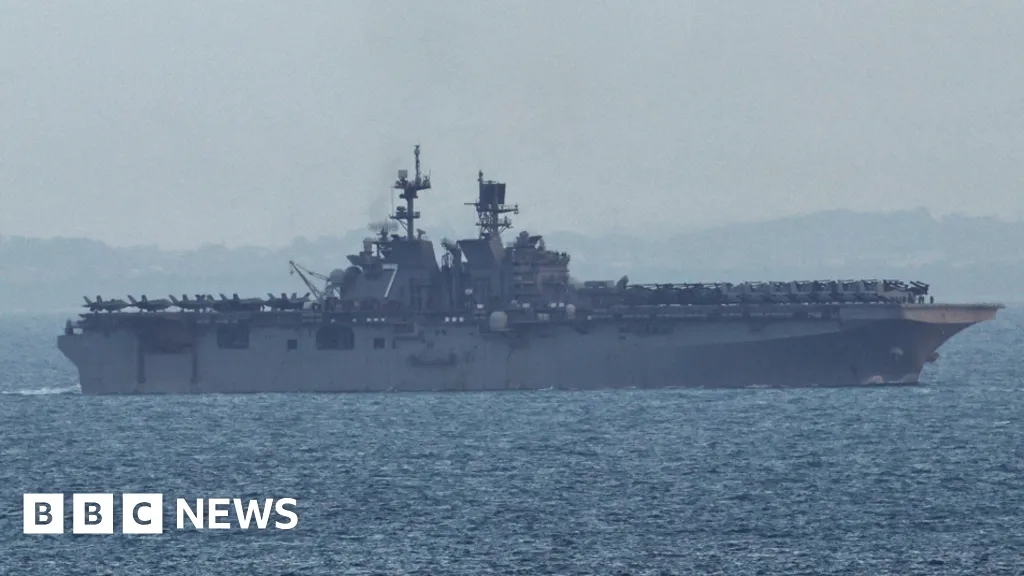
The USS Tripoli’s deployment comes amid ongoing conflicts involving Iran, the United States, and Israel. On March 27, 2026, the USS Tripoli arrived in the CENTCOM area of responsibility, serving as the flagship of the Tripoli Amphibious Ready Group and the 31st Marine Expeditionary Unit. This America-class amphibious assault ship carries approximately 3,500 sailors and Marines, along with transport and strike aircraft, as well as tactical amphibious equipment.
As tensions escalate, Iran’s Islamic Revolutionary Guard Corps has threatened retaliation against Israeli and U.S.-affiliated universities in the region. This follows a recent Iranian attack on a military installation that resulted in ten Kuwaiti soldiers being wounded. The situation has rapidly deteriorated since joint strikes by the U.S. and Israel began on February 28, 2026, leading to over 1,340 deaths.
In retaliation, Iran has launched drone and missile strikes targeting Israel and Gulf countries that host U.S. military assets. The Kuwaiti military reported detecting 14 ballistic missiles and 12 hostile drones, indicating the scale of the threat posed by Iranian forces.
The arrival of the USS Tripoli is seen as a strategic move to bolster U.S. military presence in the region amidst these heightened tensions. Observers note that the deployment may serve as a deterrent against further Iranian aggression, while also providing support to U.S. allies in the area.
Officials have indicated that the situation remains fluid, with potential for further military engagement as both sides prepare for possible escalations. The international community is closely monitoring developments, as the implications of this conflict extend beyond the immediate region.
Details remain unconfirmed regarding the full scope of military operations planned by the USS Tripoli and its accompanying forces, but the stakes are undeniably high as the Middle East remains a focal point of geopolitical tensions.