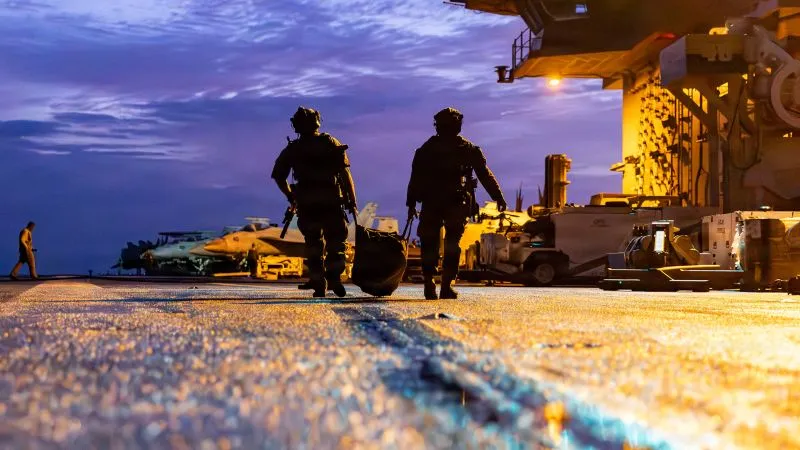
A fire broke out in the laundry compartment of the USS Gerald R. Ford in mid-March 2026, affecting approximately 600 sailors who lost access to their bunks and laundry facilities. The crew battled the fire for approximately 30 hours, showcasing their resilience and commitment under challenging circumstances. Fortunately, no sailors were seriously injured in the incident, which could have had far more severe consequences given the ship’s operational environment.
The USS Gerald R. Ford, the largest and most powerful aircraft carrier in the U.S. Navy, is currently deployed in the eastern Mediterranean Sea. With about 4,500 sailors and dozens of tactical aircraft on board, the carrier plays a crucial role in U.S. military operations. The ship has been involved in various missions, including military operations against Nicolás Maduro in Venezuela and engagements in the ongoing conflict with Iran. Its estimated cost of $13 billion underscores its significance in the U.S. naval fleet.
The fire incident highlights the ongoing challenges faced by the crew during extended deployments. The USS Gerald R. Ford has had its deployment extended multiple times, with the current mission expected to last until May 2026. This prolonged presence in a volatile region raises concerns about the well-being and morale of the sailors aboard. As noted by retired Vice Admiral Andrew “Woody” Lewis, such extended rotations can stress both the individuals and their families.
Experts have voiced concerns over the implications of extended deployments on crew retention and morale. James Stavridis, a former NATO commander, remarked, “If a ship spends six months on a single rotation, retention and morale problems accelerate.” This sentiment resonates with many families who experience the uncertainty of military life. Amini Oasis, a family member of a sailor, expressed the emotional toll, stating, “This is a constant uncertainty in which we live every day,” and added, “This could have been my daughter if she had joined the Air Force.”
The USS Gerald R. Ford’s advanced capabilities, including its electromagnetic catapult launch system, are critical to its operational effectiveness. However, incidents like the recent fire serve as a reminder of the inherent risks associated with naval operations. The crew’s ability to respond effectively to emergencies is vital, and their successful management of the fire incident reflects their training and preparedness.
As the USS Gerald R. Ford continues its deployment, the Navy must address the challenges of maintaining crew morale and ensuring the safety of its personnel. The incident has prompted discussions about the need for improved support systems for sailors and their families, particularly during extended missions. The ongoing geopolitical tensions in the region further complicate the situation, making it imperative for the Navy to remain vigilant.
In the wake of the fire, the Navy has not released detailed statements regarding the incident, but the crew’s quick response has been acknowledged. As the situation develops, further insights may emerge regarding the implications of this event on the USS Gerald R. Ford’s operational capacity and the well-being of its sailors. For now, the focus remains on the crew’s resilience and the challenges they face in their critical roles.