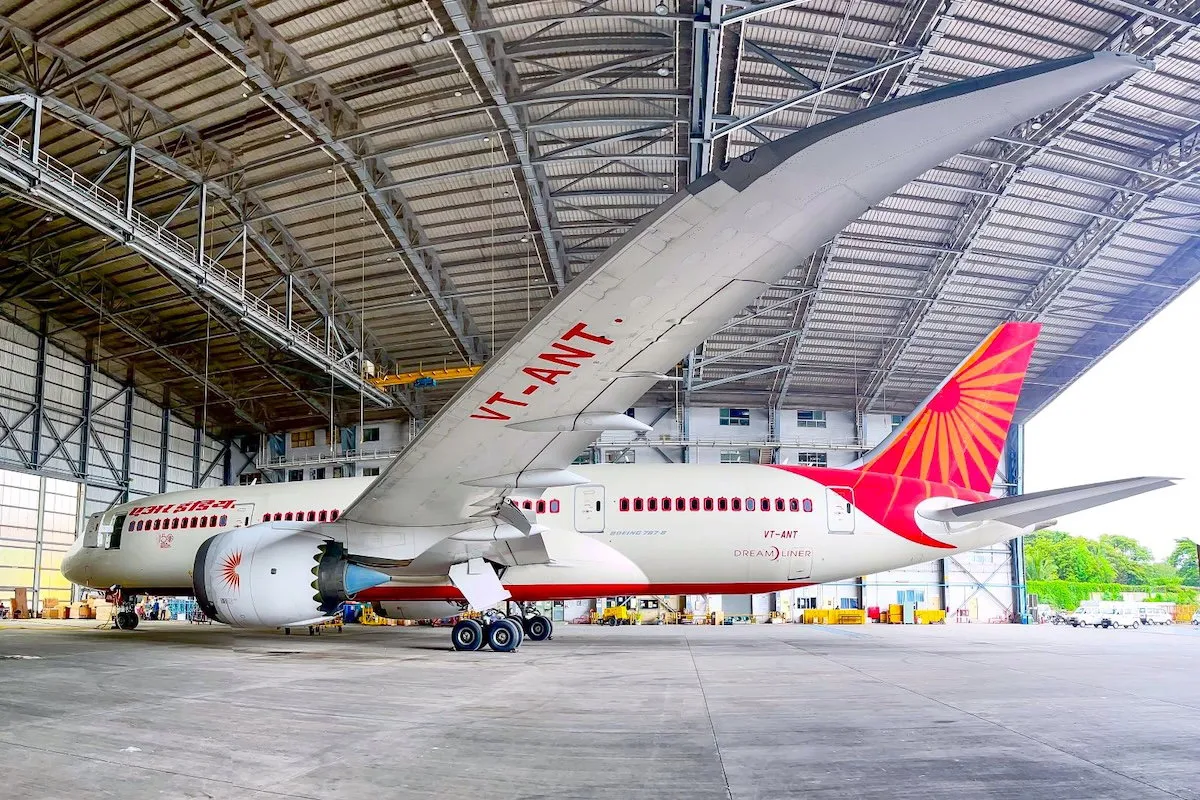
Air India is set to invest over $400 million in refreshing the interiors of its Boeing 777 and 787 aircraft, marking a significant upgrade in its long-haul fleet. The airline plans to reconfigure all 13 Boeing 777-300ERs by October 2028, with the first retrofitted aircraft expected to enter service by early 2027.
The refurbishment will retain the first-class cabin on the Boeing 777s while introducing a premium economy product across the long-haul fleet. This move aligns with Air India’s strategy to enhance passenger comfort and experience, especially as it competes in the increasingly crowded aviation market.
In addition to the Boeing 777s, Air India is also focusing on its Boeing 787-8 aircraft. The first retrofitted 787-8 is anticipated to be operational by May 1, 2026, featuring a new configuration that includes 250 total seats, with 20 business class seats, 25 premium economy seats, and 205 economy seats. This reconfiguration aims to optimize space and improve the overall passenger experience.
Historically, Air India has been undergoing a transformation since its privatization by the Tata Group in late 2021. This overhaul of the aircraft interiors is part of a broader strategy to modernize the airline and attract more travelers. The investment in the Boeing 777 and 787 fleets reflects a commitment to enhancing service quality and operational efficiency.
Air India has also been leasing six former Delta Air Lines Boeing 777-200LRs and six former Etihad Airways Boeing 777-300ERs, further expanding its fleet capabilities. These additions are crucial as the airline seeks to bolster its international routes and improve connectivity.
Meanwhile, Air France continues to operate Boeing 777-300ERs on its route from Detroit to Paris, showcasing the aircraft’s reliability and performance in long-haul travel. The business class configuration on Air France’s Boeing 777-300ER features a 2-3-2 seating arrangement, which is indicative of the competitive nature of premium air travel.
As Air India embarks on this ambitious retrofit project, observers note that the timeline for completion remains uncertain due to potential supply chain issues. Details remain unconfirmed, but the airline’s proactive approach to upgrading its fleet is a positive sign for its future in the aviation industry.