The World Cup 2026 match between the Netherlands and Morocco in Monterrey represents a significant moment that highlights themes of history, migration, and identity in football. This fixture, part of the last 32, sees both teams enter after strong group stage performances.
The Netherlands advanced unbeaten, securing seven points and scoring 10 goals in Group F, matching their most prolific World Cup group stage. Morocco also progressed, finishing with seven points in their group, behind Brazil on goal difference.
Evolving National Identity in Football
The encounter between these two nations delves deeper than just tournament progression, reflecting broader societal discussions around identity, belonging, and heritage in Europe. For many years, players born in the Netherlands to Moroccan families were largely expected to represent the Netherlands internationally. This assumption has since changed.
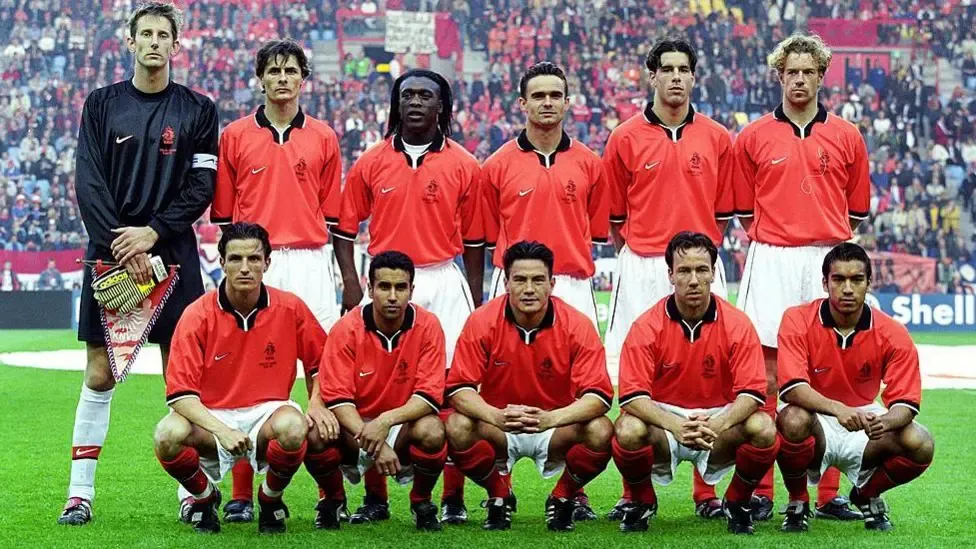
The shift began to become apparent with players like Dries Boussatta, who was the first Dutch-born player of Moroccan heritage to play for the Netherlands in November 1998. He later made appearances for Morocco, a move permitted by FIFA’s eligibility rules at the time because his Dutch appearances were in friendly matches.
The decision for dual-national footballers is often personal, influenced by family, culture, and opportunity. However, the relationship between the Dutch and Moroccan football federations has also evolved significantly. The Royal Moroccan Football Federation initiated a strategy over a decade ago to actively identify and engage with dual-national talent across Europe, particularly in countries like France, Belgium, Spain, and the Netherlands. This approach involved scouts building relationships with players and their families well before senior international call-ups were considered.
Former Morocco technical director Pim Verbeek highlighted that family often plays a crucial role in a player’s decision. This policy has had a substantial impact on Morocco‘s international squad composition. By the 2018 World Cup, five members of their squad were born in the Netherlands. This number increased to 14 foreign-born players in their 26-man squad when Morocco reached the semi-finals four years later.
The current Morocco squad for World Cup 2026 includes 19 players born outside the country. During a group-stage match against Brazil, Morocco made history by fielding an entire starting eleven composed of foreign-born players.
Key Players and Match Dynamics
A notable decision that symbolized this shift was that of Hakim Ziyech. Despite being born and developed within the Dutch system and representing the Netherlands at youth level, Ziyech chose to represent Morocco. He cited feeling Moroccan and choosing with his heart, a decision that altered perceptions on both sides. Other players, including Noussair Mazraoui, Sofyan Amrabat, and Anass Salah-Eddine, who were raised in Dutch football, have also committed their international futures to Morocco. Ismael Saibari, though born in Spain, was largely developed within PSV Eindhoven‘s academy.
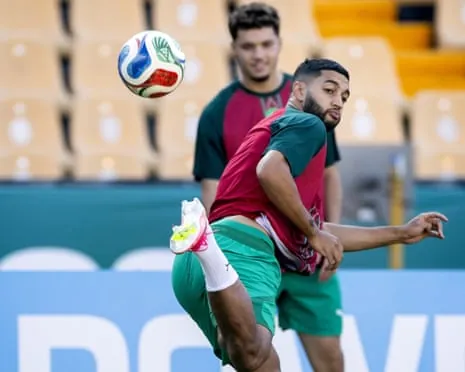
These players, produced within Dutch football, now contribute to one of the Netherlands‘ direct competitors on the international stage. The cultural connections between the two nations are deep-rooted, stemming from Moroccan migration to the Netherlands that accelerated in the late 1960s. Today, many Dutch citizens have Moroccan heritage, creating generations with a sense of belonging that spans both countries.
The upcoming match is anticipated to be a challenging contest. Morocco manager Mohamed Ouahbi emphasized that the players’ greatest motivation is to represent their country. The game will be played at Estadio Monterrey, with temperatures projected to be at least 30 degrees C at kickoff. Ouahbi noted the enthusiastic welcome Morocco received in Mexico’s north-east, drawing parallels between the local passion for football and the fervour in his own country.
Netherlands striker Brian Brobbey has been a significant force, scoring with his first three shots on target this summer. Cody Gakpo and Crysencio Summerville have also been impactful, with both players scoring twice. Koeman acknowledged that Morocco‘s attacking style under Ouahbi could create spaces, but also recognized the need for the Netherlands to prevent similar vulnerabilities.
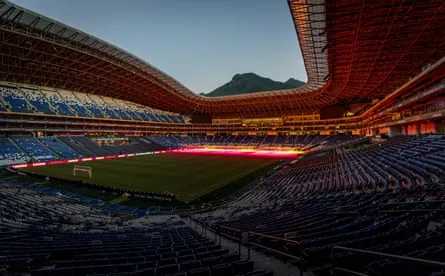
The atmosphere in Monterrey is vibrant, with hundreds of fans gathering in the Macroplaza, filling the city centre with chants, flags, and musical instruments ahead of the match. The city has become a lively host for the tournament, with fans from both sides contributing to the festive environment. Morocco goalkeeper Yassine Bounou described the upcoming match as a “clash of titans.”
This World Cup meeting is more than just a knockout tie; it is a reflection of modern football where nationality is not always assumed and heritage plays a significant role.
Read Also
Source: bbc.com