Quansah’s suspension and its impact
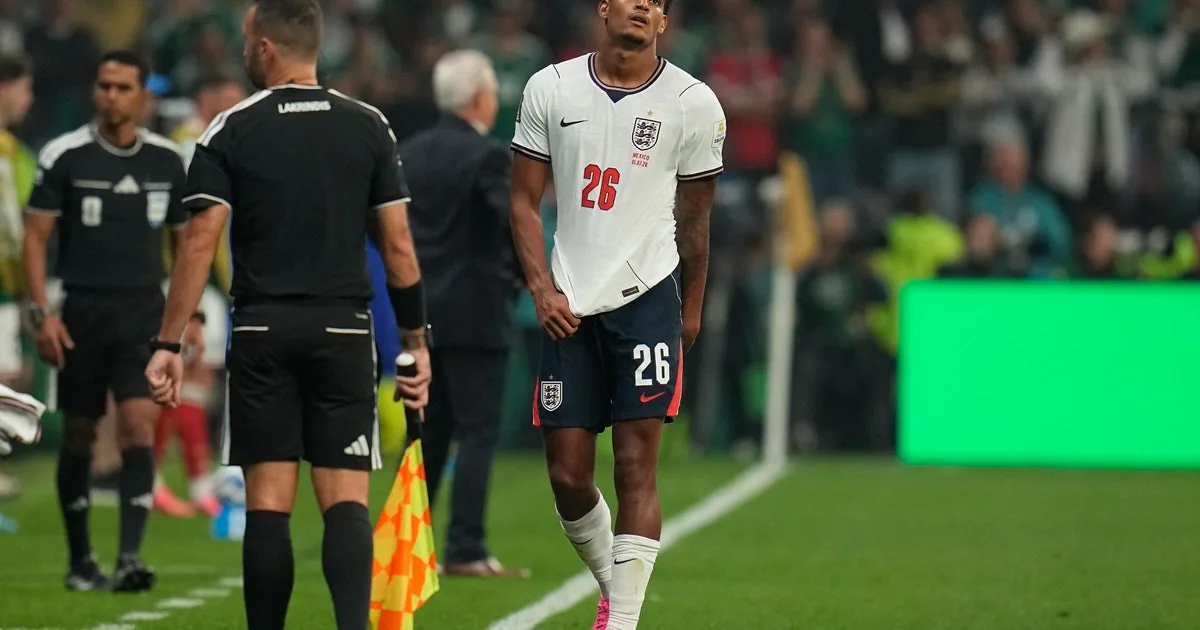
England defender Jarell Quansah has received a two-match suspension following a red card incident during the World Cup round of 16 match against Mexico. The suspension means Quansah will miss England’s quarter-final match against Norway in Miami Gardens and a potential semi-final game if the team advances. The decision was confirmed by FIFA, citing serious foul play for a high challenge on Jesus Gallardo in the second half of England’s 3-2 victory.
This ban complicates matters for head coach Thomas Tuchel, particularly concerning the right-back position. Quansah, who typically plays in central defence, had been filling in at right-back due to injuries. Bukayo Saka described the decision as “incredibly frustrating” for the team.
The Football Association considered an appeal, but tournament regulations do not provide an avenue to contest the ban. However, the FA reportedly made strong representations to FIFA regarding the process that led to the red card decision, arguing that the referee was shown a still image and slow-motion replays before seeing the incident in real-time, which could have led to ‘outcome bias’.
Right-back challenges for England
The right-back position has been a persistent issue for England throughout the tournament. First-choice right-back Reece James has not played since England’s second group match against Ghana due to a hamstring injury. His backup, Tino Livramento, was sent home before the campaign even began after sustaining a calf injury. Tuchel called up centre-back Trevoh Chalobah as a replacement, rather than a specialist right-back.
Quansah’s suspension further exacerbates these challenges. Tuchel had faced questions before the World Cup for not selecting Real Madrid right-back Trent Alexander-Arnold. While James is reportedly nearing fitness, there is an element of risk in immediately reintroducing him into a high-stakes match.
Other potential options for the right-back role include Chalobah, or Djed Spence, though Spence has appeared more comfortable at left-back for England. Tuchel will also need to consider a full-back who can complement the attacking play of players like Noni Madueke or Saka on the right flank.
Inconsistencies in red card decisions
The degree of Quansah’s punishment has drawn comparisons to the treatment of United States striker Folarin Balogun. Balogun was also sent off for serious foul play against Bosnia-Herzegovina and was expected to receive a two-game ban. However, FIFA made a decision to ban him for only one match, which was then suspended for 12 months.
This decision followed an intervention from US President Donald Trump, who reportedly contacted FIFA President Gianni Infantino to request a review of Balogun’s red card. Infantino defended the independence of FIFA’s disciplinary committee, stating the Balogun case was handled properly. The situation led to widespread criticism within the football community, including from Uefa and Belgium.
The VAR protocol for reviewing incidents has also been a point of discussion. While some suggest that slow-motion should not be used for contact fouls, VAR protocol specifies that full speed should be used for the “intensity of the challenge” and slow motion for the “point of contact for physical offences.” At the World Cup, officials are shown a still image, then slow-motion replay, and finally full speed. The Premier League, however, uses the opposite order, showing incidents at full speed first, then slow motion if needed to identify the exact point of contact.
Quansah will be available to play if England reaches the final in New Jersey on July 19.
Read Also
Source: cbsnews.com