The wider picture
The planned expansion of Medical Assistance in Dying (MAiD) to include individuals suffering solely from mental illness has ignited a firestorm of debate across Canada. This legislative shift, encapsulated in Bill C-12, is set against a backdrop of growing concern regarding the implications of such a policy on vulnerable populations. Various organizations, including the Archdiocese of Toronto and the Euthanasia Prevention Coalition, have mobilized to voice their opposition, arguing that this move could lead to dire consequences for those battling mental health challenges.
Bill C-12, which is scheduled to come into effect on March 17, 2027, proposes to allow MAiD for individuals whose only underlying condition is mental illness. This expansion has been met with organized resistance from groups advocating for the rights and welfare of individuals with mental health issues. Tamara Jansen, a prominent voice in the opposition, has described the proposed legislation as “a line that should never be crossed,” emphasizing the need for compassion and support rather than a pathway to death.
In Alberta, a parallel initiative known as Bill 18, the Safeguards for Last Resort Termination of Life Act, has been introduced to prevent assisted suicide for those with mental illness as their sole condition. This legislative effort reflects a growing recognition of the complexities surrounding mental health and the ethical dilemmas posed by MAiD. Danielle Smith, a key figure in this discourse, has articulated a clear stance: “Those struggling with severe mental health challenges need treatment, compassion and support, not a path to end their life at what may be their lowest moment.”
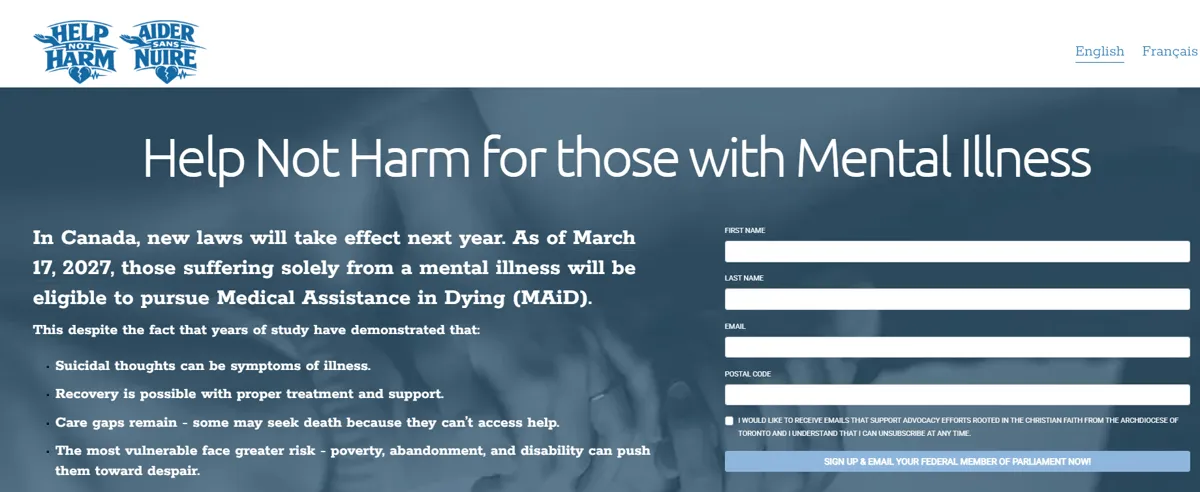
The Archdiocese of Toronto has also taken a proactive stance through its Help Not Harm campaign, which encourages Catholics and the wider community to support Bill C-12. Neil MacCarthy, a spokesperson for the Archdiocese, expressed gratitude for the solidarity shown by dioceses across Canada in opposing the expansion of MAiD, stating, “We welcome the visible solidarity shown by dioceses across Canada in support of the Help Not Harm campaign.” This collective effort underscores the significant moral and ethical concerns surrounding the legislation.
As the debate intensifies, the implications of Bill C-12 extend beyond the immediate concerns of mental health advocates. The federal government has faced scrutiny over its approach to MAiD, particularly in light of the scheduled expansion. Observers are keenly watching how this legislation will unfold and what safeguards, if any, will be put in place to protect vulnerable individuals. The introduction of Bill C-9, the Combatting Hate Act, which has already advanced to the Senate, further complicates the legislative landscape, as it raises questions about the government’s priorities in addressing societal issues.
While proponents of Bill C-12 argue that it provides individuals with autonomy and choice, critics warn that it may inadvertently encourage individuals to choose death over life due to a lack of adequate mental health support. This dichotomy highlights the urgent need for a comprehensive approach to mental health care in Canada, one that prioritizes treatment and support over assisted dying. The conversation surrounding Bill C-12 is not merely about legislation; it reflects deeper societal values and the responsibilities we hold towards our most vulnerable citizens.
As the March 2027 implementation date approaches, the discourse surrounding Bill C-12 is likely to evolve. Advocates for mental health are expected to ramp up their efforts, calling for more robust support systems and safeguards to prevent potential abuses of the MAiD policy. The outcome of this legislative battle will undoubtedly shape the future of mental health care and the ethical framework surrounding assisted dying in Canada.