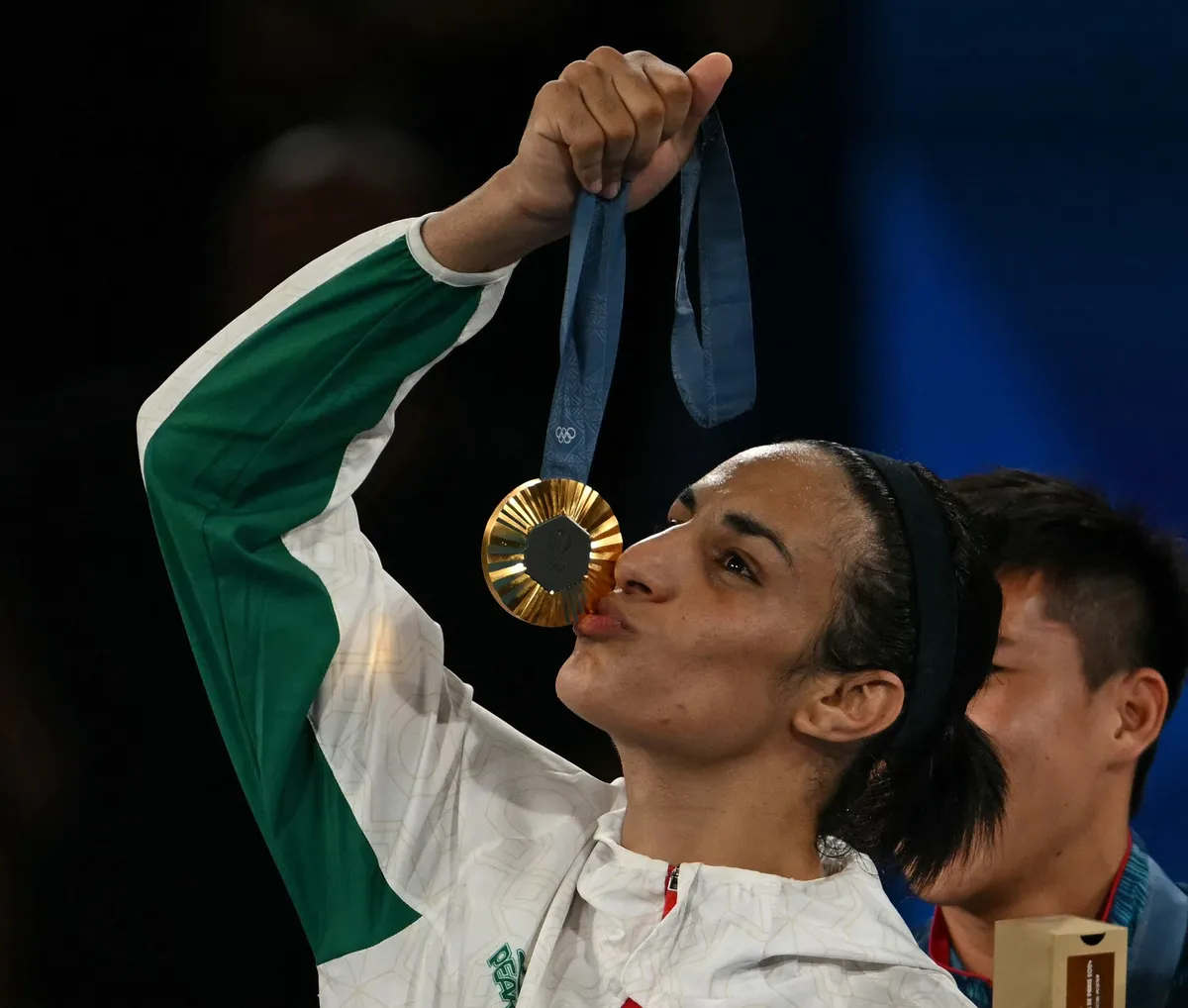
“Of course, I would accept doing anything I’m required to do to participate in competitions.” This declaration from Imane Khelif, who clinched gold in the women’s welterweight boxing category at the 2024 Paris Olympics, underscores the complexities surrounding the International Olympic Committee’s (IOC) new policy on transgender athletes. As the IOC prepares to enforce its controversial regulations starting with the 2028 Los Angeles Games, Khelif’s situation has become emblematic of the broader debate over gender and fairness in sports.
The IOC’s decision to ban transgender women and athletes with Differences in Sex Development (DSD) from competing in female categories has sparked significant backlash and support alike. The policy, which requires all athletes wishing to compete in women’s events to undergo a one-off SRY gene test to determine their biological sex, is rooted in the belief that allowing biological males to compete in the female category undermines the integrity of women’s sports. Kirsty Coventry, a prominent figure in the IOC, stated, “It would not be fair for biological males to compete in the female category.”
For Khelif, the stakes are high. Despite her success, she has faced scrutiny regarding her gender eligibility, particularly following her involvement in the International Boxing Association’s (IBA) controversial testing protocols in 2023. Khelif has consistently denied being transgender and has taken measures to lower her testosterone levels. Her willingness to comply with the IOC’s new requirements, as evidenced by her quote, reflects her commitment to competing fairly.
The IOC’s policy, which prioritizes biological metrics over other factors in determining eligibility for women’s events, has been described as a necessary step to protect fairness, safety, and integrity in women’s sports. Coventry emphasized that “the policy that we have announced is based on science and has been led by medical experts.” However, the implications of such a policy are profound, especially for athletes like Khelif, who may find themselves navigating a landscape fraught with uncertainty.
The financial implications of these new regulations are also noteworthy. The cost of the SRY gene test is approximately £185, which could pose a barrier for some athletes. Moreover, the IOC’s decision does not extend to grassroots or recreational sports programs, raising questions about the consistency of these policies across different levels of competition.
As the IOC’s new rules take effect, the conversation surrounding gender and sports continues to evolve. The organization has been grappling with the issue of transgender and DSD participation in female categories for over a decade, and the latest policy represents a significant shift in approach. Critics argue that such measures may alienate talented athletes and restrict opportunities for competition.
Looking ahead, Khelif’s legal representatives have raised concerns about the transparency of the IBA’s testing protocols during her disqualification process, highlighting the need for clear and fair procedures. As Khelif prepares for future competitions, the outcome of her situation may set important precedents for how gender is defined and regulated in sports.
In a world where “gender cannot trump biology,” as one commentator noted, the path forward for athletes like Khelif remains uncertain. The IOC’s new policy may aim to create a level playing field, but it also risks marginalizing individuals who have fought hard for their place in the sporting arena. As the debate continues, the implications for women’s sports and the athletes who compete in them will be closely watched.