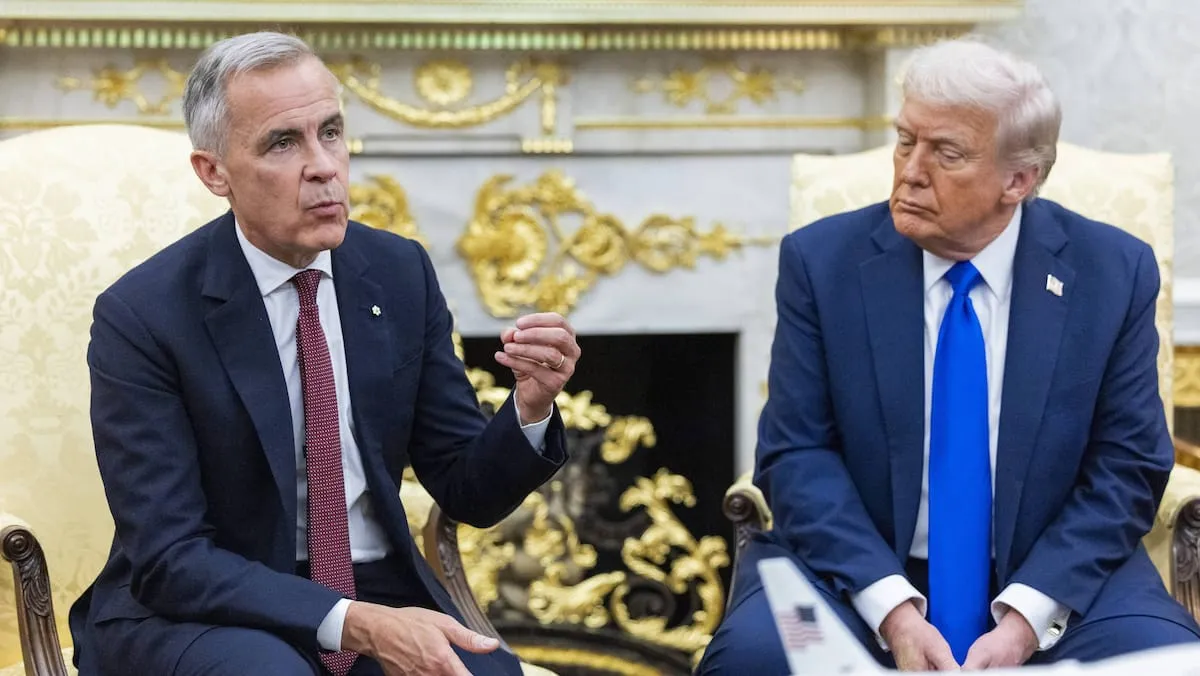
On April 20, 2026, Antoine Robitaille, a prominent columnist, expressed skepticism regarding Mark Carney’s recent communications about trade negotiations with the United States. Carney shared a video that many interpret as a precursor to bad news for Canadians. Robitaille suggests this is no coincidence—he believes Carney is preparing the public for disappointing developments.
Robitaille pointed out that Carney’s remarks about Canada’s close ties to the U.S. being a weakness signal an urgent need for change. “M. Carney nous prépare à de mauvaises nouvelles en reprenant des éléments de son discours depuis un an,” he stated, emphasizing the continuity of Carney’s messaging.
Yet, Robitaille casts doubt on the effectiveness of these communication strategies. He criticized the use of platforms like YouTube—once considered cutting-edge—arguing that they are now merely outdated tools for conveying serious messages. “Sur la forme, je me souviens que les journalistes étaient scandalisés dans les années 70 parce que Robert Bourassa envoyait des cassettes aux rédactions,” he recalled, drawing parallels to today’s media landscape.
In this context, he raised an eyebrow at Carney’s approach: “Maintenant, ce sont des cassettes YouTube.” The implication is clear—what once shocked has become routine, and perhaps less impactful.
Robitaille also took aim at Charles Milliard, referring to him as a “girouette” (weather vane), indicating his belief that Milliard’s positions shift depending on prevailing winds in political discourse. This metaphor underscores his frustration with perceived inconsistencies in leadership communication.
As discussions unfold around Canada’s relationship with the United States—a historically complex interplay of strengths and weaknesses—the stakes are undeniably high. The public’s response to these messages will be crucial in shaping future interactions between these two nations.
Initial reactions from various quarters have been mixed; some agree with Robitaille’s assessment while others defend Carney’s strategy as necessary pragmatism. The dialogue continues, but one thing remains certain: clarity and transparency are paramount in times of uncertainty.
Details remain unconfirmed about how exactly these communications will affect Canadian trade policies moving forward. As Canadians brace for what might be ahead, the effectiveness of their leaders’ messaging will likely come under further scrutiny.