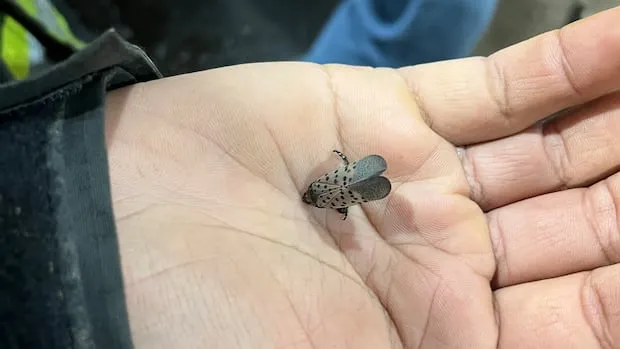
A recent sighting of the invasive spotted lanternfly in St. Catharines, Ontario, has heightened fears about its potential threat to local industries. The discovery raises significant concerns for agriculture, especially for the grape and wine sectors that are vital to the region.
The spotted lanternfly, scientifically known as Lycorma delicatula, was first detected in the United States in 2014. Since then, it has spread to various regions, and reports have surfaced in Hamilton, Windsor-Essex, and Niagara areas of Ontario. With no established populations in Canada until now, this sighting could signify a troubling trend.
This insect can feed on over 100 species of trees and plants—its preferences include economically important crops like grapes. Aidan Dagg, an entomologist, expressed concern stating that if left uncontrolled, the insect can cause major economic damage. The Canadian Food Inspection Agency has regulated this pest since 2018 to prevent its establishment.
In a recent shipment, about 30 dead spotted lanternflies were found, indicating how quickly they could infiltrate and threaten local ecosystems. Adult spotted lanternflies grow to approximately 3 centimetres long and 1.2 centimetres wide, making them relatively easy to identify.
The economic ramifications are profound. The grape industry alone could face devastating losses if the insect proliferates unchecked. Amanda Roe noted that they were “the best eggs that we’ve had,” referring to their efforts at monitoring pest populations. This highlights the importance of vigilance among farmers and agricultural specialists.
The situation remains fluid—officials have not confirmed any further sightings or measures being implemented beyond existing regulations. As communities brace for potential impacts, ongoing monitoring will be crucial.
As we look ahead, experts continue to emphasize the need for proactive measures against this invasive species. The health of local agriculture—and by extension, the economy—depends on our response to this emerging threat.