Post-Match Altercations
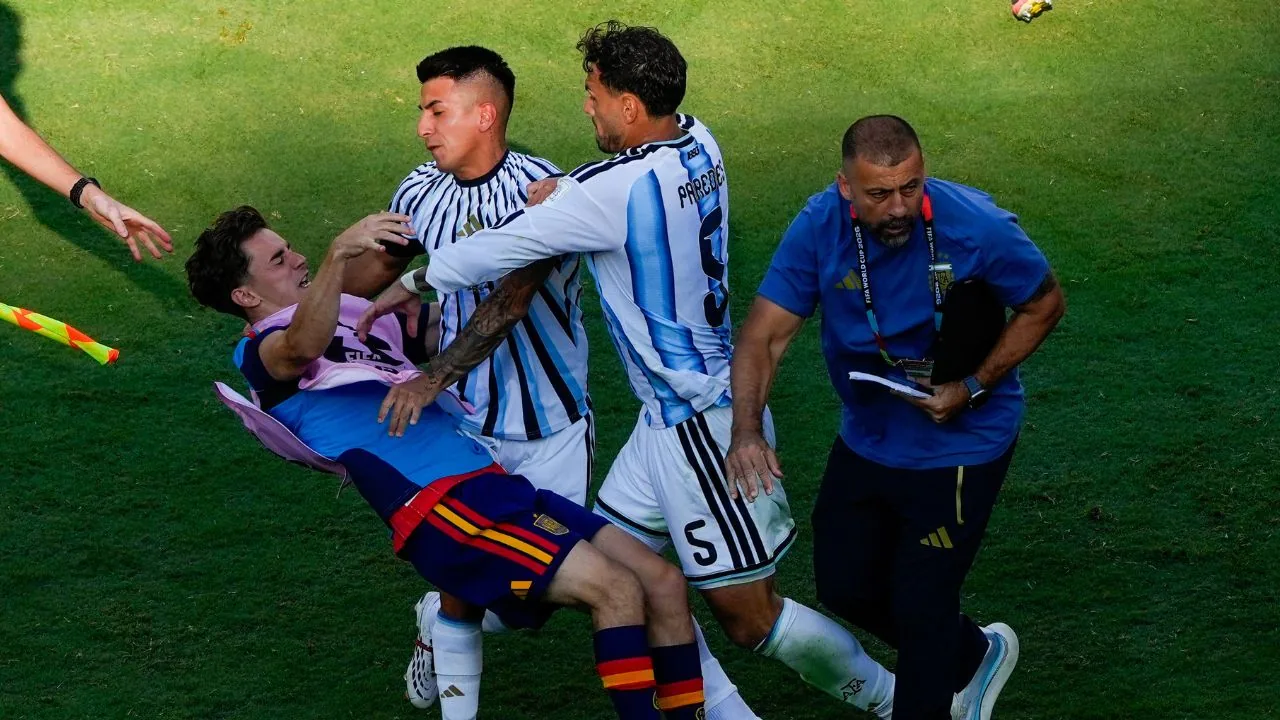
Argentina is expected to face a FIFA investigation following incidents that occurred after their final match against Spain. The altercations took place after the final whistle, which saw Spain secure a 1-0 victory. Tensions, which had been high throughout the match, escalated into a scuffle involving players and staff from both teams.
During the incident, Argentina‘s Leandro Paredes reportedly grabbed Spain‘s Eric Garcia by the throat. When unused substitute Gavi attempted to intervene, Paredes pushed him to the ground, placing a hand in his face. Additionally, Argentina assistant coach Roberto Ayala appeared to hold Garcia around the throat and allegedly struck Spain midfielder Dani Olmo. Argentina manager Lionel Scaloni intervened to de-escalate the situation.
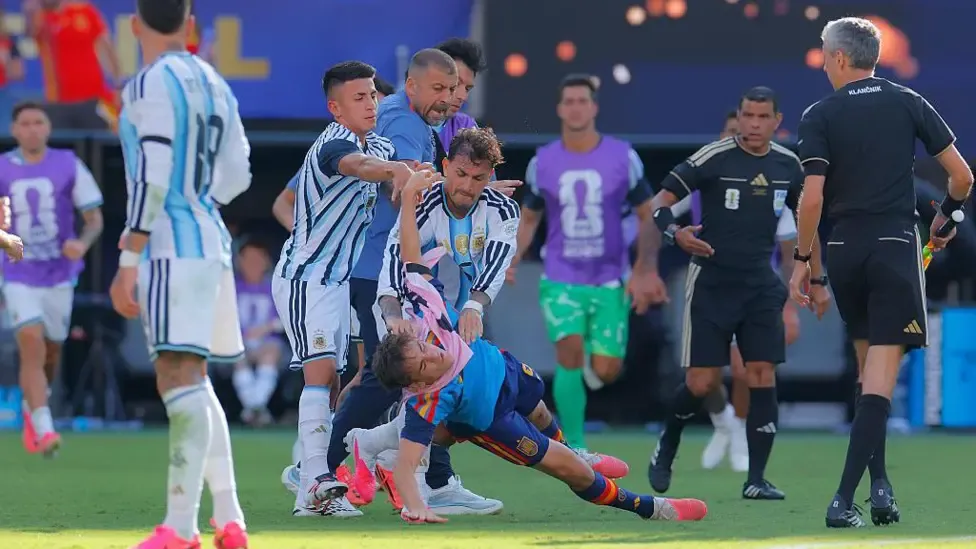
Another incident involved Argentina defender Nahuel Molina, who appeared to punch Rodri, a Spain midfielder, on the arm or stomach as Rodri ran past him. This confrontation reportedly ignited further trouble. Rodri had been substituted earlier in extra time.
Potential Disciplinary Actions
FIFA‘s disciplinary committee will review official match reports, documentation, and video footage to determine if sanctions are warranted. Any player or coach involved in the fracas at the MetLife Stadium could face suspensions, and the Argentine Football Association (AFA) may also incur fines. While an initial report from FIFA indicated Paredes had been sent off by referee Slavko Vincic, this red card was later removed from the record.
The disciplinary committee has several options, including issuing three-match bans for violent conduct. However, it is more likely to use its disciplinary code under Article 13, which covers offensive behaviour and principles of fair play. Actions could be judged as “violating the basic rules of decent conduct” and “behaving in a way that brings the sport of football and/or Fifa into disrepute.”
FIFA‘s disciplinary committee considers both aggravating and mitigating circumstances and has the authority to enforce global bans. Past precedents include a three-year ban for then-Spanish football federation president Luis Rubiales in 2023 and a four-month ban for Uruguay striker Luis Suarez in 2014 for biting an opponent.
Previous Incidents and Ongoing Investigations
This is not the first time the AFA has faced scrutiny regarding player behaviour. Following the 2022 World Cup final, Argentina faced charges related to “offensive behaviour and violations of the principles of fair play” and “misconduct of players and officials.” Despite winning on penalties, the team was criticised for its celebrations, including goalkeeper Emiliano Martinez‘s gesture with his trophy and mocking of an opposing player. The AFA was fined £18,300 at that time, though no individual player action was taken.
In 2024, Martinez received a two-game ban for ‘offensive behaviour’ during World Cup qualifiers. He repeated a celebration using a replica Copa America trophy after a 3-0 win and later hit a camera with his gloves following a 2-1 defeat. The AFA is also facing a probable fine at this World Cup for a banner displayed after a game against England, which read “Las Malvinas son Argentinas.” A similar incident in 2014 resulted in a £20,000 fine for the AFA.
Players such as Tottenham‘s Cristian Romero, former Spurs player Giovani Lo Celso, and Manchester United‘s Lisandro Martínez could potentially face bans for holding the banner. In a similar vein, Spain captain Alvaro Morata and teammate Rodri were banned for one game by Uefa after chanting “Gibraltar is Spanish” during their Euro 2024 final celebrations.
A decision on any potential charges is not expected immediately. Following the 2022 World Cup final, FIFA officially charged Argentina on January 13, but a resolution took another month to be reached.
Read Also
Source: bbc.com