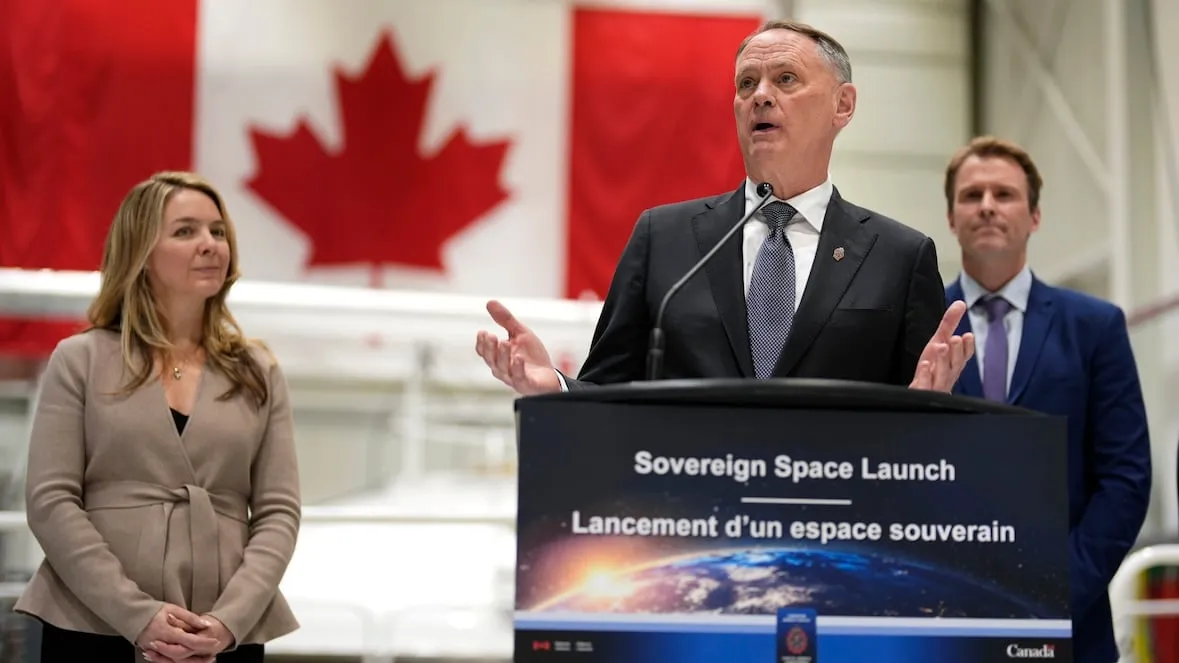
Canada is making a significant leap in its space exploration ambitions with a $200 million investment in its first launch pad located in Nova Scotia. This ambitious project, spearheaded by Maritime Launch Services, is expected to be completed by 2028, positioning Canada as a key player in the global space industry.
David McGuinty, a prominent figure in the Canadian government, highlighted the importance of this investment, stating, “About 20 per cent of the Canadian economy relies on satellites — our banking systems, our cellphone systems, our transactions.” This underscores the critical role that space technology plays in the everyday lives of Canadians and the economy at large.
The launch pad will facilitate the deployment of various satellites, including the recently launched Coronagraph and Occulter satellites, which successfully took to the skies in December 2024. These satellites are designed to work in tandem, maintaining a distance of approximately 500 feet (150 meters) apart in space, a feat that requires incredibly precise formation flying with an accuracy of just 1 millimeter.
On March 19, 2026, the Coronagraph reestablished contact after a month of silence, much to the relief of its operators. Damien Galano, a key player in the project, expressed his excitement, saying, “Hearing back from the Coronagraph is amazing news, and a great relief!” This successful communication marks a significant milestone in the mission’s progress.
Historically, Canada has relied on foreign entities for satellite launches, often writing substantial checks to companies like SpaceX for services rendered in Florida or California. Stephen Matier, a representative from the Canadian space sector, remarked, “For years, we’ve been taking our satellites from MDA Space or Kepler or those here in Canada and writing big cheques to SpaceX to launch them from Florida or from California.” This new launch pad aims to change that dynamic, allowing Canada to maintain greater control over its space assets.
In addition to the launch pad, the Canadian government has also awarded an $8.33 million Phase 1 grant to NordSpace, a company dedicated to developing scalable end-to-end space launch capabilities for Canada. Rahul Goel, a spokesperson for NordSpace, stated, “At NordSpace, we have been working for years to develop scalable end-to-end space launch capabilities for Canada, and today our nation has sent an unequivocal signal that Canada too will become a spacefaring nation capable of assured access to space.” This sentiment reflects a growing confidence in Canada’s ability to establish itself as a significant player in the global space arena.
The numbers
The Tundra rocket, which will be utilized for launches from the new pad, boasts a capacity of over 500 kg (1,100 lbs) to Low Earth Orbit (LEO). This capability is crucial for deploying various satellite missions that support both commercial and governmental objectives.
As Canada embarks on this new chapter in space exploration, observers are keenly watching how these developments will unfold. The completion of the launch pad by 2028 will be a pivotal moment, not just for Canada, but for the broader landscape of international space exploration. Details remain unconfirmed regarding the specific timeline for future launches and the potential partnerships that may arise as Canada solidifies its position in this competitive field.