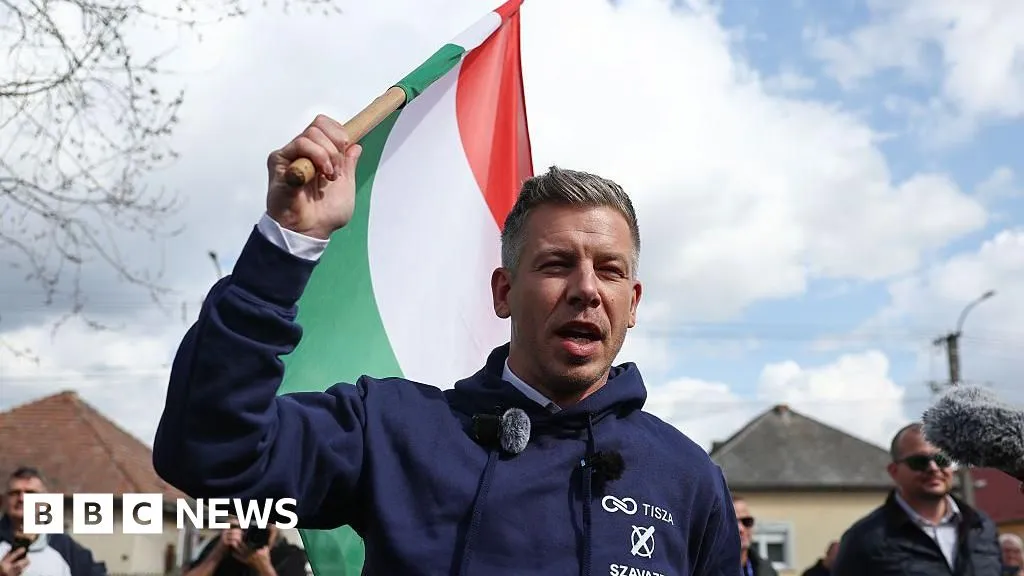
Péter Magyar is rapidly becoming a pivotal figure in Hungary’s political landscape, having built the largest opposition party in the country after 16 years of Fidesz rule. His rise is not just a personal triumph; it represents a significant shift in the political dynamics of Hungary, where the ruling party, led by Viktor Orbán, has maintained a firm grip on power for over a decade and a half.
The journey of Magyar, who was once a member of Fidesz and had close ties with its key figures, including his ex-wife Judit Varga, the current Minister of Justice, is marked by a series of dramatic personal and political events. Their marriage ended in March 2023, partly due to political disagreements, which underscores the deepening rift within Hungary’s political elite. This separation was further complicated by Magyar’s decision to secretly record a conversation with Varga regarding government interference in a corruption case, a move that has drawn significant attention and criticism.
Magyar’s party, known as Tisza or the Party of Respect and Freedom, was officially registered in 2020 and has quickly gained traction among the electorate. In the European Parliament elections held in June 2024, Tisza secured an impressive 29.6 percent of the vote, translating to seven mandates, a clear indication of the party’s growing influence. This electoral success is particularly striking when juxtaposed with Fidesz’s 45 percent share, highlighting a potential shift in voter sentiment.
His political platform promises a restoration of democratic rule and the implementation of anti-corruption measures, including plans to join the European Public Prosecutor’s Office. Magyar has also proposed limiting the prime minister’s term to eight years, a move that would retroactively affect Orbán, signaling a bold challenge to the status quo. As he stated, “There will be zero tolerance for corruption, according to Magyar,” emphasizing his commitment to reform.
Magyar’s grassroots approach has been notable; he has walked 250 kilometers from Budapest to Oradea and visited over 500 locations during his campaign, demonstrating a dedication to connecting with voters. His rally on March 15 attracted 50,000 attendees, and the National March on April 6 drew an impressive 100,000 participants, showcasing the mobilization of public support behind his vision for Hungary.
However, Magyar’s ascent has not been without controversy. He has faced accusations of attempting to extinguish all opposition parties except his own, raising questions about the future of political plurality in Hungary. This duality of being a reformist while also consolidating power poses a complex challenge for Magyar as he navigates the political landscape.
As Hungary approaches a critical juncture, the uncertainties surrounding Magyar’s ability to sustain this momentum and effectively challenge the entrenched Fidesz regime remain. The political climate is charged, and while Magyar’s supporters are optimistic about the potential for change, the realities of political maneuvering and public sentiment will ultimately dictate the outcome. Details remain unconfirmed about how these dynamics will evolve in the coming months.