Key moments
Palm Sunday, observed on March 29, 2026, marks a significant event in the Christian calendar as it commemorates Jesus Christ’s triumphal entry into Jerusalem. This day is not only a celebration but also a poignant reminder of the events that would unfold in the week leading to Easter Sunday, which falls on April 5, 2026. The observance of Palm Sunday sets the tone for Holy Week, a time of reflection and preparation for the sacrifice and victory that Easter represents.
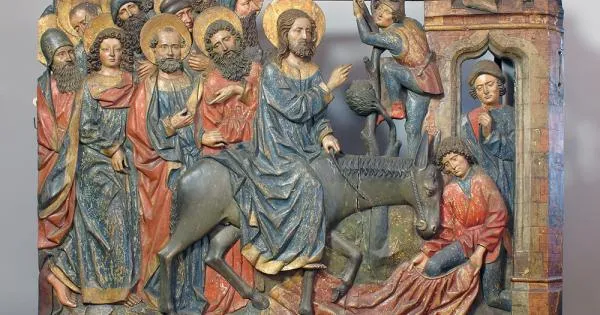
On this day, congregations around the world participate in a variety of traditions, including the blessing and procession of palm branches. These palms, which symbolize victory and peace, are often laid down by the faithful as a gesture of honor towards Jesus, who was greeted by crowds chanting “Hosanna.” The story of this event is detailed in the Gospel of Matthew, chapter 21, where it is described how the people welcomed Jesus by laying down their cloaks and palm branches before him, creating a path for his entry.
As Palm Sunday is also known as Passion Sunday, it serves as a prelude to the more somber reflections of the Passion of Christ, which will be explored in the days that follow. The liturgy of the day typically includes a procession and the chanting of “Hosanna,” creating an atmosphere of joy and reverence. However, this joy is juxtaposed with the understanding of the suffering that lies ahead, encapsulating the duality of celebration and mourning that characterizes Holy Week.
In many Christian traditions, leftover palms from Palm Sunday are treated with great respect. These palms are considered blessed sacramentals, sacred objects that should not be discarded carelessly. Instead, they are often kept in homes or burned to create ashes for the following year’s Ash Wednesday, further linking the observance of Palm Sunday with the broader liturgical calendar.
As believers engage in worship, Scripture reading, and joyful remembrance on Palm Sunday, they are invited to reflect on the deeper meanings of the day. One theologian noted, “Palm Sunday reveals a painful mystery: God does not save us from a distance but rather from the inside of the human reality of brokenness.” This perspective encourages the faithful to consider their own lives and the ways in which they welcome Jesus into their hearts, acknowledging both their devotion and their moments of denial.
The observance of Palm Sunday is not merely a ritual; it is a call to action for many Christians. As they hold palms in their hands, they are reminded that they are not only welcoming Jesus into Jerusalem but also into the “unstable territory” of their own hearts. This duality of faith—embracing both joy and struggle—invites believers to prepare themselves for the profound events of Holy Week.
In the lead-up to Palm Sunday 2026, churches and communities are already beginning to plan their observances, with many expressing a renewed sense of hope and reflection in light of recent global challenges. As the date approaches, the anticipation builds, and the faithful prepare to honor Christ’s kingship while also contemplating the sacrifice that is to come. The significance of Palm Sunday continues to resonate, serving as a reminder of the complexities of faith and the journey toward redemption.