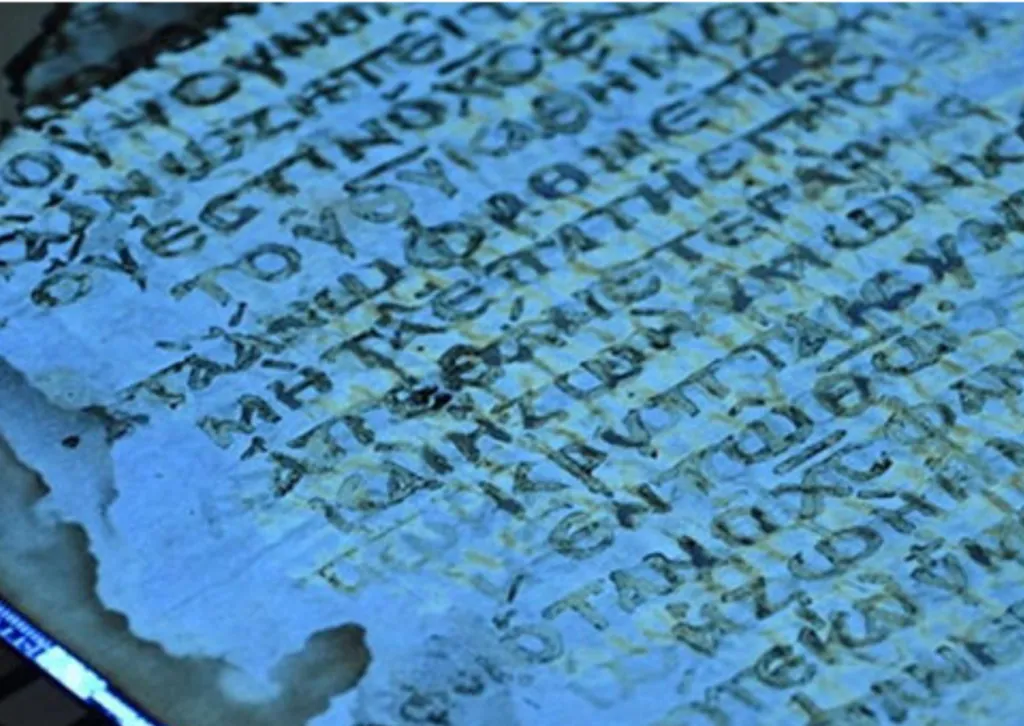
A team led by the University of Glasgow has reconstructed 42 pages from an ancient manuscript containing letters from the Apostle Paul. This remarkable achievement sheds light on early Christian reading practices.
The manuscript, known as Codex H, dates back to the VI century and was dismantled in the XIII century at the Monastery of Great Lavra on Mount Athos. The fragments that survived were later scattered across various European libraries.
Researchers utilized multispectral imaging to reveal ink traces invisible to the naked eye—an innovative approach that has transformed our understanding of these texts. Radiocarbon analysis confirmed the manuscript’s age, aligning it with other historical documents.
Among the recovered pages are passages familiar to readers of Saint Paul’s letters, as well as ancient reading structures that provide context for their usage. Notably, Codex H includes the ‘euthalian apparatus,’ a collection of prefaces and explanatory notes that further enriches its content.
This discovery is deemed invaluable by scholars, offering not just textual insights but also illuminating how these scriptures were transmitted and appropriated by early Christian communities.
For those interested in exploring this significant find, a digital edition of the manuscript is now available online, making it accessible to a wider audience. This could foster greater engagement with biblical texts and their historical contexts.