The wider picture
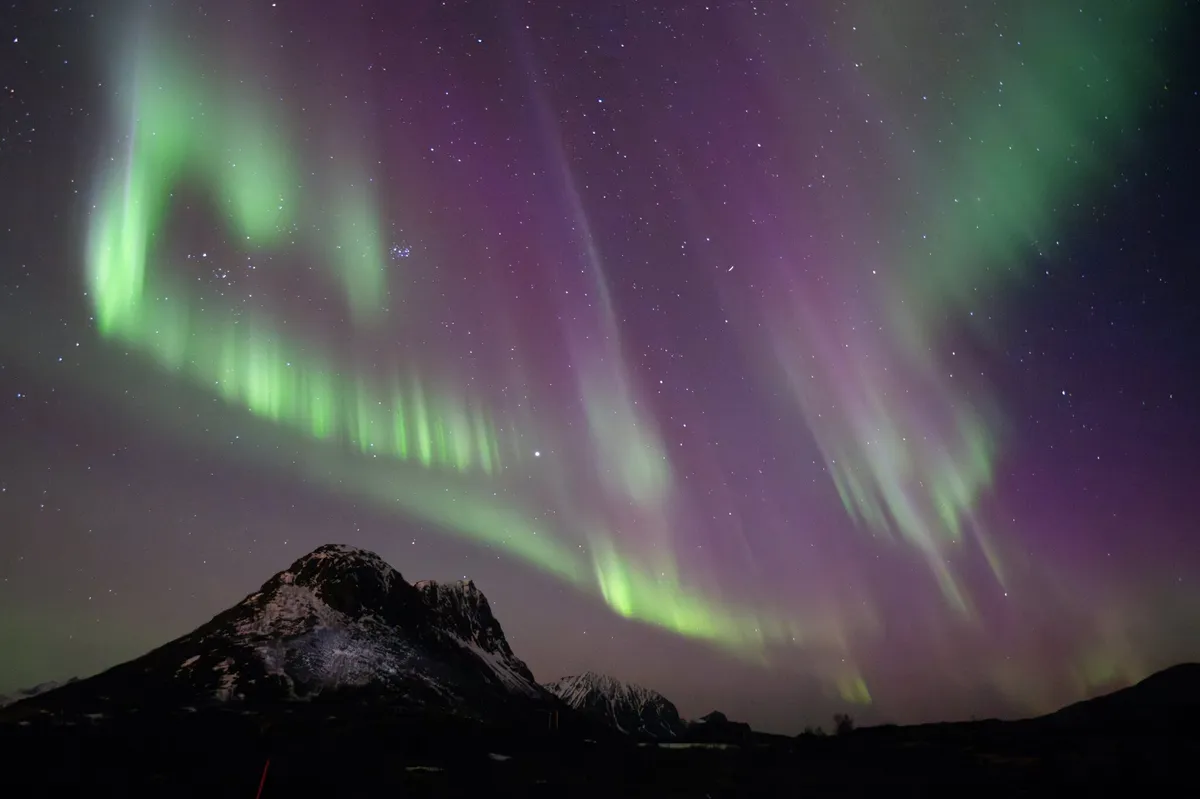
March is traditionally a vibrant month for the northern lights, also known as the aurora borealis, as geomagnetic storms become more frequent. This year, the excitement is palpable as forecasts indicate that on March 23, 2026, the auroras will be visible in mid-latitude locations, including major cities such as New York, London, and northern France. This phenomenon is expected to result from a G3 geomagnetic storm, which is a significant event on the space weather scale.
The G3 storm is attributed to recent coronal mass ejections (CMEs) and a fast solar wind stream emanating from a coronal hole on the sun. As a result, observers can anticipate Kp values ranging from 3 to 6, indicating that the auroras may extend further south than usual. This is particularly exciting for those in urban areas who typically have limited opportunities to witness such celestial displays.
Initial reactions from astronomers and enthusiasts have been enthusiastic. Janna Levin, a prominent astrophysicist, remarked, “The aurora reminds us of this otherwise invisible and protective shield provided by the Earth’s magnetic field.” This sentiment captures the awe and wonder that these natural light displays evoke, reminding us of the dynamic interactions between the sun and our planet.
In addition to the anticipated G3 storm, forecasters are also monitoring the potential arrival of another CME on March 24, which could further enhance geomagnetic activity, possibly pushing storm levels to G2 or higher. This could mean that the best viewing conditions may extend beyond March 23, providing an extended window for skywatchers to enjoy the spectacle.
Historically, March has been known as an active month for aurora displays, particularly around the spring equinox, when solar activity tends to peak. The weeks surrounding this equinox are often referred to as ‘aurora season,’ making this forecast particularly timely. Observers are advised that the optimal time to catch a glimpse of the northern lights is typically between 10 p.m. and 4 a.m. local time, when the skies are darkest.
However, it is important to note that while the forecasts are promising, solar activity is expected to drop to very low levels after March 23, 2026. This means that the window for witnessing these stunning displays may be limited, adding a sense of urgency for those hoping to catch a glimpse of the auroras.
As the date approaches, excitement continues to build. Social media platforms are already buzzing with anticipation, with users sharing their experiences and expectations. One user, Jakes, tweeted, “Wow 😍 the northern lights just exploded over downtown Reykjavik, Iceland,” highlighting the widespread enthusiasm for this natural phenomenon. The Royal Astronomical Society of Canada also chimed in, stating, “Saturday-Sunday #aurora was a banger! #timelapse,” further amplifying the excitement surrounding the upcoming events.
In summary, the northern lights aurora borealis forecast for March 23, 2026, promises to deliver a spectacular show across mid-latitudes, driven by significant geomagnetic activity. As observers prepare for this celestial event, the anticipation is palpable, with many eager to witness the beauty of the auroras lighting up the night sky.