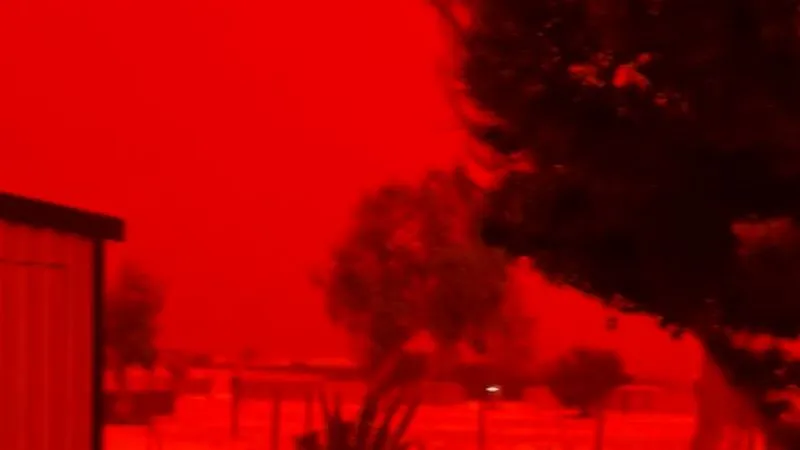
On March 29, 2026, residents of Western Australia were greeted with an unsettling sight as Tropical Cyclone Narelle approached the Shark Bay area. The sky transformed into a vivid canvas of fiery orange and red hues, creating an atmosphere that many described as apocalyptic.
This striking phenomenon was attributed to strong winds that lifted iron-rich red soil and dust into the atmosphere. As the cyclone drew near, the combination of Mie scattering intensified the red and orange tones, resulting in a blood-red appearance across the sky.
Videos circulating on social media captured the eerie ambiance, with one Facebook post describing the scene as “incredibly eerie outside, and everything is covered in dust. Not a lot of wind yet.” Such visuals are not merely aesthetic; they are a direct result of the environmental conditions preceding a significant weather event.
Sunlight, composed of all colors of the rainbow, interacts with gas molecules and dust in the air. During dawn or dusk, when the sunlight travels through a thicker layer of the atmosphere, shorter blue wavelengths are filtered out, leaving longer red wavelengths to dominate the view. This effect is further amplified by high levels of dust, smoke, or pollution, which can make red hues appear even more vivid.
The phrase “red sky in the morning” is often used to indicate the sun reflecting off incoming clouds from the west, a phenomenon that has been observed historically as a precursor to severe weather. In this instance, the red sky served as a forewarning of the impending cyclone.
As Tropical Cyclone Narelle made landfall four times across Australia, the dramatic visuals of the red sky became a talking point among meteorologists and residents alike. The cyclone’s impact on the region is still being assessed, but the striking imagery of the sky serves as a reminder of nature’s power and unpredictability.
Initial reactions from the public have been mixed, with some expressing awe at the natural spectacle while others voiced concerns about the storm’s potential impact. Official statements regarding the cyclone’s trajectory and safety measures are expected to follow as authorities monitor the situation closely.
Details remain unconfirmed regarding the full extent of damage caused by the cyclone, but the striking red sky will likely be remembered as a vivid prelude to a significant weather event in Western Australia.