Reaction from the field
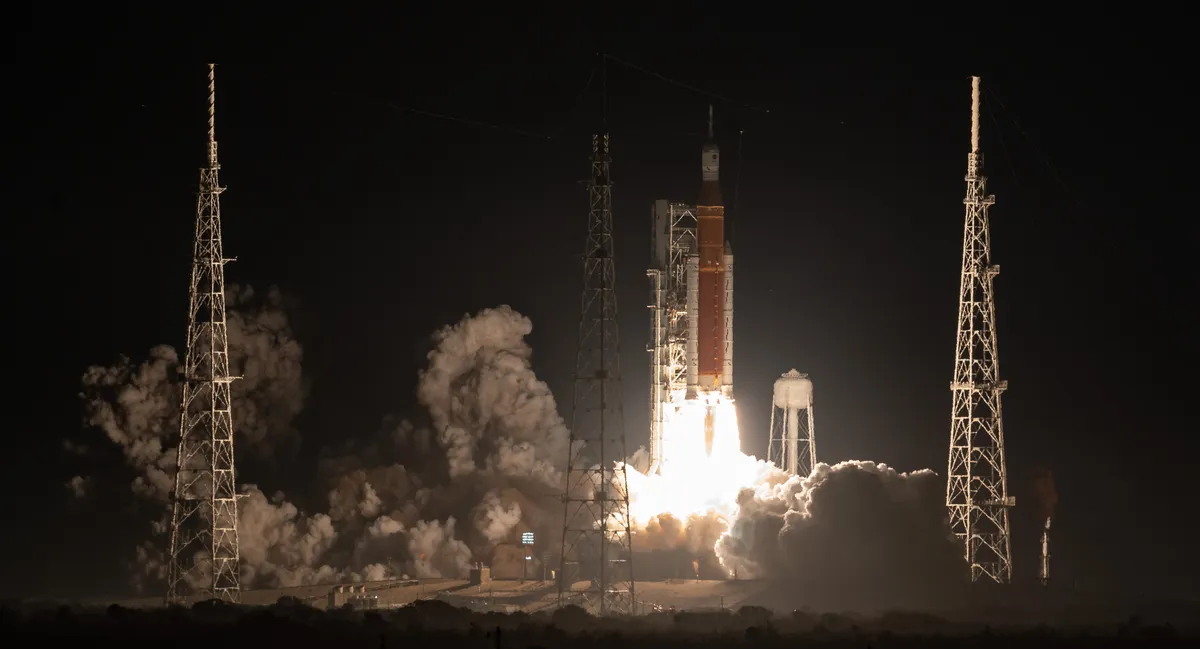
The upcoming NASA Artemis II mission is poised to redefine humanity’s relationship with the Moon, marking a significant leap in space exploration. Scheduled for launch on April 1, 2026, at 6:24 PM ET from Cape Canaveral, this mission will send four astronauts on a 10-day journey orbiting the Moon, a feat that has not been achieved since the Apollo program. This mission aims not just to revisit the Moon but to establish a sustainable human presence there, a goal articulated by Jared Isaacman, who stated, “This time the goal is not flags and footprints. This time the goal is to stay.”
The Artemis II mission will utilize NASA’s Space Launch System (SLS), a heavy-lift rocket designed to propel the Orion spacecraft into orbit. This powerful rocket is a critical component of NASA’s long-term strategy for human exploration beyond low Earth orbit. The Orion spacecraft will travel over 400,000 kilometers from Earth, making a trip around the Moon’s far side, a region that has never been seen by human eyes.
As the mission unfolds, the Orion spacecraft will re-enter Earth’s atmosphere at speeds reaching 32,187 km/h, enduring temperatures of up to 2,200°C. This challenging re-entry process is a testament to the advanced engineering and technology that has gone into the mission. Scott Pace, a key figure in NASA’s Artemis program, remarked, “We’re about to send humans in orbit around the Moon again,” highlighting the excitement and significance of this upcoming journey.
The Artemis II mission is not merely a standalone event; it is part of a broader vision for lunar exploration. NASA has plans to conduct at least one Moon landing per year starting in 2028, with the ambitious goal of constructing a Moon base by 2030. This long-term strategy aims to facilitate sustained human presence and exploration on the lunar surface, paving the way for future missions to Mars and beyond.
In collaboration with international partners, including the Canadian Space Agency, NASA is fostering a global approach to space exploration. The inclusion of astronauts from different countries underscores the mission’s collaborative spirit and the shared human endeavor of exploring the cosmos.
As the launch date approaches, the excitement surrounding Artemis II continues to build. However, details remain unconfirmed regarding the final crew selection and specific mission parameters. The anticipation is palpable, with many in the space community eager to witness the next chapter in lunar exploration.
In summary, NASA’s Artemis II mission represents a pivotal moment in space exploration, setting the stage for a new era of human presence on the Moon. As we look forward to April 2026, the implications of this mission extend far beyond lunar orbit, potentially reshaping our understanding of space and our place within it.