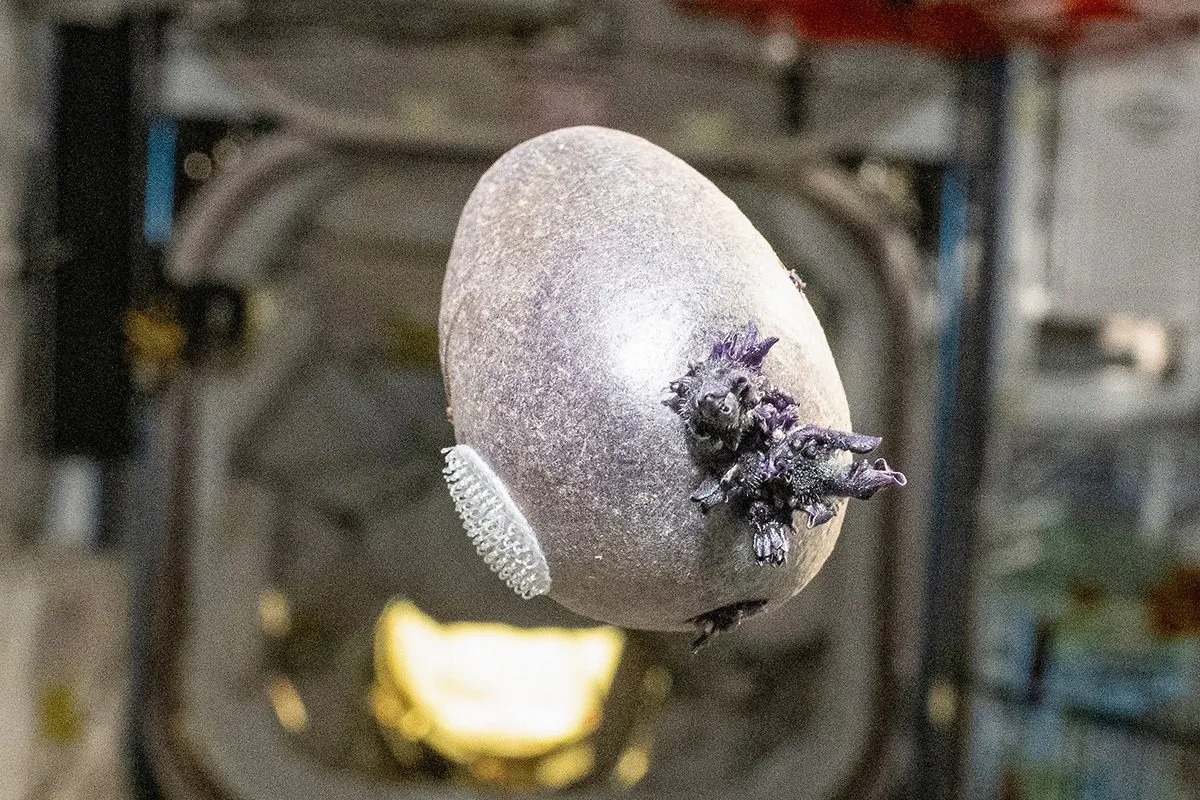
In a fascinating development from the International Space Station (ISS), astronaut Don Pettit recently shared a photo of a purple potato, affectionately named Spudnik-1. This image, posted on March 20, 2026, has not only captured the imagination of space enthusiasts but also sparked viral theories about alien life on social media.
The potato was cultivated during Expedition 72, which took place from September 2024 to April 2025. This mission was part of NASA’s ongoing efforts to explore sustainable food production systems for long-duration space missions, particularly as plans for Mars and permanent Moon bases advance.
Pettit, who has completed four space missions totaling 590 days in orbit, described his potato-growing endeavor as an off-duty activity. He noted, “I flew potatoes on Expedition 72 for my space garden, an activity I did in my off-duty time.” This hands-on approach to space agriculture reflects a growing interest in the feasibility of growing food in microgravity.
The purple potato’s unique appearance, with tentacle-like roots, is a result of the microgravity environment aboard the ISS. Pettit cleverly used Velcro to anchor the potato in his improvised grow-light terrarium, demonstrating the innovative spirit of astronauts in adapting to their surroundings.
Rich in anthocyanins, a natural pigment, this potato is not just a curiosity but also a testament to the nutritional potential of space-grown crops. Pettit remarked, “Potatoes are one of the most efficient plants based on edible nutrition to total plant mass, including roots,” underscoring their viability as a food source for future missions.
Inspired by the book and movie ‘The Martian’, Pettit’s efforts mirror the narrative of growing food in challenging environments. This aligns with NASA’s broader goals of ensuring astronauts have access to nutritious food during extended missions.
As the conversation around space agriculture continues to evolve, Pettit’s potato experiment serves as a pivotal example of how astronauts are not only exploring the cosmos but also cultivating the future of food in space.
While reactions to the photo have ranged from awe to humorous speculation about extraterrestrial life, the scientific implications of growing food in space remain a serious topic of discussion among researchers and space agencies.
Overall, the story of Spudnik-1 is more than just a quirky social media post; it represents a significant step forward in understanding how we might sustain human life beyond Earth.