How it unfolded
As NASA prepares for its Artemis II launch, the excitement surrounding this mission is palpable. Scheduled for April 1, 2026, at 6:24 p.m. EDT, this event marks the first crewed mission under the Artemis program, a significant step in humanity’s return to the Moon after decades of absence. The Kennedy Space Center in Florida will serve as the launch site, echoing the historic launches of the Apollo missions that once captivated the world.
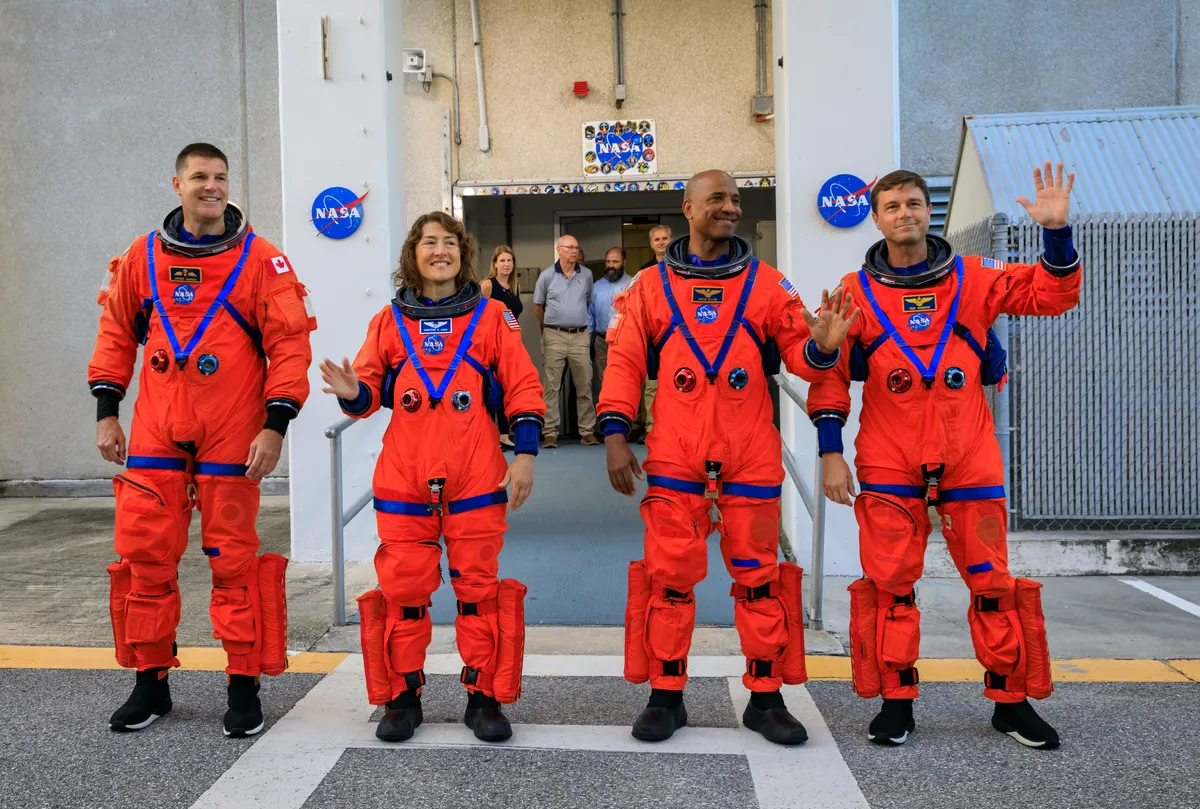
The Artemis II mission will embark on a 10-day journey around the Moon, carrying a crew of four astronauts: Jeremy Hansen from the Canadian Space Agency, and NASA astronauts Christina Koch, Victor Glover, and Reid Wiseman. This diverse team is set to not only explore lunar orbit but also to test the Orion spacecraft’s life support systems with humans aboard for the first time. Such testing is crucial for future missions, particularly those aimed at establishing a sustainable human presence on the Moon and beyond.
In a notable achievement, the crew is expected to surpass the record for the farthest distance from Earth achieved by humans, previously set by Apollo 13 at 248,655 miles. This milestone underscores the mission’s significance in pushing the boundaries of human spaceflight and exploration. As the countdown to launch begins, NASA is committed to providing real-time updates and coverage of the mission events, ensuring that the public can engage with this historic endeavor.
NASA’s Artemis II launch will utilize the Space Launch System (SLS) rocket, a powerful vehicle designed to carry astronauts and cargo to deep space. The SLS represents a new era of space exploration technology, developed to support missions that extend beyond low Earth orbit. The mission’s success will not only validate the SLS’s capabilities but also lay the groundwork for future Artemis missions aimed at returning humans to the lunar surface.
Throughout the mission, the crew will participate in live conversations known as downlinks, allowing them to share their experiences with audiences back on Earth. NASA will also hold a post-launch news conference approximately two-and-a-half hours after liftoff, providing insights into the mission’s progress and initial findings. This level of transparency and engagement is part of NASA’s broader strategy to inspire public interest in space exploration.
As the launch date approaches, anticipation builds not just for the mission itself but for the potential it holds for future exploration. NASA’s commitment to continuous updates through its Artemis blog and YouTube channel ensures that the public remains informed and engaged. The mission’s success could pave the way for a new era of lunar exploration, with implications for scientific research, international collaboration, and technological innovation.
The crew’s return to Earth is expected on April 10, 2026, with a splashdown in the Pacific Ocean. This return will mark the conclusion of a mission that is not just about reaching the Moon but about preparing for the future of space exploration. As NASA aims to establish a sustainable human presence on the Moon, the Artemis II mission stands as a testament to human ingenuity and the enduring spirit of exploration.
In summary, the Artemis II launch represents a pivotal moment in space exploration, rekindling humanity’s relationship with the Moon and setting the stage for future endeavors. As we look forward to this historic event, the implications for science, technology, and international cooperation in space are profound.