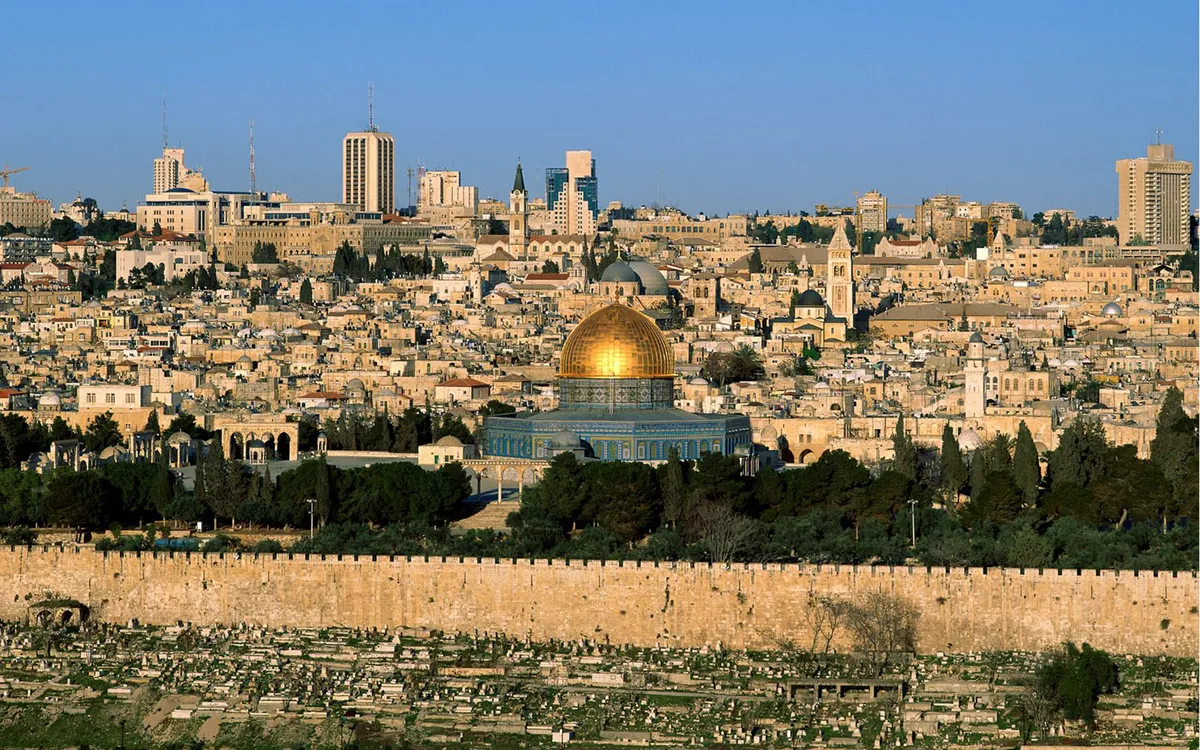
Israeli security forces attacked and arrested Palestinian Christians attempting to reach the Church of the Holy Sepulchre on Holy Saturday, a significant day in the Christian calendar. This incident underscores the escalating tensions in Jerusalem, particularly as the city is a focal point for religious observances.
On Orthodox Easter, Israeli National Security Minister Itamar Ben-Gvir and his supporters stormed into the Al-Aqsa Mosque compound, further inflaming the situation. The Al-Aqsa Mosque and the Church of the Holy Sepulchre had previously been closed for 40 days during the US-Israeli war on Iran, marking a troubling precedent for religious freedoms in the region.
The Status Quo agreement, which has governed religious life in Jerusalem since the 16th century, is increasingly under strain. Recognized in the Treaty of Paris (1856) and the Berlin Treaty (1878), this agreement is seen as a crucial safeguard against complete Israeli control over religious sites.
Israeli authorities recently forced two Palestinians in Jabal al-Mukabber to self-demolish their home, a practice that has become alarmingly common as families face pressure to demolish their homes under the pretext of lacking building permits. Those who resist such actions often confront the threat of Israeli bulldozers and steep fines.
As Israeli policies continue to restrict Palestinian urban growth while expanding Israeli settlements, the forced self-demolition adds to the growing number of displaced Palestinian families. The situation is exacerbated by the detention of Sheikh Mohammad al-Abassi, the imam of Al-Aqsa Mosque, who has been barred from entering the compound for a week.
Observers note that prayer has increasingly become an act of resistance for Palestinians, as they navigate the complexities of their religious and national identities amid ongoing tensions. “Israel shows little regard for its ‘partners’ when they fail to exert pressure,” remarked an observer, highlighting the precarious balance of power in the region.
As the 27th of the Hebrew month of Nissan approaches, marking Holocaust Remembrance Day, the historical weight of the events cannot be overlooked. IDF Chief of Staff Lt.-Gen. Eyal Zamir emphasized the importance of remembering the acts of bravery and resistance in the face of attempts to erase Jewish identity, adding another layer of complexity to the ongoing conflict.
Details remain unconfirmed regarding the long-term implications of these recent events, but the situation in Jerusalem continues to evolve, with both local and international observers closely monitoring developments.