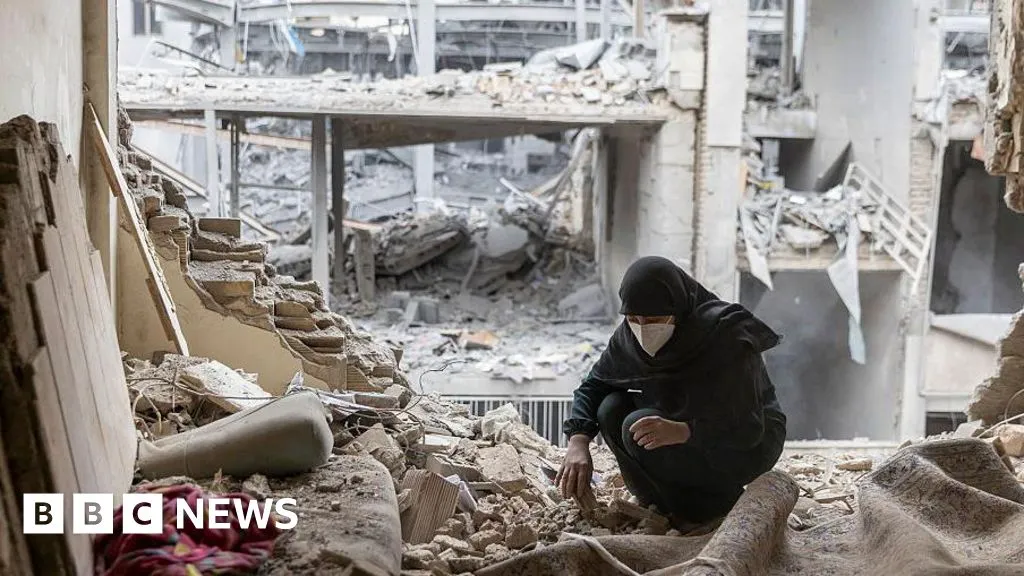
The Israel-Iran war has reached a critical juncture as Israel launched a wave of strikes targeting Iranian infrastructure in Isfahan, while Iran retaliated with missile attacks on central Israel, resulting in destruction and injuries. This escalation marks a significant increase in hostilities between the two nations.
In a notable development, Israel’s defense minister announced the killing of Alireza Tangsiri, the head of the Iranian Revolutionary Guard’s navy, further inflaming tensions. Meanwhile, the Pentagon is preparing to deploy up to 3,000 paratroopers from the Army’s 82nd Airborne Division to the Middle East, signaling a potential shift in U.S. military involvement in the conflict.
As the situation unfolds, the U.S. has presented a 15-point action list for a peace deal to Iran through Pakistan, which could serve as a diplomatic avenue amid the chaos. However, Iran has countered with five conditions for ending the war, including war reparations and rights over the strategically vital Strait of Hormuz.
The Strait of Hormuz has become a focal point in this conflict, with Iran blocking most traffic since the war’s onset. Before the conflict, approximately 130 ships passed through the strait daily, underscoring its importance to global trade. Iran’s Parliament is now planning to formalize fees for ships navigating these waters, a move that could further complicate international shipping routes.
In a related incident, the UAE intercepted 15 missiles and several drones launched from Iran, highlighting the regional implications of the ongoing war. The conflict has already resulted in 8 casualties in the UAE, demonstrating the war’s far-reaching effects.
Brent crude oil prices have surged to over $107 a barrel, reflecting the market’s reaction to the instability in the region. As global economies grapple with the repercussions, observers note that this war is a catastrophe for the world’s economies, as articulated by German Defense Minister Boris Pistorius.
Amid these developments, the death of an Israeli soldier, aged 21, in Lebanon during the conflict adds another layer of tragedy to the ongoing hostilities. As the situation evolves, the effectiveness of the U.S. peace proposal and Iran’s response remain uncertain.
Details remain unconfirmed regarding the exact outcome of the ongoing indirect talks between the U.S. and Iran, as well as the full implications of the U.S. troop deployment. The international community watches closely, hoping for a resolution to a conflict that has already caused significant upheaval in the region.