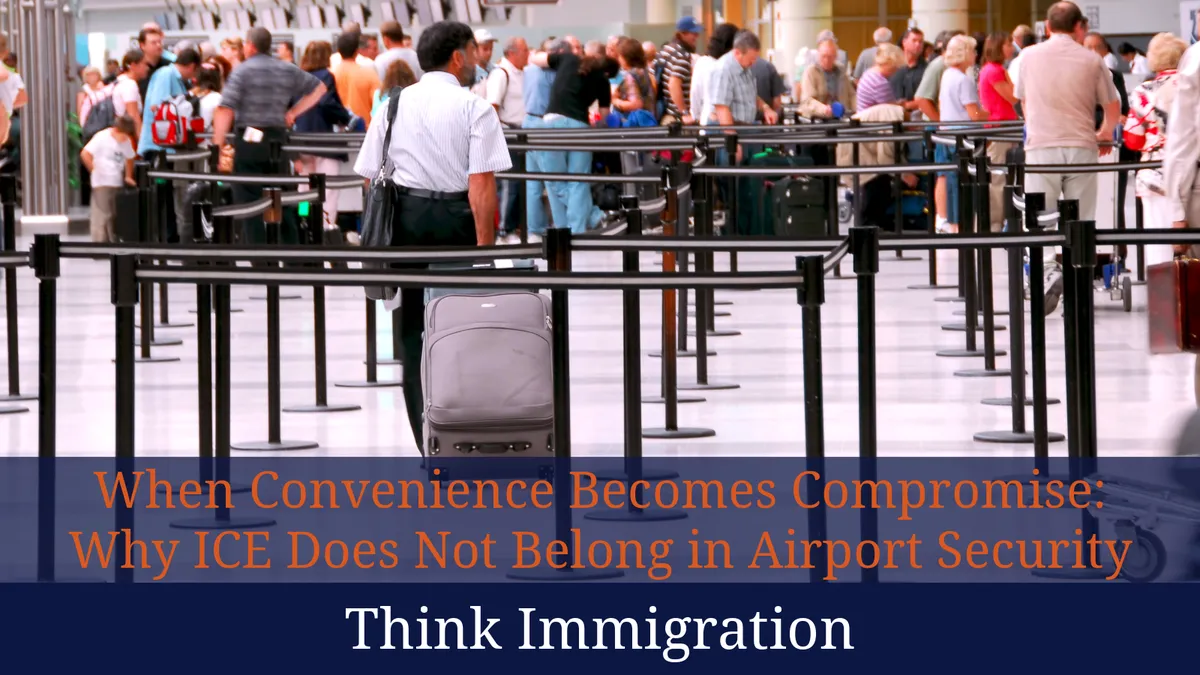
As the United States grapples with a partial government shutdown, the Transportation Security Administration (TSA) faces significant staffing shortages, with absentee rates soaring at major airports. For instance, Houston’s William P. Hobby Airport reported a staggering 43% absentee rate among TSA officers. In response, the Department of Homeland Security has deployed Immigration and Customs Enforcement (ICE) agents to assist TSA personnel, a move that has drawn both support and criticism.
On March 25, 2026, reports emerged of ICE officers stationed at several major airports, including Chicago O’Hare, Hartsfield-Jackson Atlanta, and New York’s JFK. This deployment aims to alleviate disruptions for travelers, as TSA officers struggle with high absenteeism rates, which have been exacerbated by the ongoing government shutdown.
However, the presence of ICE agents at airports raises serious concerns about the blurring of lines between security and immigration enforcement. Critics argue that ICE officers, who are not trained for aviation security tasks such as operating X-ray machines, could create confusion and anxiety among travelers. “We’re just simply helping our fellow officers at TSA,” stated Tom Homan, an ICE official, attempting to justify the presence of his agency at these critical transportation hubs.
The situation escalated dramatically when ICE agents arrested a mother and child at San Francisco International Airport after being tipped off by TSA. Both individuals were Guatemalan nationals with prior immigration status issues. The incident sparked outrage among local officials and members of Congress, with Representative Doris Matsui expressing her anger over the forcible detention of the mother in front of her young daughter.
ICE officers have continued to receive pay during the DHS shutdown, unlike TSA workers, further complicating the relationship between the two agencies. The Trump administration’s previous expansion of data sharing between TSA and ICE has marked a significant shift in how immigration enforcement operates within airport environments.
As the situation evolves, the exact duration of ICE’s presence at airports remains unconfirmed, and the correlation between TSA absentee rates and ICE deployments is still unclear. Public safety advocates warn that the ongoing presence of ICE at airports could erode trust among travelers, as fear and uncertainty may deter individuals from seeking help in legitimate situations.
In summary, while the deployment of ICE agents at airports may be intended to address immediate staffing challenges, it raises profound questions about the role of immigration enforcement in spaces traditionally reserved for security. The implications of this partnership will likely resonate beyond the current crisis, shaping the future of airport security and immigration policy in the United States.