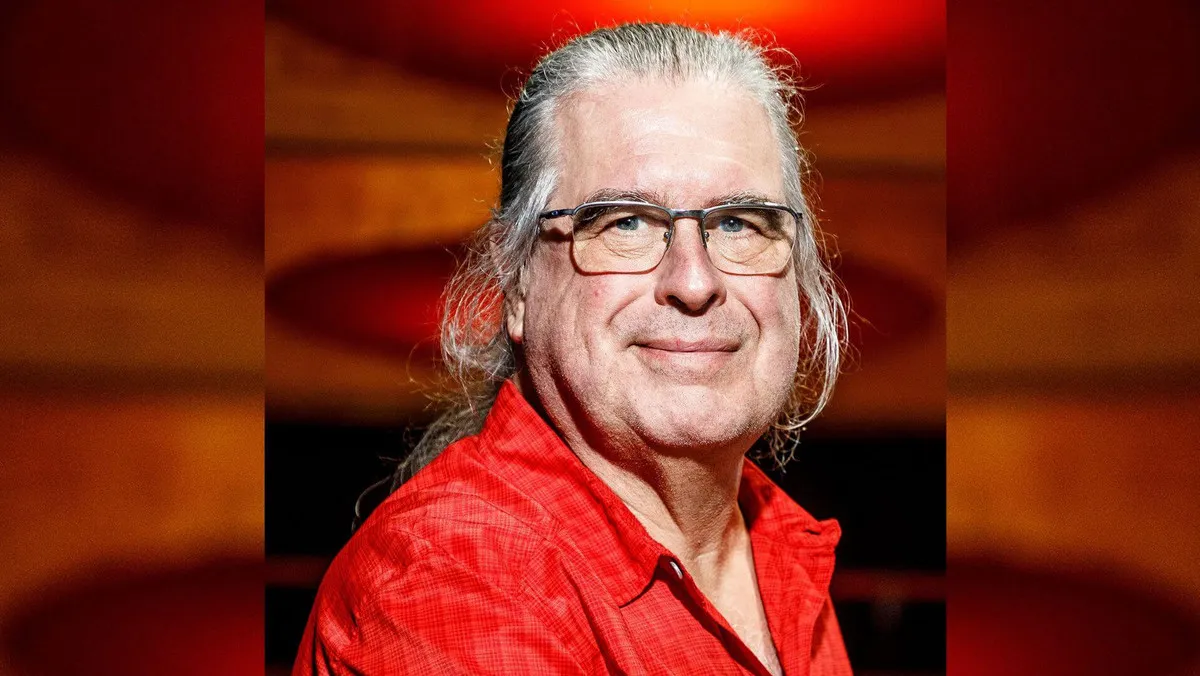
Gilles Brassard, a prominent figure in quantum cryptography, has been named co-winner of the 2025 A.M. Turing Award, a prestigious honor that includes a $1 million U.S. prize funded by Google. This accolade recognizes his pivotal role, alongside Charles H. Bennett, in laying the groundwork for quantum information science.
Brassard and Bennett’s collaboration dates back to 1979, when they first met and began exploring the implications of quantum theory. Their most notable achievement, the BB84 protocol, has established a method for encrypting communications that is theoretically unbreakable, a significant advancement in a field where traditional encryption methods have been in use for over 40 years.
Brassard expressed his gratitude for the recognition, stating, “The Turing Award is the most important of all international awards in computer science, and is the most significant of my career to date.” This sentiment reflects not only his personal achievement but also the broader implications of their work in the realm of cybersecurity.
The Turing Award, named after the British mathematician Alan M. Turing, has been awarded since 1966 and is considered the highest honor in computer science. Brassard is only the eighth Canadian to receive this award, joining a select group of innovators who have made substantial contributions to the field.
Brassard’s accolades do not stop with the Turing Award; he has also received the Breakthrough Prize in Fundamental Physics and the Wolf Prize in Physics, further underscoring his impact on the scientific community. His work has been lauded by peers, with Yannis Ioannidis stating, “Bennett and Brassard fundamentally changed our understanding of information itself.” This highlights the transformative nature of their contributions.
In light of increasing cybersecurity threats, Brassard has been vocal about the need for a shift in how we approach encryption. He warned, “We need to wake up and stop relying solely on outdated cryptographic infrastructure that is supposed to protect us.” This call to action underscores the urgency of adopting quantum-based solutions to safeguard communications in an era where digital security is paramount.
Looking ahead, the implications of Brassard and Bennett’s work are profound. The Defense Advanced Research Projects Agency (DARPA) aims to develop quantum computers capable of solving real-world problems by 2033, which could further revolutionize the field of cryptography. As the landscape of technology evolves, the foundational principles established by Brassard and Bennett will likely play a critical role in shaping future advancements.
As the world continues to grapple with the challenges of cybersecurity, the contributions of Gilles Brassard and his colleagues will remain at the forefront of discussions about the future of secure communications. Details remain unconfirmed regarding the next steps in their research, but the anticipation surrounding their work is palpable.