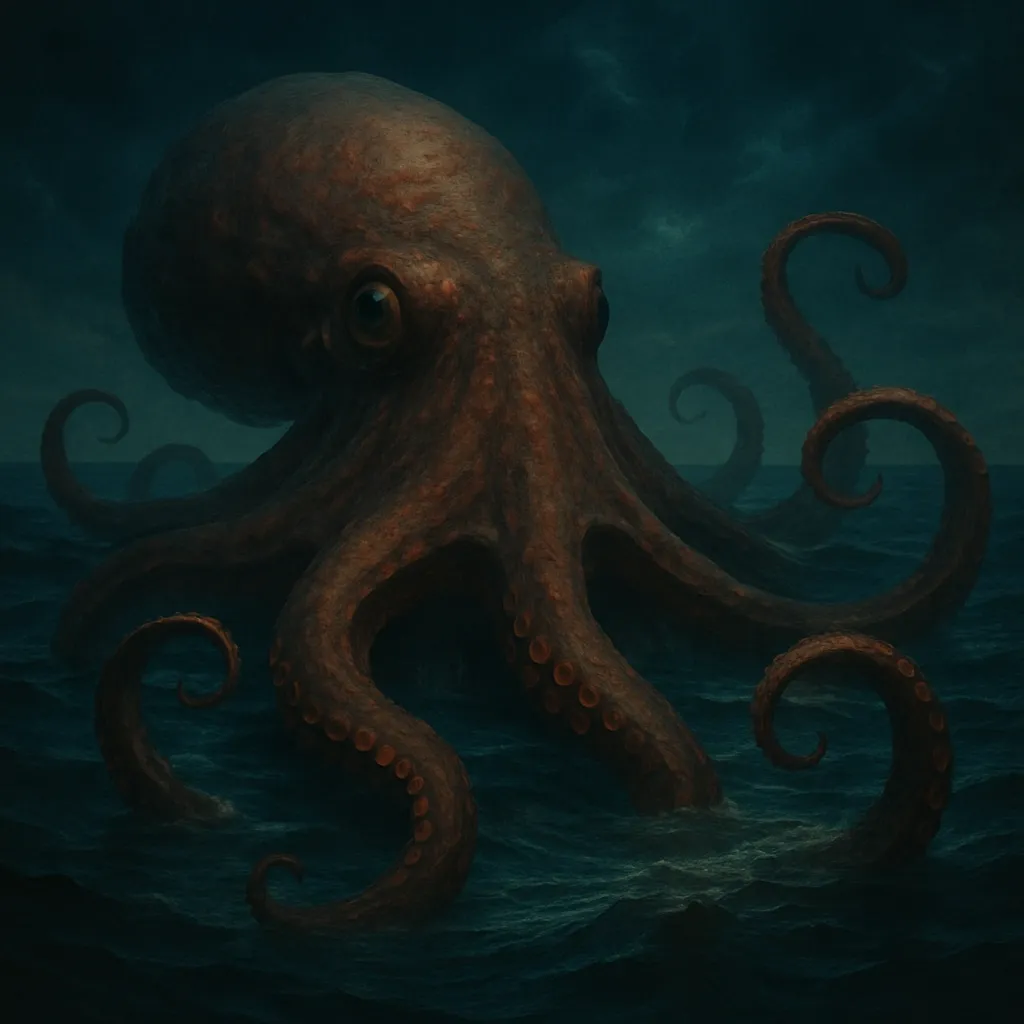
“Our study shows that giant invertebrates — octopuses — were also part of the top predator community,” states Yasuhiro Iba, shedding light on a remarkable chapter in marine history. Research indicates that these colossal creatures, some stretching up to 19 metres, roamed the ancient seas during the Cretaceous period.
These giant octopuses weren’t just passive inhabitants of their environment; they were formidable predators at the very top of the Cretaceous marine food web. Fossil evidence, particularly fossilized beaks discovered in rock formations on Vancouver Island and Hokkaido, Japan, provides insight into their predatory prowess.
Living between 100 million and 72 million years ago, these ancient octopuses like Nanaimotethis haggarti may have been among the largest invertebrates ever to exist. The size of their beaks—larger than that of modern giant squids—suggests they tackled substantial prey. Distinct wear patterns indicate they routinely crushed hard bones and shells. This behavior hints at not just strength but also a degree of behavioral sophistication.
Dr. Thomas Clements noted, “To see a beak this size is quite amazing, to be honest. It was a massive animal.” Indeed, the sheer scale of these creatures challenges our perceptions of ancient marine ecosystems and their complexities.
Yet, understanding how these octopuses evolved remains largely a mystery. Fossils are rare; thus, much about their evolutionary journey is still unknown. What we do know is that they thrived alongside predatory marine reptiles like mosasaurs and plesiosaurs.
The findings published in the journal Science underscore the importance of these giant octopuses in their ecosystems. They played a crucial role not only as predators but as participants in a dynamic food web where survival depended on adaptability.
As research continues to unfold, one can only wonder what other secrets lie beneath the ocean’s depths—waiting to redefine our understanding of marine life from epochs long past.