In the lead-up to March 2026, expectations surrounding Germany’s foreign policy were largely shaped by a cautious approach towards international conflicts, particularly the Iran war. Traditionally, Germany has maintained a diplomatic stance, often prioritizing dialogue over confrontation. However, this status quo faced a radical shift when German President Frank-Walter Steinmeier publicly condemned the Iran war as a “disastrous mistake” and a violation of international law.
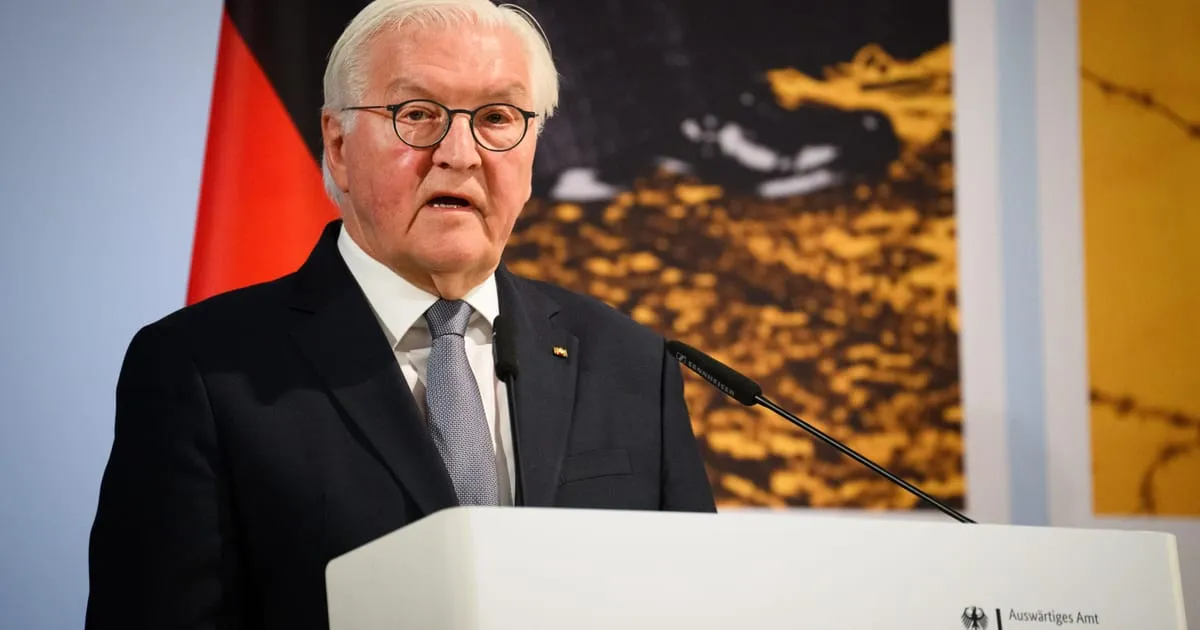
This decisive moment came during a speech on March 24, 2026, where Steinmeier articulated his views on the war’s implications, stating, “This war is also — and please bear with me when I say this, as someone directly involved — a politically disastrous mistake.” His remarks not only highlighted his disapproval of the conflict but also reflected a broader sentiment within Germany regarding its role on the global stage.
The immediate effects of Steinmeier’s statements were palpable, particularly in the context of Germany’s relationship with the United States. He compared the current transatlantic rift, exacerbated during Donald Trump’s second term, to Germany’s historical divorce from Russia following the invasion of Ukraine in 2022. This analogy underscores a significant shift in how Germany perceives its alliances and dependencies.
Steinmeier’s role as president, which is largely ceremonial, grants him the freedom to express such opinions without the constraints faced by active politicians. He urged Germany to pursue greater independence from U.S. influence in defense and technology, emphasizing that the current U.S. administration operates under a worldview that disregards established international norms.
Furthermore, he called for Germany’s military to become the backbone of conventional defense in Europe, a stark departure from previous policies that leaned heavily on U.S. support. This shift is particularly significant given that trade between the U.S. and Germany amounted to more than 163 billion euros (approximately $190 billion) in the first eight months of 2025, indicating a robust economic relationship that could be strained by political disagreements.
Steinmeier’s remarks also resonate with a growing domestic debate over Germany’s stance on the Iran war and its broader foreign policy. He stated, “Our foreign policy does not become more convincing just because we do not call a breach of international law a breach of international law,” highlighting the need for Germany to take a firmer stance on international issues.
As the geopolitical landscape continues to evolve, Steinmeier’s assertion that there will be no return to pre-2025 transatlantic relations suggests a permanent shift in Germany’s approach to foreign policy. The rupture in relations is described by Steinmeier as “too deep,” indicating that the implications of this shift will be felt for years to come.
In summary, Steinmeier’s bold criticism of the Iran war not only reflects a significant change in Germany’s foreign policy but also signals a potential reconfiguration of its alliances and defense strategies in an increasingly complex global environment.