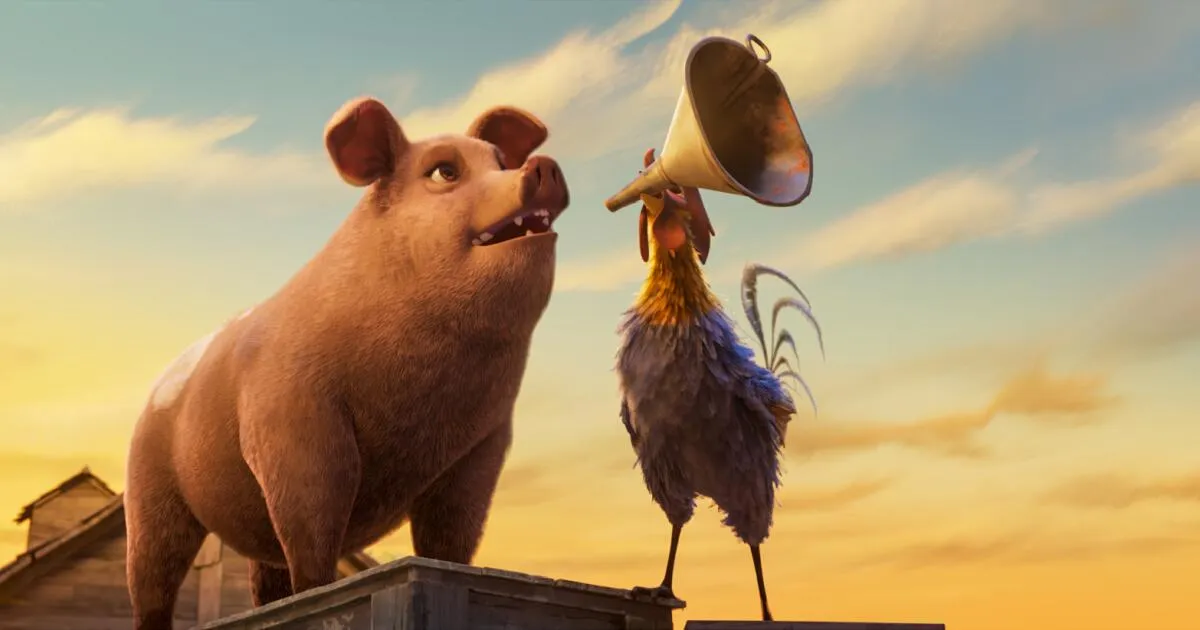
The new animated adaptation of Animal Farm, directed by Andy Serkis, controversially targets a younger audience while stripping away the original’s complex themes. This shift raises questions about the integrity of Orwell’s political satire and its intended audience.
Originally published in 1945, Animal Farm served as a sharp critique of the corruption within the Soviet Union, illustrating moral messages through anthropomorphized animals. The expectation was that adaptations would maintain this depth and nuance.
However, this latest version has faced criticism for being overly simplified. Critics argue it lacks the necessary complexity to convey Orwell’s original intent, which was aimed at adult readers rather than children—an important distinction.
The new adaptation features notable voices like Seth Rogen as Napoleon and Laverne Cox as Snowball. Yet, it introduces a character named Lucky, voiced by Gaten Matarazzo, further straying from Orwell’s vision.
Reviews highlight that the film is devoid of the nuance that characterizes Orwell’s work. One critic remarked, “Some cartoons are decidedly less equal than others.” This sentiment encapsulates the disappointment felt by those who cherish the original narrative.
The adaptation has been released by Angel Studios, known for its conservative values—an interesting choice given the anti-capitalist themes present in Orwell’s narrative. This raises additional questions: Is this a genuine attempt to introduce children to political satire or merely a commercial venture?
As one observer noted, “If you have ever wanted to see Animal Farm, but where Napoleon the pig keeps calling himself ‘Napopo’… you are in luck.” Such commentary underscores the absurdity many feel regarding this reimagining.
The film also portrays Napoleon with traits reminiscent of Donald Trump, which may resonate differently with younger audiences unfamiliar with historical context. This could dilute understanding of critical themes such as power dynamics and corruption.
Ultimately, while the intention behind adapting Animal Farm for children may be well-meaning—“This ‘Farm’ isn’t lacking for good intentions”—the execution raises concerns about what young viewers will take away from it.
The discussion surrounding this adaptation reflects broader trends in children’s animation today. Are we simplifying crucial narratives to make them palatable? Or are we merely missing an opportunity to educate?