What the data shows
What drives a person like Dayton Webber, a celebrated cornhole player and quadruple amputee, to allegedly commit murder? This question looms large following Webber’s arrest for the shooting death of 27-year-old Bradrick Wells during an argument in La Plata, Maryland. The incident, which has garnered widespread attention, raises not only legal but also ethical questions about Webber’s life choices and the circumstances that led to this tragic event.
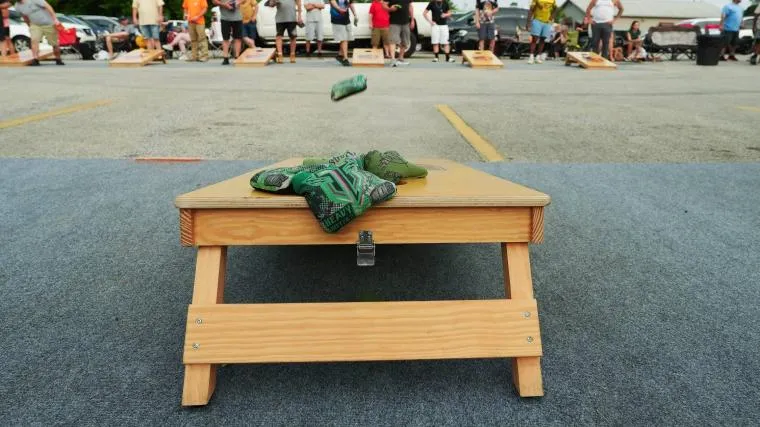
Webber, 27, became a notable figure in the sports community after joining the American Cornhole League in 2022, making history as the first quadruple amputee to do so. His journey has been one of resilience; he lost his limbs due to a severe bacterial infection when he was just 10 months old, with a mere 3% chance of survival at that time. Webber’s story is one of triumph over adversity, encapsulated in his own words: “If you put your mind to it, anything is possible.” However, the recent allegations against him cast a shadow over his achievements.
The shooting incident occurred while Webber was driving a vehicle with Wells as a front-seat passenger. Following the altercation, Webber reportedly asked other passengers to assist in removing Wells from the car, but they fled the scene instead. This raises further questions about the dynamics of their relationship and the nature of their argument. Two hours later, Wells was found dead in a residential yard in Charlotte Hall, Maryland, just 14 miles from where the incident took place.
Webber faces serious charges, including first-degree murder and second-degree murder. The legal ramifications of this incident are significant, especially given Webber’s public persona as a motivational figure in the cornhole community. The American Cornhole League has described him as “unstoppable” in a promotional video, highlighting his ability to overcome physical limitations. Yet, the stark contrast between his public image and the gravity of the charges he now faces is striking.
After the shooting, Webber was treated at a hospital in Charlottesville, Virginia, located about 150 miles from La Plata, before being arrested. The details surrounding the shooting remain murky, particularly whether Wells was shot with a gun adapted for use by someone without hands. Details remain unconfirmed, leaving many questions unanswered about the circumstances of the shooting.
The incident has not only shocked the local community but has also drawn attention beyond Maryland, prompting discussions about violence, mental health, and the pressures faced by individuals with disabilities. Webber’s story is complex; he has a YouTube channel showcasing his skills with firearms, which adds another layer to the narrative surrounding his arrest.
As the legal process unfolds, the public will be watching closely. What led to this moment in Webber’s life? Was it a culmination of personal struggles, or was it an isolated incident? The answers to these questions may shape not only Webber’s future but also the perception of individuals with disabilities in competitive sports.
In the meantime, the cornhole community and those who have followed Webber’s journey are left grappling with the implications of his actions. The duality of his existence—an inspiring athlete and an alleged murderer—serves as a poignant reminder of the complexities of human behavior and the often-unforeseen paths that life can take.