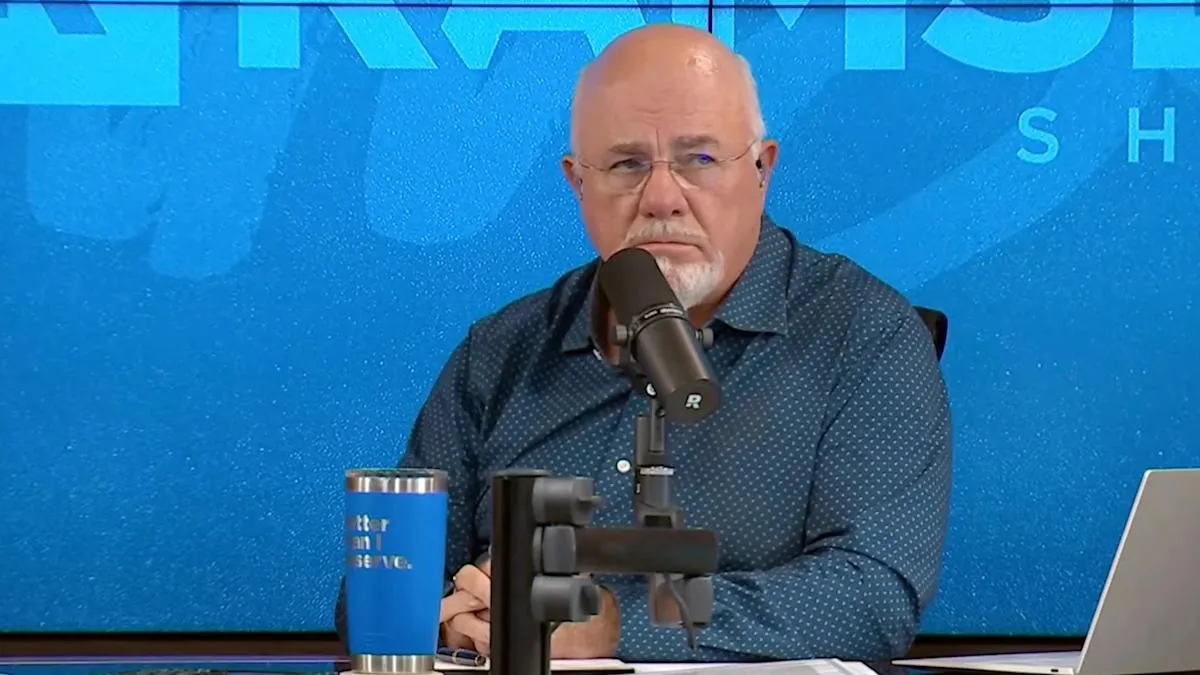
“If every time you get afraid by watching the news, quit watching the news.” This striking quote from financial expert Dave Ramsey encapsulates his approach to navigating the tumultuous waters of market volatility. In recent months, geopolitical tensions have stirred uncertainty in financial markets, prompting many investors to reconsider their strategies. Ramsey’s advice is clear: emotional reactions can lead to poor investment decisions.
Market volatility can often be triggered by events such as the ongoing conflict between the U.S. and Iran, which has historically caused fluctuations in stock prices. Yet, Ramsey emphasizes that reacting impulsively to these events can be detrimental. He reminds investors that the S&P/TSX Composite has delivered an annualized total return of approximately 9.1% since 1956, illustrating the importance of maintaining a long-term perspective.
Reflecting on past market downturns, Ramsey points out that the TSX fell 37% during the COVID crash in March 2020 but managed to recover fully within eight months. This historical context serves as a reminder that markets have a tendency to rebound, even after significant declines. Ramsey advises investors to resist the urge to check their stock portfolios daily during downturns, suggesting that such behavior can exacerbate anxiety and lead to hasty decisions.
He further elaborates, stating, “Those who ride rollercoasters only get hurt if they jump off in the middle of the ride.” This metaphor underscores the importance of staying the course during turbulent times. By adhering to a well-thought-out investment strategy, investors can weather the storms of market volatility without succumbing to fear-driven actions.
Ramsey’s approach is not just about patience; it also involves a disciplined commitment to one’s investment plan. He warns against selling investments out of fear during market downturns, as this can lock in losses and derail long-term financial goals. Historical data supports his stance, with markets having recovered from downturns such as the 1929 crash and the 2008 financial crisis, reinforcing the notion that time in the market often outweighs timing the market.
In a recent discussion regarding real estate investments, Ramsey remarked, “So he has no more right to decide he wants the money now than you do to deny it to him legally.” This statement reflects the complexities involved in investment decisions, particularly in the real estate sector, where market conditions can fluctuate significantly. For instance, a home purchased for $675,000, with $200,000 spent on renovations, can appreciate to a current worth of $1,200,000, showcasing the potential for substantial returns when investments are held over time.
As investors navigate these uncertain waters, Ramsey’s insights serve as a guiding light. He encourages individuals to stick to their investment strategy, even when external factors create noise and uncertainty. By maintaining focus on long-term goals, investors can avoid the pitfalls of emotional decision-making.
In a world where market conditions can change rapidly, Ramsey’s advice remains relevant: patience and a steadfast commitment to one’s investment strategy are crucial. As the financial landscape continues to evolve, investors would do well to heed his counsel and resist the temptation to react impulsively to the latest headlines.