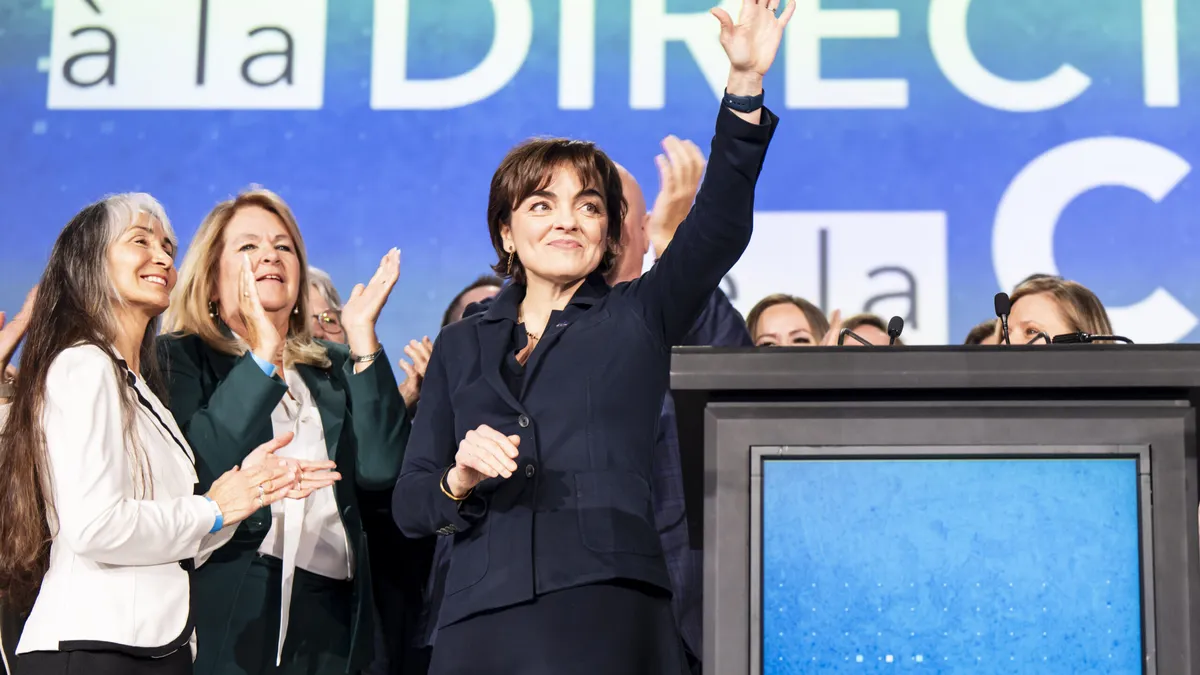
Christine Fréchette’s election as the new premier of Quebec marks a pivotal moment in the province’s political landscape. With 57.9% of the vote from 15,833 party members, Fréchette has succeeded François Legault, who announced his resignation on January 11, 2026, thus triggering the leadership race within the Coalition Avenir Québec (CAQ).
Fréchette, who is 56 years old, is only the second woman to serve as premier of Quebec, following in the footsteps of Pauline Marois. Her ascent to leadership comes after a notable career, including her role as the CAQ’s Minister of the Economy, Innovation and Energy, and her election as the MNA for Sanguinet in 2022.
Her leadership campaign was characterized by a strong focus on pressing issues such as economic growth, immigration policies, housing, and healthcare, reflecting the concerns of many Quebecers. The support she garnered from 41 MNAs and the CAQ’s youth wing underscores her appeal within the party and her potential to lead effectively.
Fréchette’s election is significant not only for its historical context but also for the implications it holds for the upcoming provincial election scheduled for October 5, 2026. With 77.1% of CAQ members participating in the leadership race, her victory signals a desire for a new style of governance, as she herself noted, “You have voted for another style of leadership so that a new generation can lead Quebec.”
François Legault, who led the CAQ to two consecutive majority governments since 2018, acknowledged the tensions that often accompany leadership transitions, stating, “A leadership race creates tensions, it’s normal.” His tenure has been marked by significant policy changes and a strong party presence in Quebec politics.
Fréchette’s background includes experience as a deputy chief of staff to former Parti Québécois minister Jean-François Lisée and a position on the board for the Conseil du statut de la femme, showcasing her long-standing commitment to public service and women’s issues.
As Quebec enters this new chapter under Fréchette’s leadership, the focus will likely remain on addressing the economic challenges and social issues that have been at the forefront of public discourse. Her ability to navigate these complexities will be closely watched by both supporters and critics alike.
Details remain unconfirmed regarding her specific policy initiatives and how she plans to implement her vision for Quebec’s future. The political landscape is poised for further developments as Fréchette settles into her role and prepares for the challenges ahead.