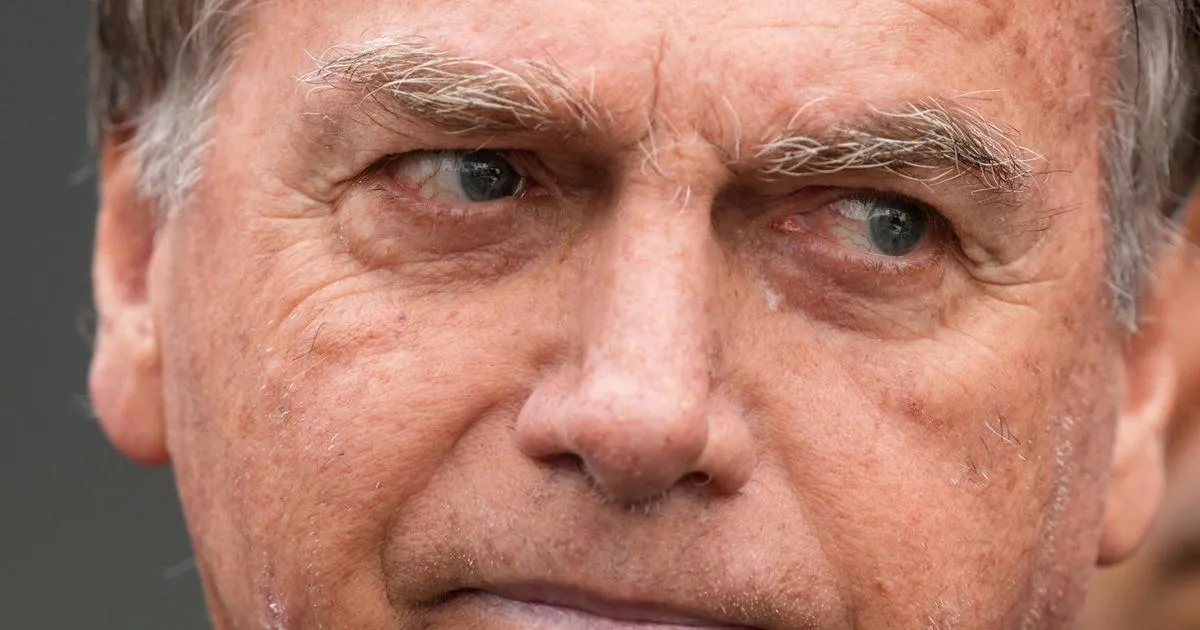
“The measure could be revised within 90 days,” stated the Supreme Court, highlighting the conditional nature of Jair Bolsonaro’s recent transition to house imprisonment. This decision comes after Bolsonaro was discharged from a hospital where he was treated for pneumonia, a health issue that has plagued him since he was stabbed in 2018.
Bolsonaro, who served as President of Brazil from 2019 to 2022, is currently serving a 27-year sentence for his role in a coup attempt and the violent abolition of democratic rule. The Supreme Court granted him the right to serve this sentence at home due to his failing health, a move that has drawn both support and criticism.
Justice Alexandre de Moraes emphasized that Bolsonaro’s house arrest is conditional, warning that he could be returned to prison if he violates any rules, regardless of his medical condition. This has raised eyebrows among legal experts, with law professor Marcelo Crespo noting, “It is unusual for house imprisonment rulings like Bolsonaro’s to include a review after 90 days.”
Critics of Bolsonaro argue that his lenient treatment is inconsistent with his past advocacy for harsh penalties against convicts. Many are upset that a figure with such a controversial history is receiving what they perceive as special treatment. Meanwhile, Bolsonaro has consistently denied any wrongdoing, labeling the legal actions against him as a political witch hunt.
As Bolsonaro adjusts to his new living conditions, he is required to wear an ankle monitor and is prohibited from communicating with anyone outside his home. Local police will oversee his residence, and protests are not allowed nearby, indicating the level of concern surrounding his situation.
Bolsonaro’s family and allies have criticized the temporary nature of his house imprisonment, suggesting that it undermines the severity of his crimes. In the political arena, his son, Sen. Flávio Bolsonaro, is emerging as a competitive candidate against President Luiz Inácio Lula da Silva in upcoming polls, despite his father’s ineligibility to participate in any public campaign due to his conviction.
As Brazil navigates this complex landscape of justice and political maneuvering, the implications of Bolsonaro’s house imprisonment will likely resonate throughout the country. Observers are keenly awaiting the Supreme Court’s review in 90 days, which could alter the course of this high-profile case.