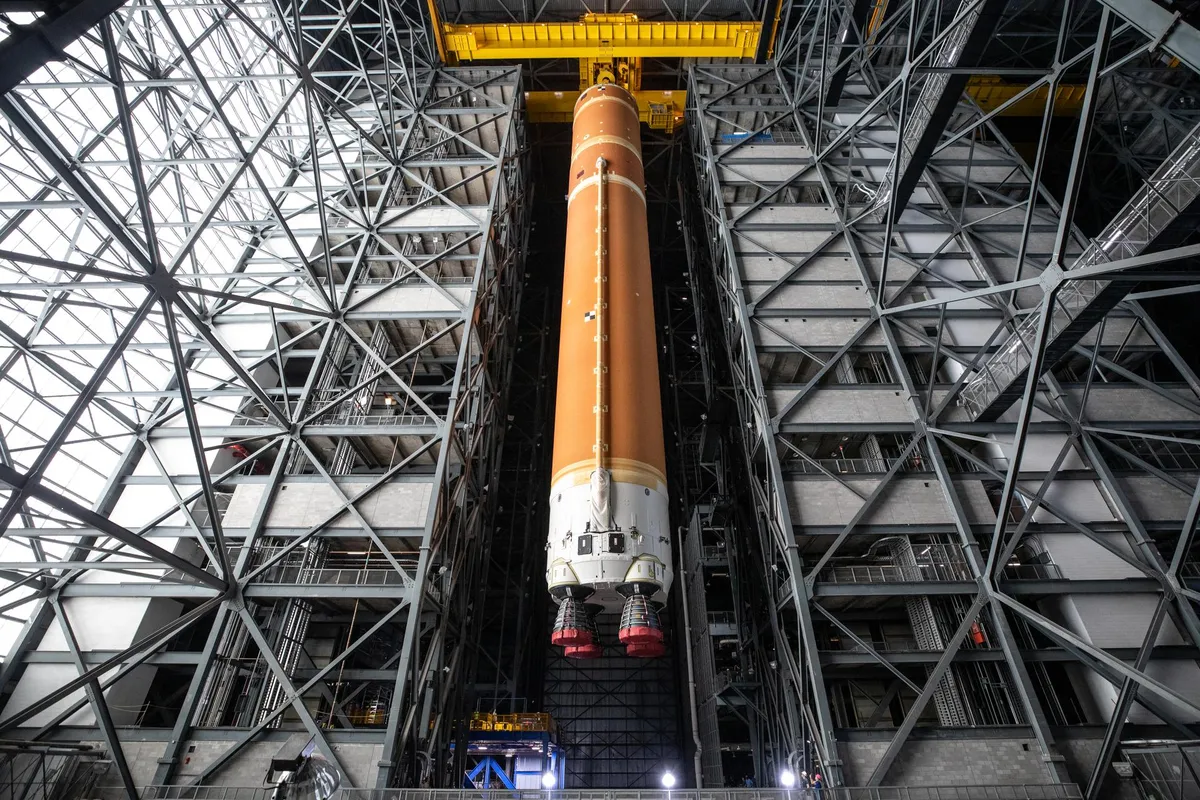
The Artemis II launch raises a pivotal question: Can this mission successfully reignite NASA’s ambitions for lunar exploration? Scheduled for January 17, 2026, the mission aims to send a crew of four astronauts—Reid Wiseman, Victor Glover, Christina Koch, and Jeremy Hansen—on a 10-day journey around the Moon.
Utilizing the Space Launch System (SLS) rocket and the Orion spacecraft, the Artemis II mission represents a significant step in NASA’s broader Artemis program, which seeks to establish a long-term human presence on the Moon. This mission follows the uncrewed Artemis I flight, which faced challenges, including damage to the Orion capsule’s heat shield.
The countdown for the launch will commence approximately two days prior to liftoff, with the launch team arriving at their stations 49 hours before the event. The launch window will be tightly controlled, lasting just six minutes, underscoring the meticulous planning involved in this ambitious endeavor.
NASA’s investment in the Artemis program is substantial, with plans to allocate $20 billion towards building a lunar base. This commitment highlights the agency’s determination to not only return to the Moon but to create a sustainable human presence there.
Historically, NASA last sent humans to the Moon in the 1970s, making the Artemis II mission a significant milestone in the agency’s history. As Pamela Melroy, a prominent figure in NASA, stated, “I’ve always thought it was not a race for boots on the moon, because we won that race more than 50 years ago.” This sentiment reflects a shift in focus from merely landing on the Moon to establishing a lasting presence.
However, the Artemis program has faced scrutiny and skepticism. Critics question whether Artemis II can inject enough momentum into NASA’s return-to-the-Moon program to quell these concerns. Scott Pace, a key figure in the program, emphasized the importance of the solid rocket boosters’ performance during launch, indicating that technical reliability will be crucial for the mission’s success.
As the launch date approaches, the excitement builds, but so do the uncertainties. Details remain unconfirmed regarding the mission’s final preparations and any potential challenges that may arise. The world watches as NASA prepares to embark on this historic journey, hoping to inspire a new generation of space exploration enthusiasts.
The Artemis II launch is not just a mission; it is a statement of intent from NASA, signaling a renewed commitment to lunar exploration and beyond. The outcome of this mission could very well shape the future of human spaceflight for decades to come.