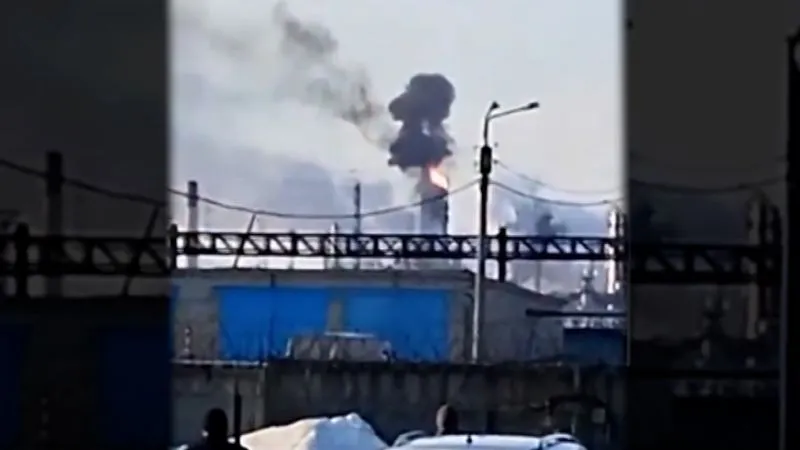
The repeated drone strikes on the Tuapse refinery in Russia have resulted in significant environmental damage and public health warnings for local residents. As of April 2026, the area has witnessed three separate attacks, causing widespread contamination and prompting authorities to take drastic measures.
Following the first strike on April 16, which ignited a fire lasting two days, emergency services began to assess the fallout. By April 20, a second strike exacerbated the situation, leading to another fire that lasted five days. The cumulative effect of these incidents has been devastating.
Key impacts:
- Residents of Tuapse were ordered not to drink tap water due to contamination.
- Emergency workers cleared 12,600 cubic metres of contaminated material from the vicinity.
- Authorities advised limiting outdoor activities due to elevated levels of benzene in the air—three times above safe limits.
The strikes have not only damaged infrastructure but also led to a disturbing phenomenon: black rain. This rain, laden with oil residue, has coated cars and wildlife alike. At least eight storage tanks at the refinery were destroyed during the attacks, resulting in petroleum leaking into the Tuapse River.
Sergei Solovev aptly described the situation as “an environmental disaster.” The local health authority has recommended that residents consume bottled water exclusively as a precaution against potential health risks. Volunteers have even set up cleanup centres for animals affected by oil exposure.
As tensions between Ukraine and Russia continue—having escalated since February 2022—the implications of these drone strikes extend beyond immediate environmental concerns. The evacuation of Tuapse after the third strike underscores the urgency of addressing both ecological and humanitarian crises.
The full extent of the long-term environmental impact remains uncertain. Experts are still assessing how this will affect local ecosystems and public health moving forward. Meanwhile, residents grapple with their new reality amid ongoing conflict.