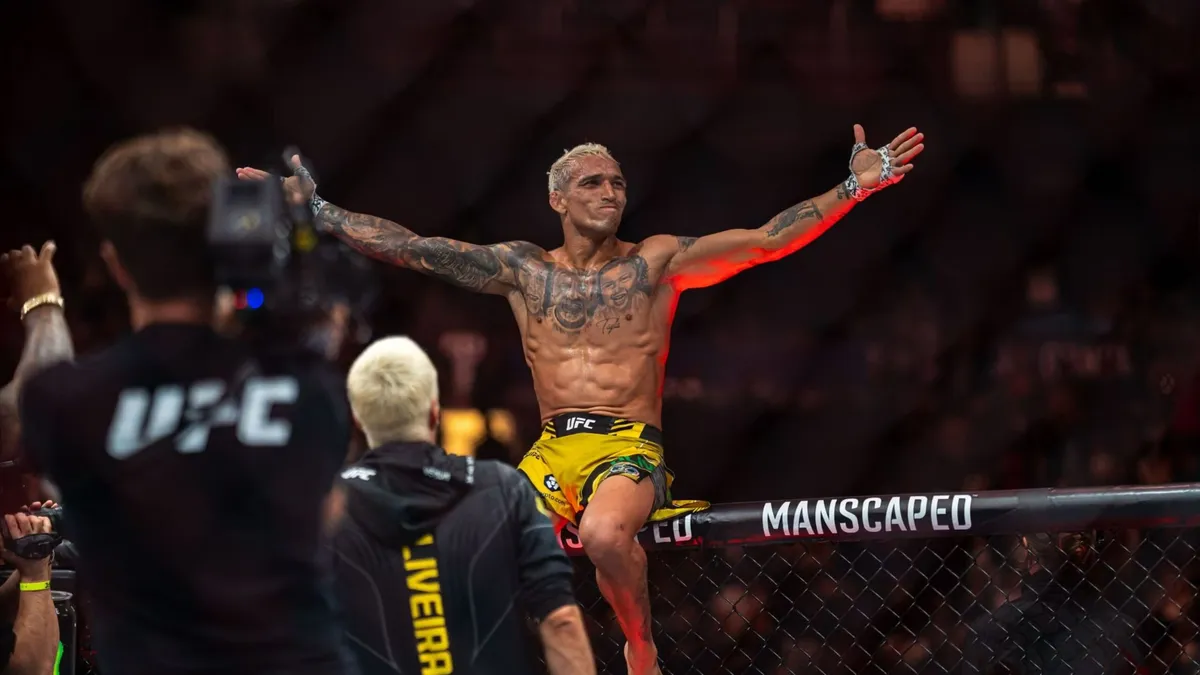
On April 11, 2026, the Kaseya Center in Miami buzzed with excitement as UFC 327 unfolded, a significant event not just for sports fans but also for political observers. Just hours before the event, the atmosphere was tense as Vice President JD Vance was in Pakistan, attempting to negotiate peace with Iran. However, those talks crumbled after just one day, leaving many to wonder about the implications of such diplomatic failures.
Donald Trump arrived at the venue shortly after 9 PM, accompanied by UFC President Dana White and several family members, including Ivanka, Tiffany, and Donald Jr. Despite his declining approval ratings, Trump was met with an enthusiastic crowd, a testament to his enduring popularity among certain demographics, particularly young, male fans. The UFC has played a crucial role in this, with its high-energy events resonating with Trump’s base.
As the night progressed, Trump made headlines not just for his presence but also for his remarks. He praised fighter Paulo Costa, saying, “You’re a beautiful guy … You could be a model, you look so good.” Such comments reflect Trump’s characteristic style, blending personal admiration with public spectacle. This event was not merely a night of fights; it was a strategic move to bolster his image amidst political turmoil.
In a notable development, Dana White announced a heavyweight fight between Derrick Lewis and Josh Hokit, scheduled for a White House event on June 14, 2026, at Trump’s request. This fight, which features Lewis, who holds the UFC record for most victories by knockout, is expected to draw significant attention and further intertwine the worlds of sports and politics.
Trump’s comments during the event also included a dismissive take on the failed negotiations with Iran. He stated, “Whether we make a deal or not makes no difference to me,” showcasing a nonchalant attitude towards international diplomacy. This sentiment was echoed by critics who described the administration’s approach as lacking seriousness, with House Democrats labeling it as “amateur hour.”
As the night concluded, Derrick Lewis expressed gratitude towards Trump, saying, “Tell the president thank you.” This interaction symbolizes the unique relationship between the UFC and Trump’s political narrative, where sports figures often become part of the broader political discourse. The blending of these two worlds was evident throughout the evening, with Trump leveraging the event to maintain his visibility and relevance.
Currently, the UFC stands as a powerful platform for Trump, allowing him to connect with audiences that might otherwise be disengaged from his political messaging. The event’s timing, juxtaposed against the backdrop of failed diplomatic efforts, underscores the complexities of Trump’s leadership style and his reliance on entertainment to bolster his public image.
In summary, UFC 327 was more than just a fight night; it was a reflection of the current state of American politics, where sports and political narratives are increasingly intertwined. As Trump prepares to host another UFC event at the White House, the implications of these gatherings will continue to resonate, shaping both his political future and the landscape of American sports.