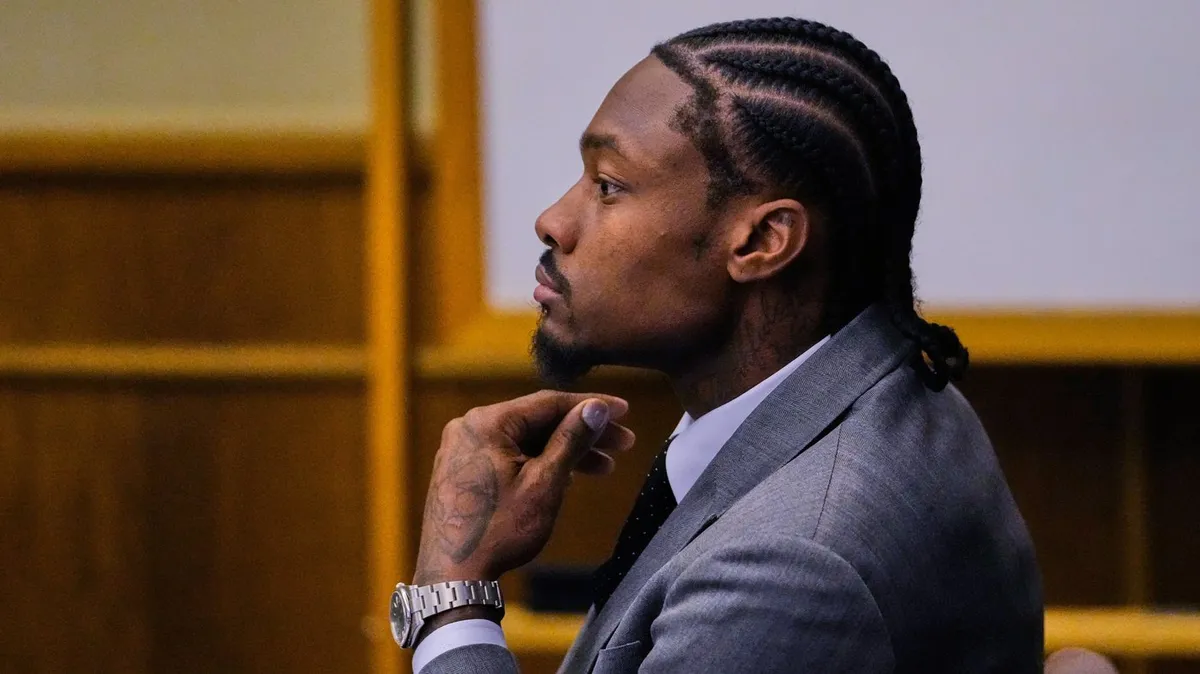
A jury found NFL wide receiver Stefon Diggs not guilty of strangulation and assault charges on May 5, 2026, in Dedham, Massachusetts. The trial, which lasted two days, brought to light the complicated relationship between Diggs and the accuser, Jamila Adams.
Before this verdict, expectations loomed large. Diggs faced serious allegations from Adams, who accused him of choking and slapping her in December 2025. The accusations were troubling—especially for someone in the public eye. The NFL has a history of dealing with domestic violence cases, making this trial particularly significant.
During deliberations that lasted about 90 minutes, the jury wrestled with the evidence presented. They sought clarification on what constituted assault and battery—an inquiry that hints at their struggle to reconcile the testimonies with legal definitions. Ultimately, they sided with the defense’s argument: there was no credible evidence of an assault.
The outcome has immediate repercussions for both parties involved. For Diggs, it means a chance to rebuild his reputation after being released by the Patriots in March 2026. As noted by his attorney Mitchell Shuster, “This has impacted him both personally and professionally.” On the other hand, Adams initially did not press charges but later sought legal action—a decision that raises questions about her motives. Was it truly about justice or financial gain? Her attorney reportedly sought $5.5 million in damages.
Diggs’ camp maintained throughout that “no assault ever occurred,” painting the case as an attempt to extract money from an NFL player. Public sentiment often sways quickly in high-profile cases like this one—what once seemed a straightforward accusation now feels tangled in layers of personal history and financial implications.
Adams testified she was paid approximately $2,000 per week for her work as Diggs’ live-in chef. This detail complicates matters further: how does one navigate accusations when there are financial ties involved? The jury’s decision reflects their skepticism regarding Adams’ claims—an essential factor in their deliberation process.
The court’s handling of this case also merits attention. Judge Jeanmarie Carroll acknowledged the jury’s diligence, stating, “The court is grateful for the seriousness and integrity with which you have carried out your responsibilities.” Such remarks underscore the gravity of the situation—both legally and socially.
This trial serves as a reminder that allegations carry weight—but so does innocence. As Stefon Diggs moves forward post-verdict, both he and Jamila Adams will likely continue to navigate the complexities that emerged during this tumultuous period.