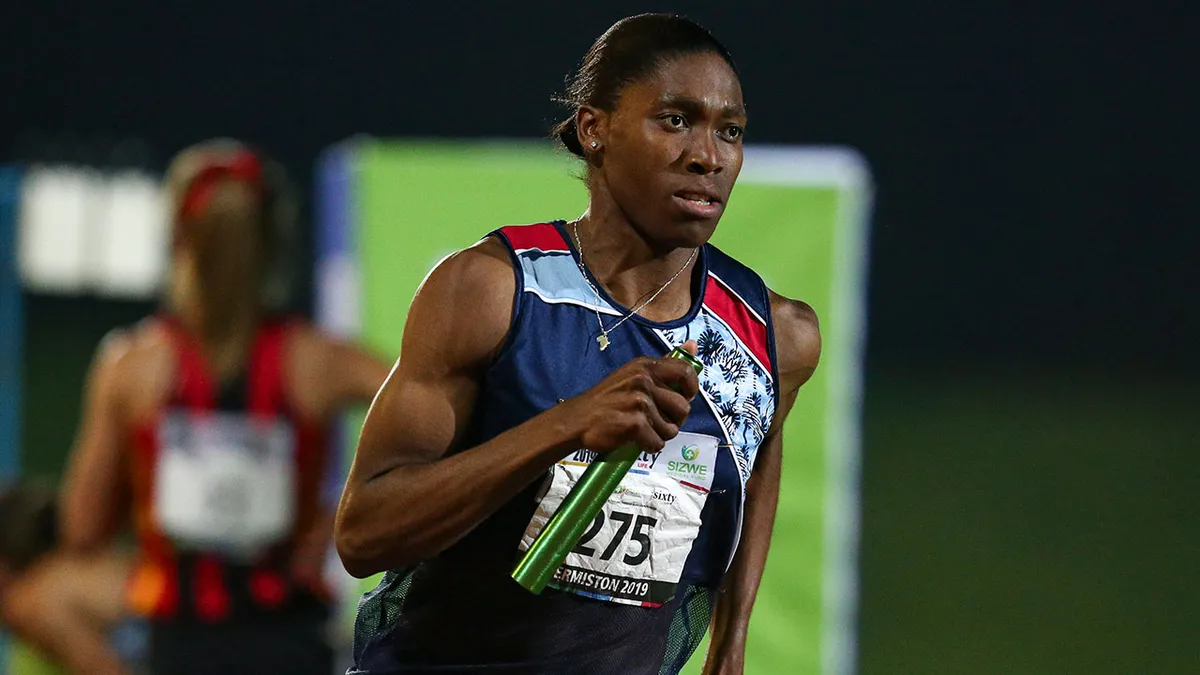
Caster Semenya, the two-time Olympic champion runner from South Africa, has expressed her disappointment with the International Olympic Committee (IOC) following its recent decision to ban transgender women athletes from competing in women’s events. This announcement, made on March 29, 2026, has reignited discussions surrounding gender and sports, particularly as the IOC’s new eligibility policy is set to take effect at the Los Angeles Olympics in July 2028.
The IOC’s ruling comes at a time when Semenya herself has faced significant challenges in her athletic career. Since 2019, she has been barred from competing in her preferred events due to regulations concerning testosterone levels, which exceed the typical female range. This ongoing situation has led to a prolonged legal battle, which Semenya has now concluded, marking the end of her seven-year challenge against sex eligibility rules.
In her criticism, Semenya pointedly addressed IOC President Kirsty Coventry, who hails from Zimbabwe. She stated, “Personally, for her as a leader, she’s an African, I’m sure she understands how, you know, we as Africans, we are coming from, as a global South, you know, you cannot control genetics.” This comment underscores the complexities of identity and biology in the context of sports.
Semenya further articulated her concerns about the decision’s implications for women in sports, asserting, “Obviously if you say the science, because we talk about science here, if the science is clear, show us who decided and don’t dress that as a lie because it’s a lie and we know because we’ve seen it so if we were to answer or confront Kirsty that’s how we gonna respond and we’ll respond strong as we are because it affects women.”
Her remarks reflect a broader sentiment among many athletes who feel that the IOC’s consultation process was superficial, describing it as a “tick box” exercise rather than a genuine effort to engage with the complexities of gender identity in sports.
As the debate continues, it is worth noting that no transgender women who transitioned from being born male competed at the 2024 Paris Summer Games, highlighting the ongoing tensions in the realm of competitive sports.
The IOC’s decision has not only affected Semenya but has also sparked a wider conversation about the rights of athletes and the evolving landscape of gender in sports. Reactions from various stakeholders are expected to unfold as the implications of this ruling become clearer.
As Semenya moves forward, her voice remains a powerful advocate for change, emphasizing the need for a more inclusive and scientifically informed approach to sports eligibility. The dialogue surrounding this issue is far from over, and the impact of these decisions will resonate throughout the athletic community.
Details remain unconfirmed.