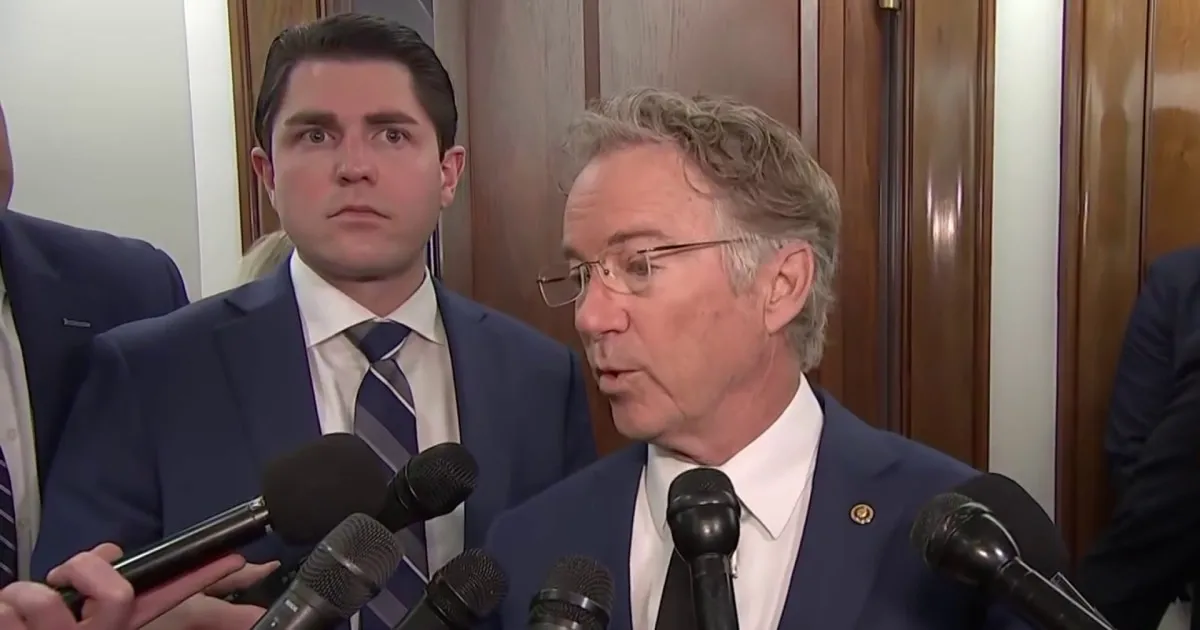
In a significant development within the Senate, Rand Paul has publicly announced his opposition to Markwayne Mullin‘s nomination to lead the Department of Homeland Security. This announcement comes against the backdrop of heightened political tensions and a history of personal conflict between the two lawmakers.
Rand Paul, who leads the Senate Committee on Homeland Security, has a personal stake in the matter. In 2017, he was assaulted by a neighbor, resulting in six broken ribs. This incident has shaped his views on political violence, making Mullin’s previous comments particularly poignant.
During the confirmation hearing, Paul confronted Mullin about his understanding of political violence, referencing Mullin’s past statement that he understood why a neighbor attacked Paul. In response, Mullin asserted, “I don’t believe in political violence. I’ve made that very clear.” However, the exchange took a contentious turn as Mullin accused Paul of engaging in “character assassination” during the hearing.
Paul, not backing down, highlighted the historical context of violence in political discourse, stating, “there’s historical precedence for violence, such caning and dueling, to resolve political differences between lawmakers.” This remark underscores the gravity of the situation and the implications it holds for the Senate’s decorum.
As the confirmation process unfolds, observers are keenly watching how this opposition will affect Mullin’s chances of securing the position. The political landscape is fraught with divisions, and Paul’s stance may resonate with those who share his concerns about the normalization of violence in politics.
Looking ahead, the Senate Committee will continue to deliberate on Mullin’s nomination, with Paul’s opposition likely influencing the opinions of other committee members. The outcome remains uncertain, but the implications of this nomination extend beyond individual careers, reflecting broader societal tensions.
Details remain unconfirmed regarding the next steps in the nomination process, but the discourse surrounding it is already indicative of the challenges facing lawmakers in today’s polarized environment.