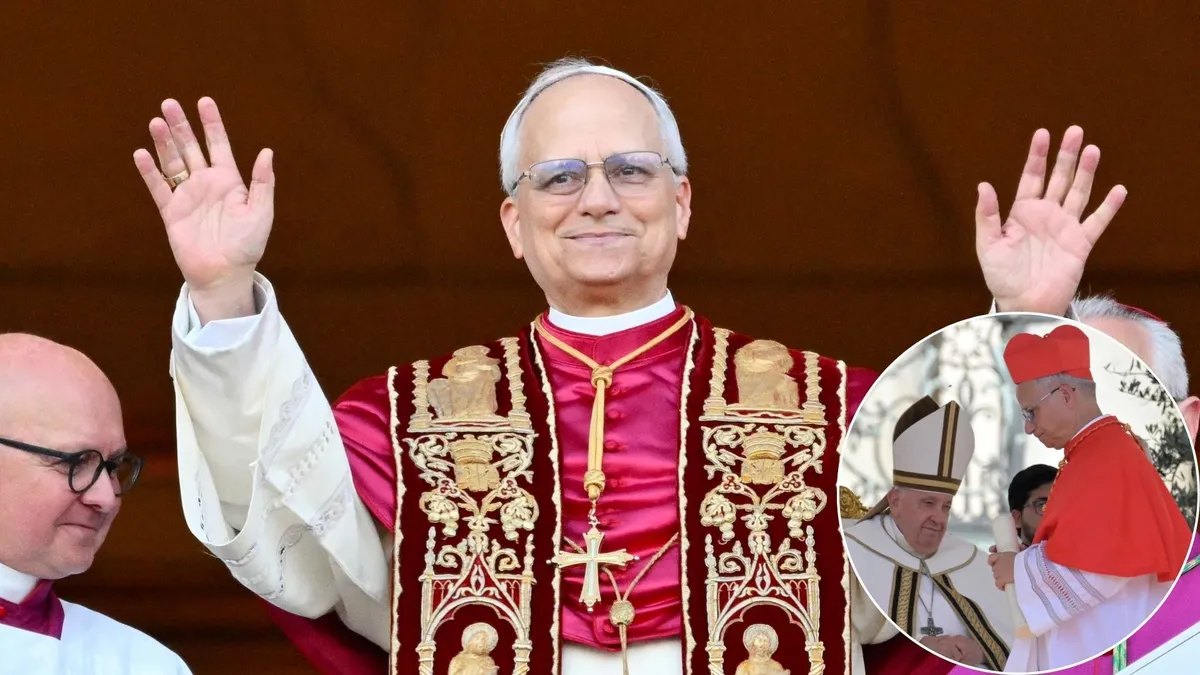
Pope Leo XIV has made headlines by responding to Donald Trump’s criticisms regarding the US and Israel’s military actions in Iran, asserting his commitment to peace and reconciliation. In a striking declaration, the first pope born in the United States stated, “I have no fear of the Trump administration nor of proclaiming loudly the message of the Gospel.” This bold stance comes amid rising tensions and ongoing conflicts in the region.
During a recent prayer vigil for peace at St. Peter’s Basilica, Pope Leo XIV delivered a powerful anti-war message, urging leaders to prioritize the common good and serve the people. He emphasized the importance of dialogue and mediation over rearmament and violence, stating, “Happy are those who bring peace.” His remarks reflect a clear opposition to the notion of military might as a solution to conflict, criticizing what he termed the “illusion of omnipotence” that often fuels wars.
In response to Pope Leo XIV’s statements, Donald Trump did not hold back, labeling the pontiff as a “very liberal person” and expressing that he is “not a big fan” of the new pope. This exchange highlights the growing divide between the Catholic Church’s leadership and the former president’s administration, particularly on issues of war and peace. Since his election in May 2025, Pope Leo XIV has taken a clear stance against several decisions made by the Trump administration, especially those related to military interventions.
Pope Leo XIV’s call for a society that promotes popular participation and civil society resonates with many who advocate for social justice and humanitarian efforts. His insistence on peace based on the Gospel challenges the prevailing narratives that often prioritize military solutions over diplomatic ones. The pope’s leadership style marks a notable shift in the Vatican’s approach to global conflicts, particularly in the context of US foreign policy.
As tensions in Iran continue to escalate, observers are keenly watching how this public exchange will influence both political and religious landscapes. The pope’s emphasis on reconciliation and dialogue is a stark contrast to the aggressive rhetoric often associated with Trump’s foreign policy. This divergence raises questions about the future of US-Catholic relations and the potential impact on global peace efforts.
Moreover, Pope Leo XIV’s strong anti-war message is likely to resonate with many Catholics and peace advocates around the world. His calls for leaders to abandon displays of force and prioritize humanitarian concerns reflect a growing desire for a more compassionate approach to international relations. The pope’s vision for a peaceful society challenges the status quo and invites a re-examination of how power is wielded on the global stage.
Details remain unconfirmed regarding the potential ramifications of this public dispute, but it is clear that Pope Leo XIV’s leadership is set against a backdrop of increasing polarization in both religious and political spheres. As the world watches, the pope’s commitment to peace and reconciliation may serve as a beacon of hope in turbulent times.