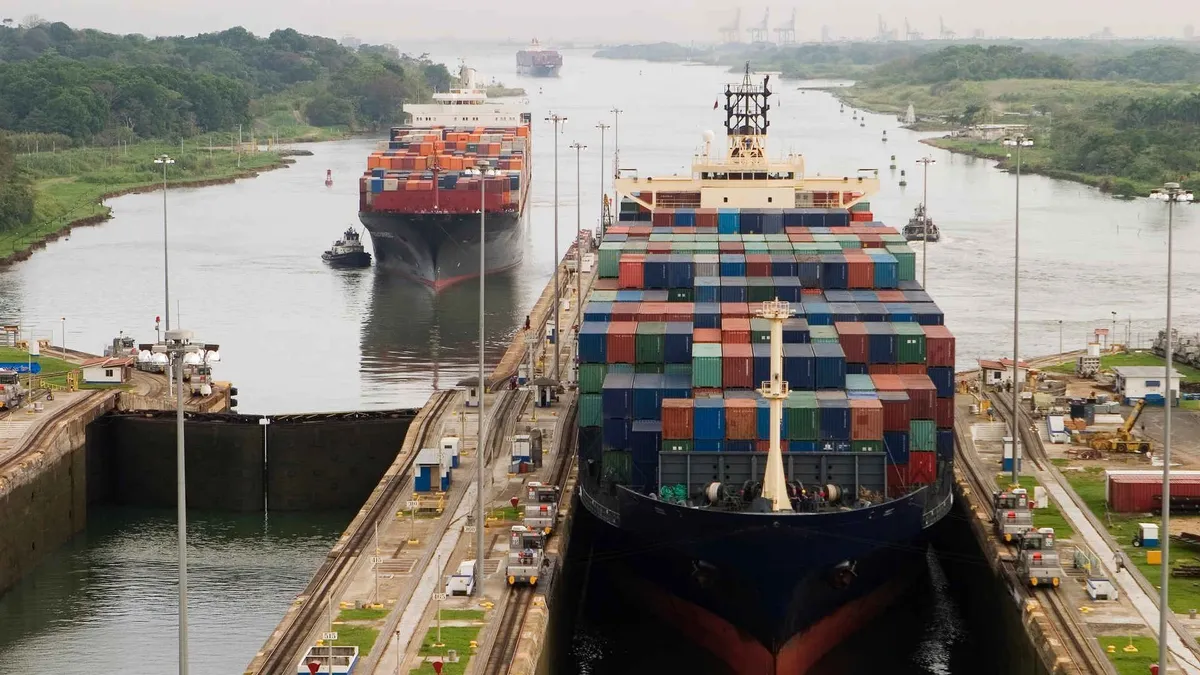
The Panama Canal is experiencing a surge in transits and passage costs due to heightened global demand and shifts in trade patterns. In April 2026, the Canal recorded around 300 additional vessel crossings compared to the same period last year.
The average number of daily transits through the Panama Canal has remained strong, with 34 ships per day in January and 37 in March. This uptick reflects significant changes in global trade dynamics — particularly with liquefied natural gas (LNG) exports playing a crucial role.
Key statistics:
- The Panama Canal recorded 12 LNG transits in April 2026, including four laden carriers headed west to deliver U.S. cargoes.
- A liquefied natural gas carrier paid USD 4 million to bypass the queue, avoiding a wait of up to five days.
- The increase in traffic has been attributed to shifting market conditions and neoliberal policies affecting trade routes.
The Panama Canal Authority anticipates further increases in shipments moving through this vital waterway. Yet, the implications for local communities cannot be ignored. The Río Indio Dam project threatens to displace 2,543 people, raising concerns about water resources.