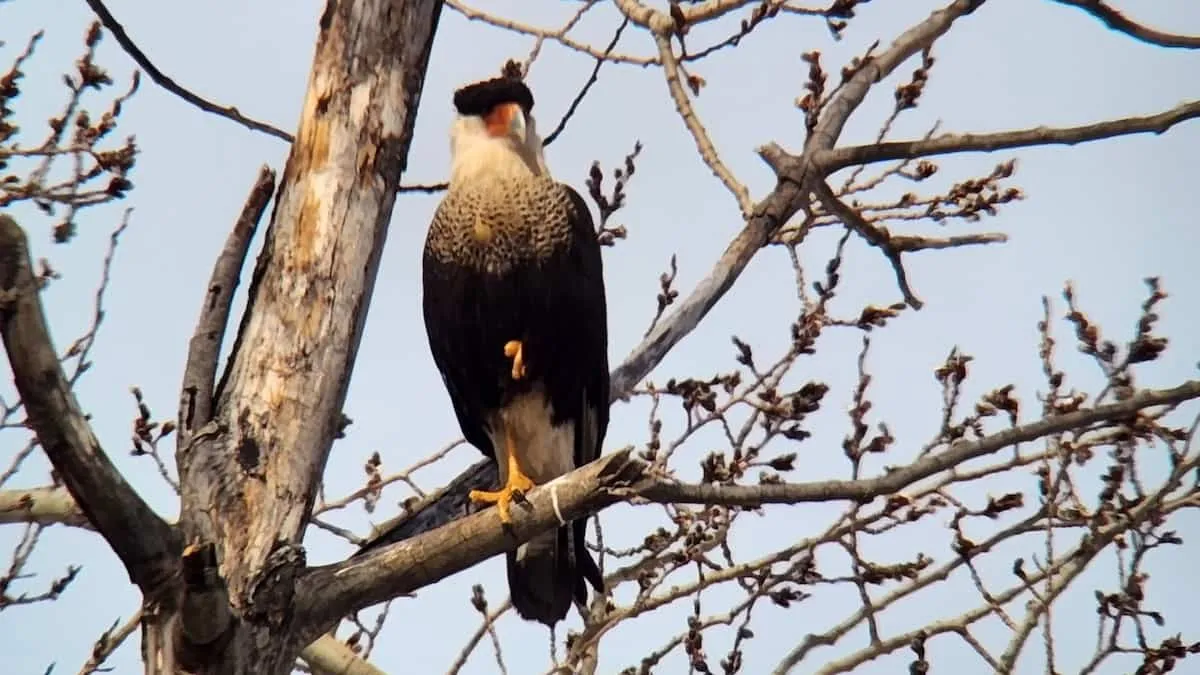
A caracara huppé was observed in Saint-Augustin-de-Desmaures, Quebec on April 13, 2026, marking a significant event for local birdwatchers. This sighting is particularly noteworthy as it represents only the fifth recorded appearance of this bird in Quebec, a region where such occurrences are rare.
The caracara huppé, a bird of prey belonging to the falcon family, is primarily found in Central and South America. Its presence in Quebec is unusual and has sparked interest among ornithologists and bird enthusiasts. According to Jean-Sébastien Guénette from QuébecOiseaux, “Ce serait la cinquième mention pour le Québec. La première fois qu’un [caracara huppé] a été vu, c’était en 2012 et la dernière fois, en 2024.” This highlights the rarity of the bird’s sightings in the province.
The phenomenon behind such occurrences is often attributed to “vagrancy,” where birds stray far from their typical habitats in search of new territories. Guénette elaborates, stating, “C’est un oiseau qui se perd. Quand il se disperse, pour chercher de nouveaux territoires par exemple, il peut déborder de son aire de répartition.” This behavior can lead to unexpected sightings in areas far removed from their usual range.
Current environmental conditions may have played a role in this sighting. The ongoing migration period, coupled with favorable south winds, could have aided the caracara huppé in its journey northward. Guénette noted, “Les oiseaux profitent des vents du sud pour s’aider à migrer. Donc, oui, ça pourrait arriver que l’oiseau ait été déporté plus loin que ce qu’il avait prévu.” Such winds can significantly influence migratory patterns, leading to the appearance of species in non-native regions.
Despite its formidable appearance as a bird of prey, the caracara huppé is not considered a threat to humans or pets, as it tends to be quite fearful. In its search for food, it typically consumes small mammals, birds, and carrion, which are more readily available in the milder climate of the season.
Birdwatchers and nature enthusiasts are encouraged to track the bird’s sightings in real-time on platforms like ebird.org, where they can share and receive updates on rare bird appearances. This community-driven approach not only fosters a greater appreciation for avian diversity but also aids in the conservation efforts for such rare species.
As the caracara huppé continues to capture the attention of birdwatchers in Quebec, observers remain hopeful for further sightings and the potential for more frequent appearances of this rare bird. Details remain unconfirmed regarding its future movements, but the excitement surrounding this sighting underscores the importance of ongoing monitoring and research into migratory patterns and vagrancy in birds.