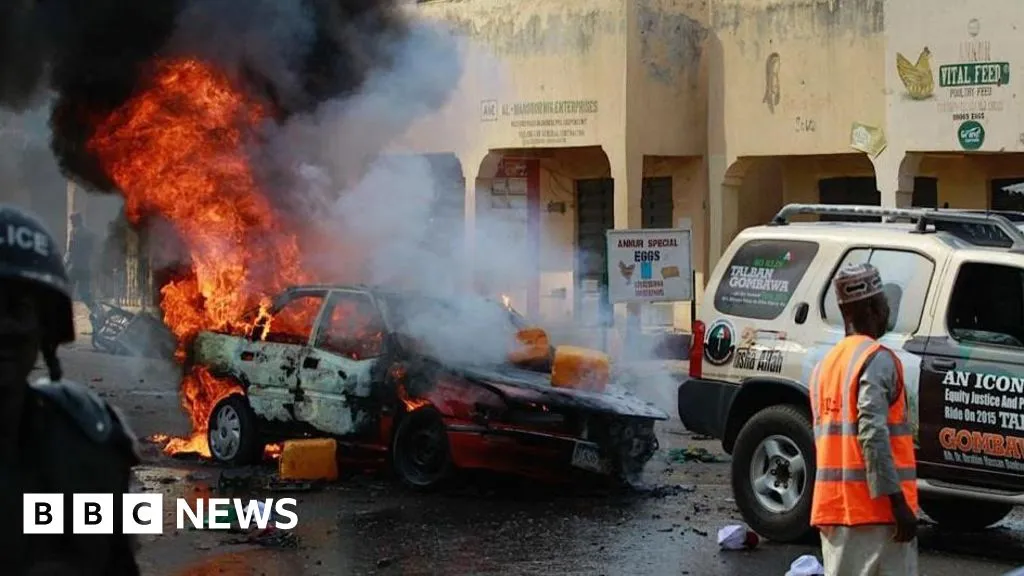
Nigeria has been facing a complex security situation due to a long-standing insurgency involving extremist groups. Over the past 16 years, the country has grappled with violence from groups like Boko Haram and the Islamic State West Africa Province (ISWAP), which have resulted in tens of thousands of deaths and the displacement of two million people.
In a significant development, nearly 400 terrorism suspects were convicted in a mass trial held in Nigeria’s capital, Abuja. The trials, which involved 508 cases, resulted in 386 convictions, alongside eight discharges and two acquittals. Many of those convicted received prison terms of up to 20 years for their participation in attacks or support for militant activities.
Lateef Fagbemi, a prominent legal figure involved in the proceedings, stated, “We brought 508 cases to court and out of this number, we were able to secure 386 convictions, eight discharges, two acquittals and 112 cases to the next session or phase.” This mass trial is seen as a crucial step in Nigeria’s ongoing efforts to combat terrorism and restore security.
However, the situation remains dire, as disputes between Muslim Fulani herders and Christian farming communities have escalated into deadly clashes, further complicating the security landscape. Recent attacks have underscored the urgency of addressing these issues, with at least 26 people killed in three separate Easter attacks in northern Nigeria.
John Cleese, a well-known figure, has criticized the international community’s silence regarding the anti-Christian violence in Nigeria, remarking, “It looks rather as though Black Lives Don’t Matter.” His comments reflect a growing concern among observers about the lack of attention given to the plight of Christians facing violence from Islamist groups.
As Nigeria continues to navigate this turbulent period, international observers have been monitoring the court proceedings closely, highlighting the global implications of the ongoing insurgency. The trials are not only a reflection of Nigeria’s internal struggles but also a call for the international community to engage more actively in addressing the humanitarian crisis.
Looking ahead, officials and analysts suggest that the mass trials may pave the way for more comprehensive strategies to tackle terrorism and restore peace. However, the path forward remains fraught with challenges, as the insurgency shows no signs of abating and the humanitarian situation continues to deteriorate.
Details remain unconfirmed regarding the long-term impact of these convictions on the broader security situation in Nigeria, but the recent developments signal a critical juncture in the fight against terrorism in the region.