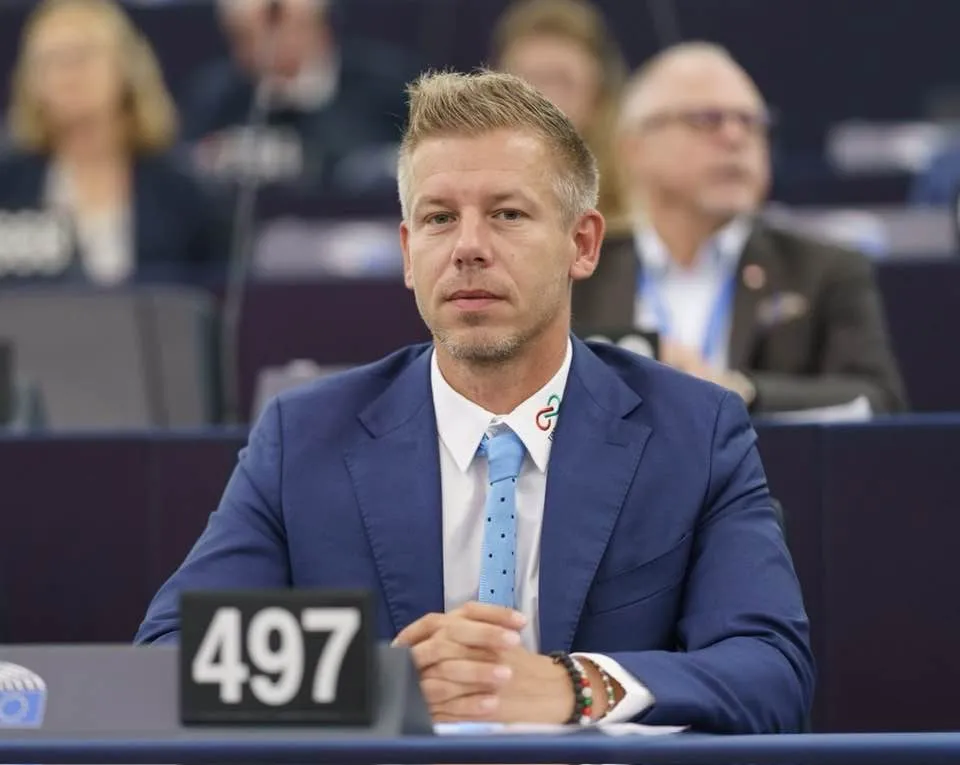
“Magyar accused Orbán’s government of systemic corruption and operating in the interests of a small circle of political and economic elites.” This bold statement encapsulates the essence of Péter Magyar’s political campaign, which has resonated with a significant portion of the Hungarian electorate. As the leader of the opposition Tisza party, Magyar’s rise to prominence has been swift and impactful, culminating in a historic election where Viktor Orbán conceded defeat after 16 years in power.
Born in 1981, Magyar’s political journey began when he joined Fidesz in 2002. However, his trajectory took a decisive turn in early 2024, when he began to distance himself from the party that had once been his political home. The catalyst for this shift was the pardon scandal that erupted in 2024, leading to a public break with Fidesz. In a revealing interview with the YouTube channel Partizán, Magyar articulated his need for an “insurance policy in case I come into conflict with Orbán’s regime,” highlighting the growing tensions within Hungary’s political landscape.
Magyar’s Tisza party, registered in 2020, gained significant traction during the European Parliament elections in June 2024, securing 30% of the vote and attracting approximately 1.3 million voters. This surge in support was further evidenced by the massive turnout at his rallies, with 50,000 people gathering on March 15, 2024, and an impressive 100,000 attending the National March on April 6, 2024. Such numbers underscore the enthusiasm and energy that Magyar has injected into Hungarian politics, appealing to a broad segment of society disillusioned with the status quo.
Despite his rising popularity, Magyar has faced criticism for his combative style and conservative views. His approach has polarized opinions, with some viewing him as a necessary counterbalance to Orbán’s long-standing dominance, while others express concern over his methods. The split from Fidesz, as Magyar noted, occurred partly due to political disagreements, indicating that his journey is not without its complexities.
Magyar’s personal life has also been a subject of public interest, particularly his divorce from Judit Varga in 2023 and his role as a father to three children. These aspects of his life humanize him in the eyes of voters, making him a relatable figure amidst the often impersonal nature of politics.
As Hungary moves forward, the implications of Magyar’s victory are profound. His rise signifies a potential shift in the political landscape, challenging the entrenched power of Orbán and Fidesz. The question now is how Magyar will navigate the complexities of governance and whether he can maintain the momentum that has brought him to this pivotal moment.
In the wake of this election, the political climate in Hungary remains charged. With Magyar at the helm of the Tisza party, observers are keenly watching for his next moves and how he will address the systemic issues he has so vocally criticized. As the nation grapples with its future direction, the impact of Péter Magyar’s leadership will undoubtedly be a focal point of discussion in the months to come.