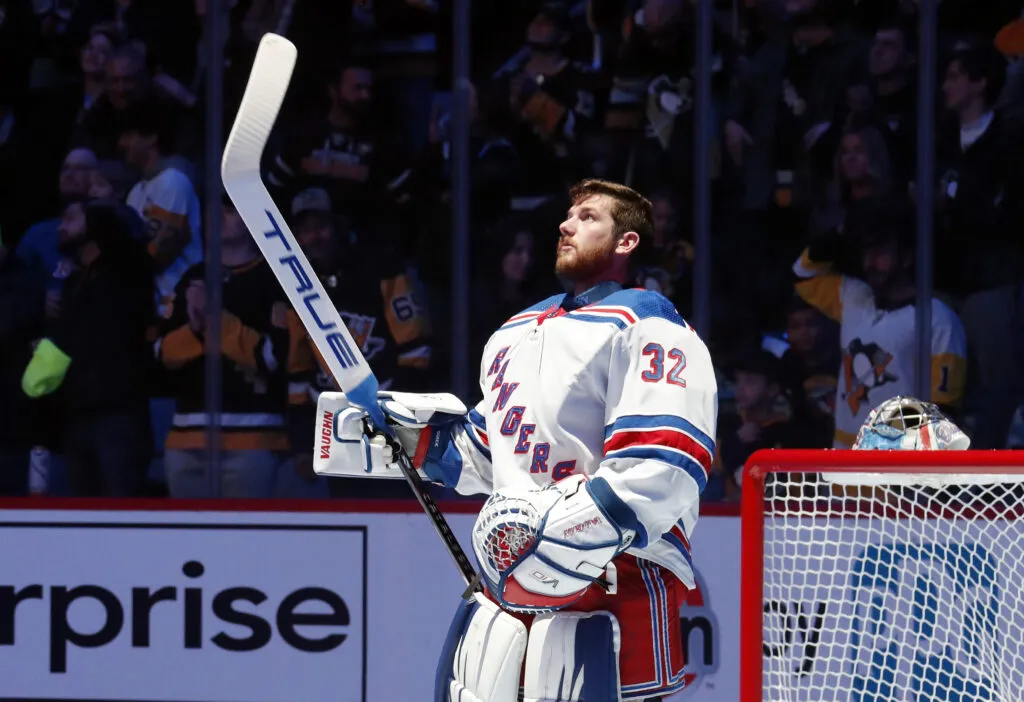
Jonathan Quick’s professional career began in 2005 with the Los Angeles Kings, where he quickly established himself as one of the premier goaltenders in the NHL. Drafted 72nd overall in the 2005 NHL Draft, Quick’s journey was marked by significant achievements, including winning two Stanley Cups in 2012 and 2014. His performance during the 2012 playoffs earned him the Conn Smythe Trophy as the postseason MVP, solidifying his reputation as a clutch performer.
On April 13, 2026, Quick announced his retirement from hockey after the conclusion of the 2025-26 season, bringing an end to a remarkable chapter in his life. “Obviously, the past few years, very lucky to be part of this organization and wear this jersey, but tonight will be my last game in the league,” Quick stated, reflecting on his time in the sport. This announcement comes after a career that saw him achieve a record of 410 wins, making him the winningest American-born goalie in NHL history.
Throughout his career, Quick has been known for his exceptional skills between the pipes, boasting a career goals against average (GAA) of 2.51 and a save percentage (SV%) of .910. His peak years, from 2008-09 to 2017-18, showcased even more impressive statistics, with a GAA of 2.27 and a SV% of .917. Over the course of his career, he accumulated 65 shutouts, further demonstrating his ability to perform at the highest level.
After spending the majority of his career with the Kings, Quick had a brief stint with the Vegas Golden Knights, where he added another Stanley Cup to his accolades in 2023. He later played three seasons with the New York Rangers, showcasing his adaptability and enduring talent in the league. His departure from the Kings marked a significant transition, but Quick continued to prove his worth as a veteran presence in the locker room.
As Quick prepares for his final game, he expressed gratitude for the support of his family, stating, “I’m looking forward to it. Very fortunate. Wife flew down with the kids. So they’ll be in attendance tonight. My parents will be here. So looking forward to this last one and (will) try to get one more win here.” This emotional farewell highlights the deep connections he has formed throughout his career and the impact he has had on those around him.
Reactions from the hockey community have been overwhelmingly positive, with many recognizing Quick’s contributions to the game. One commentator noted, “If he does end up retiring, he is, no doubt, a Hall of Famer.” This sentiment reflects the consensus that Quick’s legacy will be celebrated long after he hangs up his skates. His humility and team-first mentality have endeared him to fans and teammates alike, as he consistently credited those around him for his success, saying, “He always gives credit to his teammates for how they played in front of him.”
As observers look ahead, the focus will shift to Quick’s potential induction into the Hockey Hall of Fame, a fitting recognition for a player of his caliber. His retirement marks not just the end of an era for Quick but also a significant moment in NHL history, as one of the league’s most accomplished goaltenders steps away from the game. The impact of his career will undoubtedly resonate within the sport for years to come.