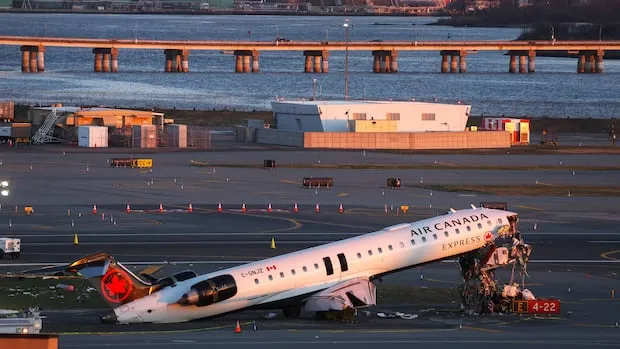
On a fateful night at LaGuardia Airport, an Air Canada Express jet collided with a fire truck on the runway, resulting in the tragic deaths of two pilots and injuries to dozens of others. The aircraft, a CRJ-900 operated by Jazz Aviation, had just taken off from Montreal Trudeau International Airport with approximately 70 passengers onboard.
The incident occurred shortly after 10:30 p.m. ET, when two air traffic controllers were managing operations in the tower cab. The local controller signed in for work at 10:45 p.m. ET, while the controller in charge had logged in at 10:30 p.m. ET. This timing raises questions about the adequacy of staffing during critical operational hours.
Jennifer Homendy, chair of the National Transportation Safety Board (NTSB), is leading the investigation into the collision. She noted that the NTSB is scrutinizing the staffing levels of air traffic control at LaGuardia during the incident. “This is a heavy workload environment,” Homendy remarked, highlighting the challenges faced by controllers during midnight shifts.
Homendy also cautioned against prematurely attributing the incident to distraction among the controllers, stating, “I would caution against pointing fingers at controllers and saying distraction was involved.” She emphasized that investigations often reveal multiple factors at play, saying, “We rarely, if ever, investigate a major accident where it was one failure.” This perspective is crucial in understanding the complexities of air traffic control operations.
As the investigation unfolds, the NTSB has confirmed that there is no indication of fatigue being a factor in the collision. However, details remain unconfirmed regarding who was conducting the duties of the ground controller at the time of the incident, as well as information about other personnel present.
Currently, the runway where the collision occurred remains closed, although flights resumed at LaGuardia Airport the day following the incident. The ongoing investigation will likely examine the broader implications for air traffic safety, especially given the historical concerns about fatigue during midnight shifts.
As the NTSB delves deeper into the circumstances surrounding this tragic event, the focus will not only be on the immediate factors but also on systemic issues within air traffic control that could prevent future occurrences. The outcome of this investigation is critical for the safety of air travel and the well-being of those who work in this demanding environment.