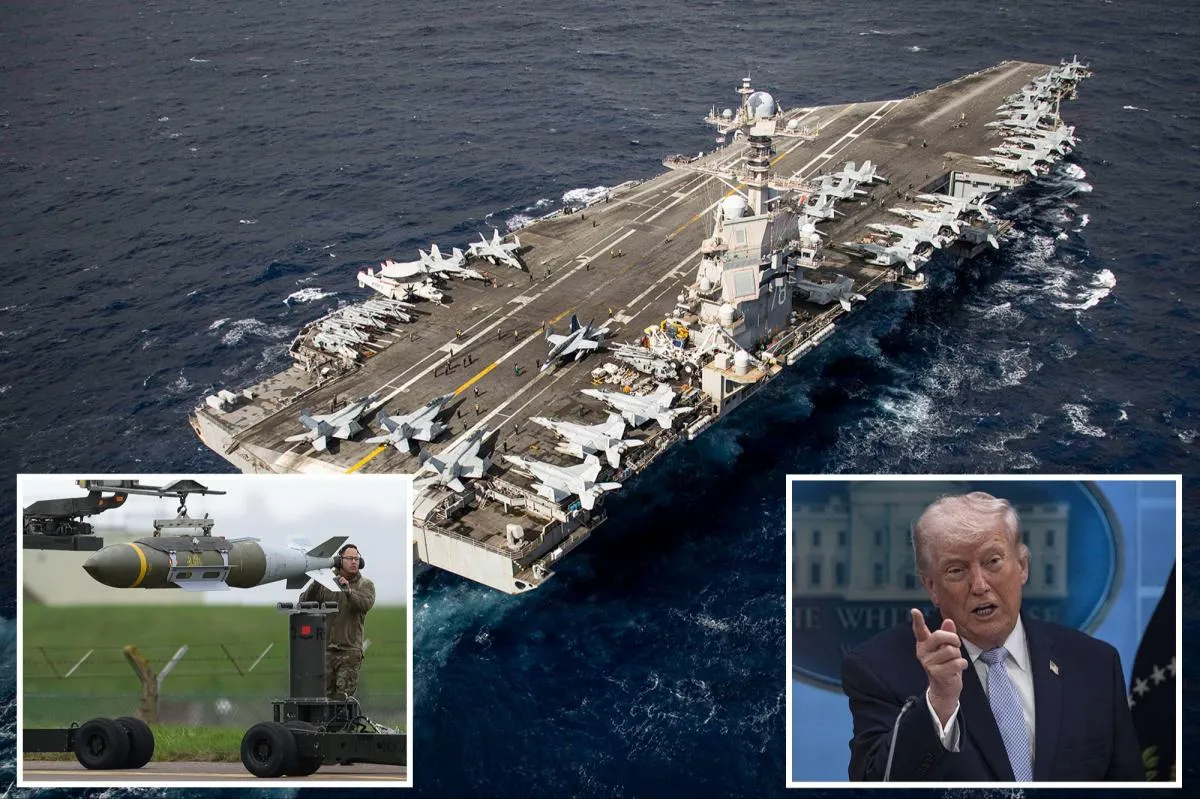
“We’re loading up the ships with the best weapons ever made, even at a higher level than we used to do a complete decimation,” stated President Trump, underscoring the precarious nature of the ongoing negotiations between the United States and Iran. As peace talks commenced in Pakistan following a two-week ceasefire, the specter of military escalation looms large, with Trump’s remarks highlighting the US’s readiness to resume hostilities should diplomacy fail.
The US and Iranian officials began face-to-face negotiations on April 10, 2026, in a context marked by significant casualties and geopolitical tension. The war has already claimed the lives of at least 3,000 people in Iran and 2,020 in Lebanon, with the conflict severely disrupting the Persian Gulf’s economic stability. Energy prices have soared, with Brent crude reaching $94 per barrel, a 30% increase since the war’s onset. This economic strain adds urgency to the peace talks, as both sides grapple with the consequences of continued hostilities.
Leading the Iranian delegation is Parliament Speaker Mohammad Bagher Ghalibaf, while the US team is headed by Vice President JD Vance, accompanied by special envoy Steve Witkoff and Jared Kushner. The talks are expected to center on critical issues such as sanctions, the Strait of Hormuz, and Iran’s nuclear enrichment program. However, the US has made clear its demands, including the surrender of an estimated 1,000 pounds of enriched uranium and the full reopening of the Strait of Hormuz.
In a notable development, the US military has begun preparations to clear mines in the Strait of Hormuz, a crucial maritime route for global oil shipments. This operation is part of a broader strategy to ensure safe passage through the strait, which has been a flashpoint in US-Iran relations. The US has also rejected Iran’s proposal to charge transit fees for ships passing through the strait, indicating a hardline stance that could complicate negotiations.
Pakistani officials have confirmed that talks are progressing, albeit with uncertainty surrounding the specifics of the negotiations. “I cannot say whether they are sitting in the same room or in separate rooms, but talks have started and are progressing well,” a Pakistani official remarked, reflecting the cautious optimism surrounding the discussions. However, the details remain unconfirmed, leaving room for speculation about the potential outcomes.
President Trump further commented on the situation, stating, “Let’s see what happens — maybe they make a deal, maybe they don’t. It doesn’t matter. From the standpoint of America, we win.” This statement encapsulates the US administration’s perspective, which appears to prioritize military readiness alongside diplomatic efforts. The dual approach raises questions about the sincerity of the peace talks and the potential for a lasting resolution.
As the negotiations unfold, the backdrop of violence continues to cast a shadow over the proceedings. The recent ceasefire agreement reached on April 7, 2026, remains fragile, with the war claiming the lives of 300 people in Beirut alone on the same day. The ongoing violence underscores the stakes involved in the peace talks, as both sides navigate a landscape fraught with mistrust and hostility.
Looking ahead, the outcome of these negotiations could have far-reaching implications for regional stability and global energy markets. The talks are expected to address not only the immediate concerns of nuclear proliferation and military engagement but also the broader geopolitical dynamics involving key players like Hezbollah and Israel. With tensions running high, the world watches closely as the US and Iran attempt to chart a path toward peace amid the chaos of war.