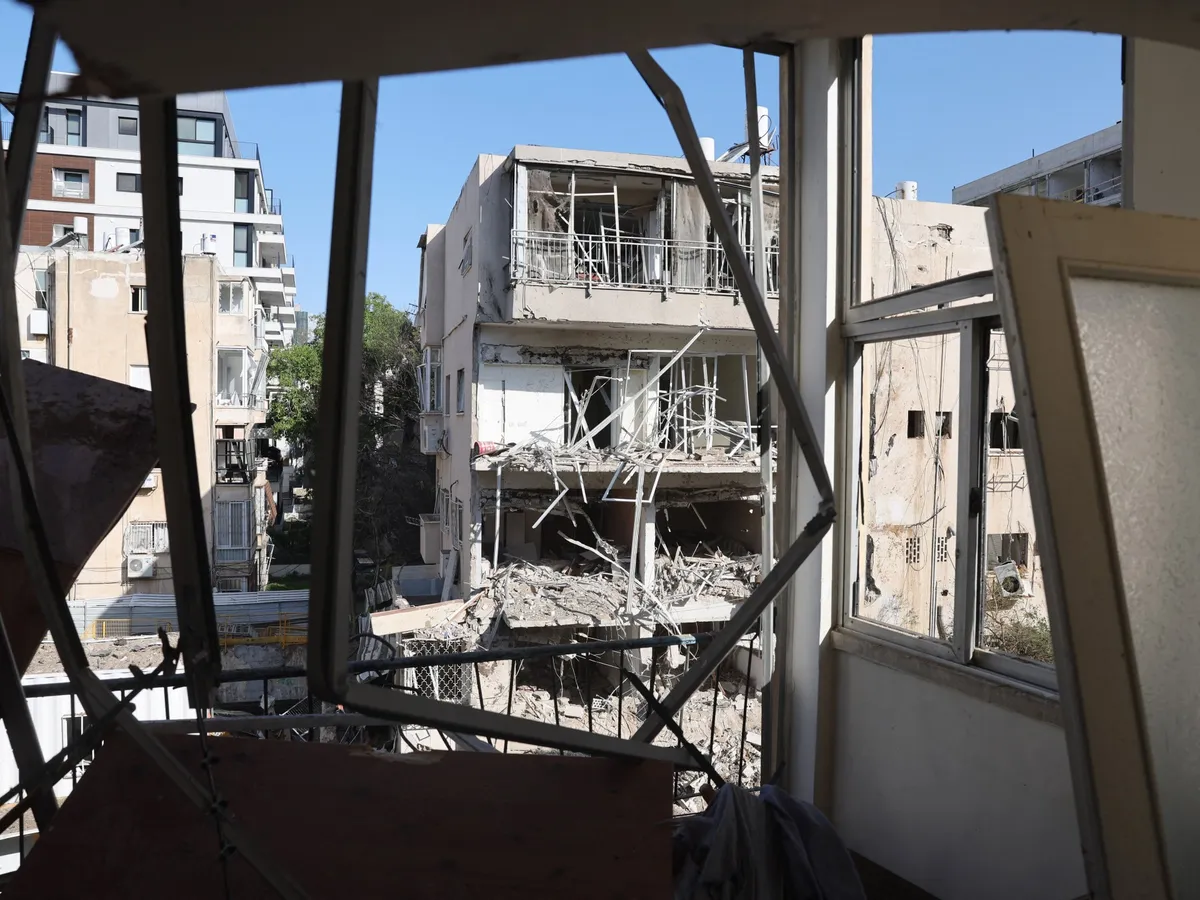
In a significant escalation of hostilities, Iran has launched missiles targeting Israel, resulting in damage and injuries in Tel Aviv. This attack marks a pivotal moment in the ongoing conflict, raising alarms about the potential for further military engagement in the region.
Reports indicate that Iran’s missile production capabilities remain robust, with estimates suggesting that the country can currently produce around 40 missiles per month, a stark decline from 300 at the start of the war. This reduction highlights the impact of military pressure from the U.S. and Israel, yet Iran’s capacity to strike remains a concern.
Before the onset of the war, Iran was believed to possess between 2,500 and 6,000 missiles, capable of reaching distances up to 2,400 miles (4,000 km). Israeli Prime Minister Benjamin Netanyahu has emphasized that Iran’s missile capabilities allow it to reach deep into Europe, underscoring the broader implications of these developments.
Despite the ongoing military actions against its missile production facilities, which have been targeted and damaged, Iran’s missile and drone capabilities have not been entirely neutralized. Israeli officials have described Iran’s missile capacity as ‘massively degraded,’ yet the full extent of its military capabilities remains uncertain.
Experts suggest that while Iran may be exaggerating its missile-making capabilities, it still poses a significant threat. William Alberque, a defense analyst, remarked that the rhetoric surrounding Iran’s capabilities could be seen as ‘pointless bravado.’ However, Alex Plitsas noted that this could also be a form of propaganda designed to instill fear, even if there is a possibility that Iran could carry out such strikes.
Details remain unconfirmed regarding the exact size of Iran’s missile stockpile prior to the war and how much capacity has been rebuilt since the recent conflicts. The effectiveness of Iran’s missile production capabilities continues to be a subject of ongoing assessment, particularly in light of the military pressure it faces.
As the situation unfolds, the international community, including the United States and European countries, is closely monitoring these developments. The potential for further escalation remains high, particularly with Iran’s demonstrated willingness to engage in aggressive military actions.
This latest missile strike not only raises immediate security concerns for Israel but also poses a broader threat to regional stability, with implications for neighboring countries such as Saudi Arabia, Kuwait, Bahrain, Qatar, and the United Arab Emirates.
The ramifications of these actions could lead to a recalibration of military strategies in the region, as nations reassess their defenses against the backdrop of Iran’s missile capabilities.