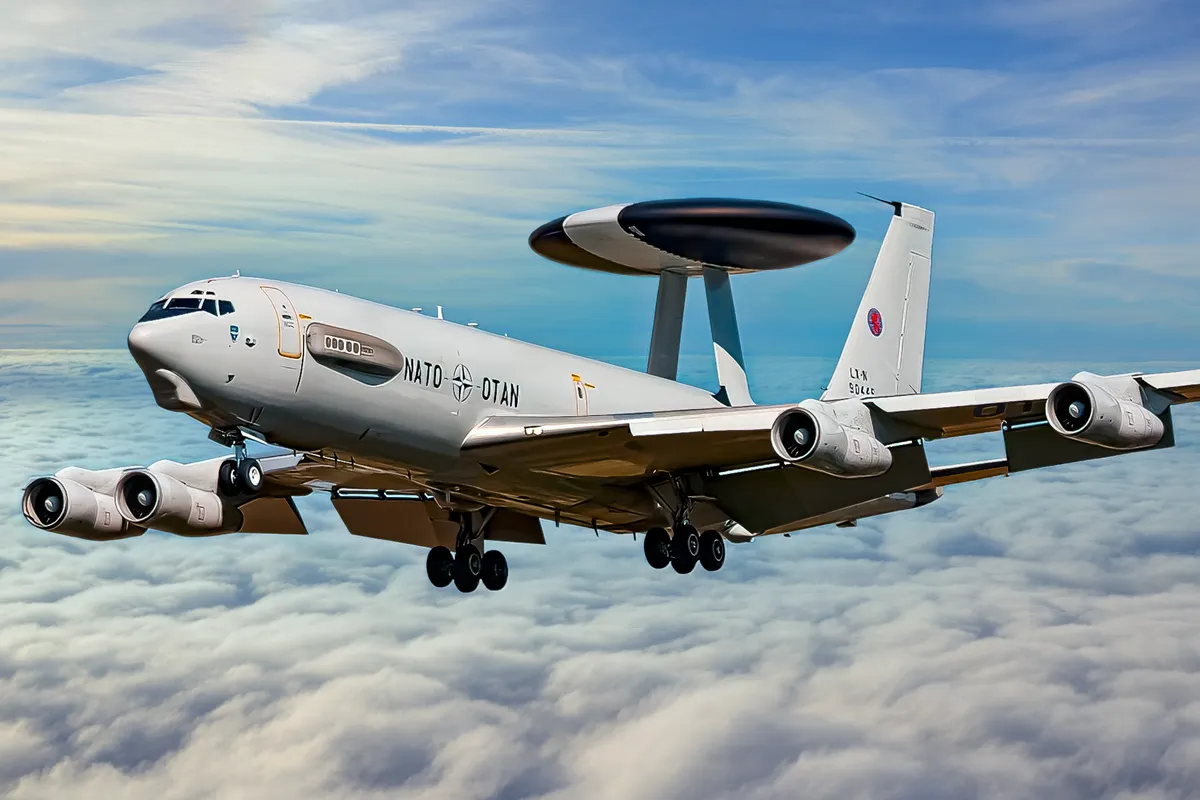
In a significant escalation of tensions, an Iranian strike on March 30, 2026, has resulted in the destruction of an E-3 Sentry AWACS aircraft at Prince Sultan Air Base in Saudi Arabia. This incident not only marks a critical moment in U.S.-Iran relations but also raises alarms about the effectiveness of U.S. surveillance capabilities in the region.
The E-3 Sentry, an airborne warning and control system, has been a cornerstone of U.S. military operations, capable of tracking around 600 targets simultaneously and monitoring an expansive 120,000 square miles of battlespace. Prior to this strike, the U.S. had 16 E-3 Sentry aircraft in its fleet, a number that has dwindled from 32 in 2015.
Analysts are expressing grave concerns about the implications of this loss. Cedric Leighton, a military analyst, stated, “The loss of the AWACS is a serious blow to (U.S.) surveillance capabilities.” This sentiment is echoed by Andreas Krieg, who noted, “Iran is gradually eating away at the network of early warning systems that the U.S. has built over decades in the region.” Such commentary underscores the strategic significance of the E-3 Sentry in maintaining air superiority.
The attack comes at a time when the U.S. Air Force is already contemplating replacements for its aging E-3 fleet, although no definitive platform has been chosen by the Pentagon. The urgency of this situation is compounded by the fact that the U.S. fleet has shrunk to just 17 E-3s at the beginning of 2026.
Kelly Grieco highlighted the broader implications of the strike, stating, “Iran’s going after the radars that detect threats, the tankers that keep jets flying, and the AWACS that direct the battle.” This coordinated approach by Iran suggests a strategic targeting of U.S. military assets that are vital for operational success.
As the dust settles, uncertainties remain regarding the presence of Oklahoma-based crews during the attack and the full extent of damage to U.S. forces and assets in the region. Details remain unconfirmed.
In light of this incident, military experts are urging a reassessment of U.S. defense strategies in the Middle East. The loss of an E-3 Sentry not only diminishes immediate surveillance capabilities but also raises questions about the U.S.’s long-term military posture in a region increasingly dominated by Iranian influence.
The ramifications of this strike will likely reverberate through U.S. military planning and diplomatic efforts in the region, as officials scramble to address the vulnerabilities exposed by this incident.