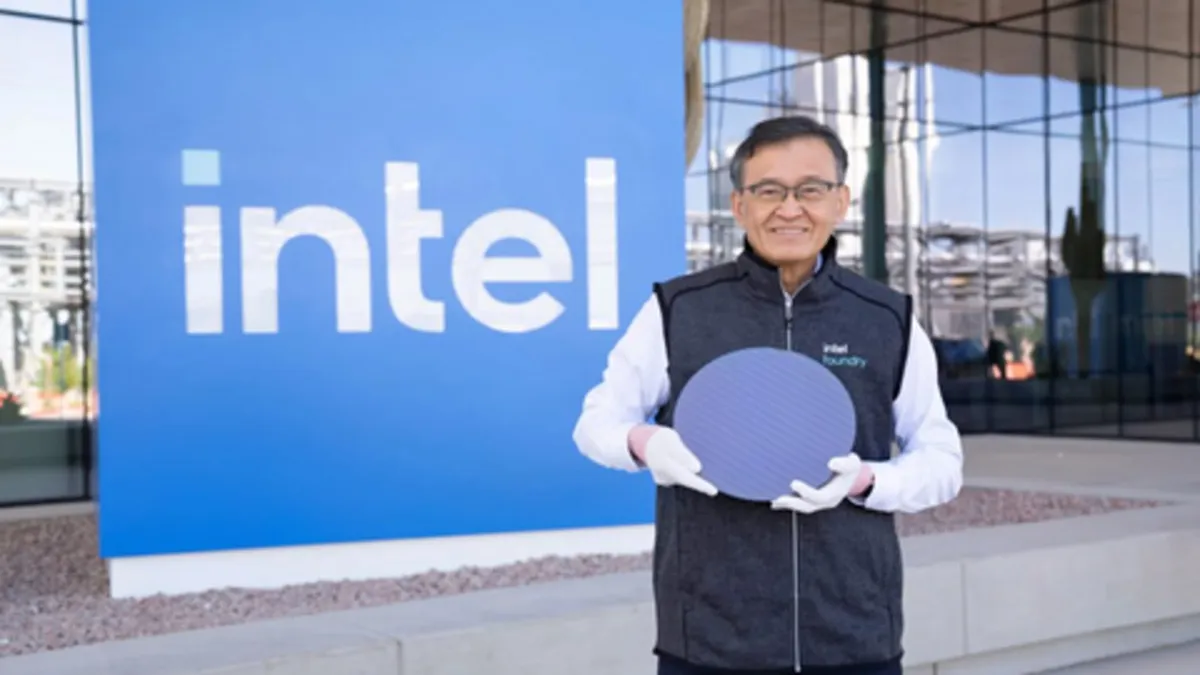
Intel’s stock surged over 20% following a strong earnings report and a significant partnership with Tesla. This remarkable jump came on April 23, 2026, when Intel Corp. announced adjusted earnings per share of 29 cents — far exceeding the expected 1 cent.
In Q1, Intel generated revenue of $13.58 billion, surpassing forecasts of $12.42 billion. Such performance reflects a year-over-year growth rate of 6.9%. The numbers suggest that the semiconductor giant is regaining its footing in an increasingly competitive landscape.
But it’s not just about numbers; it’s about strategy. Tesla plans to invest approximately $3 billion to utilize Intel’s next-generation chip fabrication process. This partnership marks a significant milestone as Tesla becomes the first major third-party customer for Intel’s advanced manufacturing capabilities.
The broader context reveals that Intel’s stock has increased more than 80% in 2026 alone, showcasing a notable turnaround after years of challenges in the semiconductor industry. Analysts have pointed to new leadership and strategic shifts as key factors driving this resurgence.
Yet, challenges remain. Despite these encouraging figures, Intel reported a net loss of $4.28 billion in the latest quarter — a stark reminder that recovery takes time. Moreover, the company anticipates Q2 revenue between $13.8 billion and $14.8 billion, leaving some investors uncertain about sustained momentum.
Intel’s data center revenue grew by an impressive 22%, reaching $5.1 billion, indicating strong demand for its products amid rising interest in artificial intelligence applications. Lip-Bu Tan remarked, “The CPU is reinserting itself as the indispensable foundation of the AI era.” This sentiment echoes throughout the tech community.
On April 24, Intel’s stock soared again by more than 20%, reflecting renewed investor confidence amidst broader market declines. The analysts at Evercore ISI noted that “INTC’s new CEO fixed the balance sheet,” suggesting that effective management is key to revitalizing the company’s prospects.
As we observe these developments, it’s clear that Intel is not merely recovering; it appears to be positioning itself for future growth within the semiconductor sector — an area that remains critical for technological advancement.
The path ahead may not be without its hurdles, but for now, Intel’s performance offers a glimpse into potential recovery in an industry often fraught with volatility.